






Understanding the ABN Form: Definition and Purpose
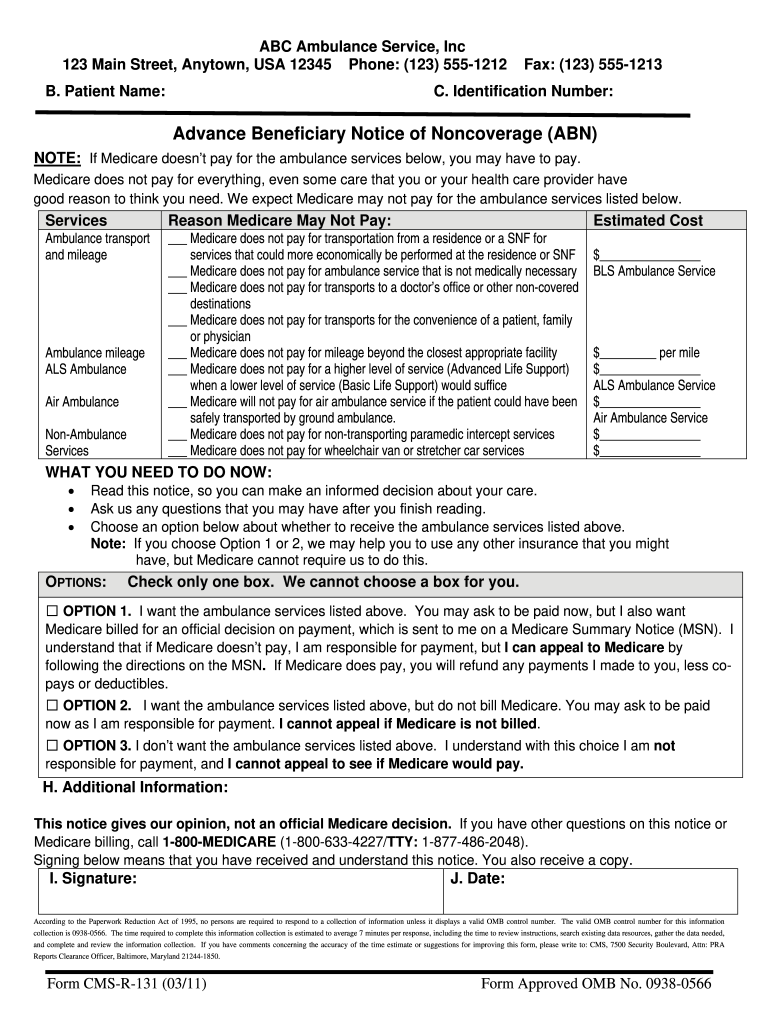
The Advance Beneficiary Notice of Noncoverage (ABN) is a critical document that informs patients about services that Medicare may not cover. This notice serves several key purposes, including:
- Outline of Non-Coverage: The ABN notifies patients of potential non-coverage before receiving a service. This is especially important for ambulance transportation and other medical services that might be deemed not medically necessary by Medicare.
- Patient Awareness: It clearly communicates to patients the reasons Medicare may not pay for certain services, helping them make informed decisions about their medical care.
- Documentation Requirement: The ABN acts as a formal notification that the provider believes certain services may not be covered, which can protect the healthcare provider if the patient challenges the charges later on.
To fully understand the implications of the ABN form, it's essential to be aware of its components and the context in which it is used.
How to Use the ABN Form Effectively
The ABN form can be utilized effectively by both patients and providers. Here are steps and considerations:
- Before Service Delivery: Providers should present the ABN form to patients before administering the service in question. This allows patients to review their options.
- Patient Signature: Patients are required to sign the form to acknowledge that they understand the information provided about non-coverage and declare their choice about whether to proceed with the service.
- Maintaining Records: It's crucial for both parties to keep a copy of the signed ABN for their records. For providers, this serves as proof that they fulfilled their obligation of informing the patient.
Additionally, it is essential for providers to understand the rules regarding when an ABN must be issued. Failure to correctly execute the ABN process can result in penalties or denied reimbursements.
Steps to Complete the ABN Form
Completing the ABN form requires diligent attention to detail. Here are the essential steps involved:
- Step 1: Identify Services: Determine which services are being provided that may not be covered by Medicare.
- Step 2: Fill in Patient Information: Enter the patient’s name, Medicare number, and the date of service.
- Step 3: Detail the Service: Clearly explain the service being rendered, including any relevant dates and descriptions. Specify why the service might not be considered necessary by Medicare.
- Step 4: Explain Patient Rights: Provide clear options for the patient regarding the service, including their options should they choose to forgo the service.
- Step 5: Secure Signatures: Obtain the patient’s signature, indicating their understanding of the potential costs involved.
Common Scenarios for Using the ABN Form
Understanding who typically uses the ABN form can provide context for its significance:
- Ambulance Services: It is frequently utilized in ambulance service situations, where patients are transported for emergency care but the necessity for transport can vary based on medical conditions.
- Outpatient Procedures: Medical facilities may issue the ABN when a patient seeks outpatient procedures that might not meet Medicare’s coverage criteria.
- Specialty Services: Clinics offering specialized or experimental treatments may also rely on the ABN to inform patients about the possibility of non-coverage.
By recognizing these common scenarios, both healthcare providers and patients can better navigate situations involving potential non-coverage.
Legal Aspects of the ABN Form Usage
The legal implications of using the ABN form are significant:
- Compliance with Medicare Requirements: Issuing an ABN is a requirement under the Medicare program for certain services. Not providing it when necessary can lead to financial penalties for healthcare providers.
- Protection Against Liability: For healthcare providers, having a signed ABN reduces the risk of liability when the patient is billed for services not covered by Medicare, as it demonstrates a good faith effort to inform the patient.
- Patient Rights: Patients gain protection as well; they are made aware of their financial obligations regarding non-covered services, which helps them avoid unexpected charges.
Examples of Completed ABN Forms and Templates
Having access to examples of completed ABN forms is useful for both patients and providers. Here are a few relevant examples:
- Sample ABN Form Filled Out: It illustrates how a completed ABN form looks, providing clarity on what details are required.
- ABN Template: Templates of the ABN form can be used as a reference to ensure compliance and completeness.
- Printable ABN Form Resources: Access to printable versions, such as the ABN form PDF, can assist providers in maintaining proper documentation.
Learning from these examples can improve understanding and execution of the ABN process, benefiting both healthcare providers and patients.
Important Dates and Filing Deadlines for the ABN Form
While the ABN itself does not have specific filing deadlines, awareness about when to issue it is crucial:
- Service Date Relevance: The ABN must be presented to patients before the service date. Failure to do so can lead to complications in billing and coverage disputes.
- Policy Changes: Providers should be aware of periodic updates to Medicare policies that may influence when an ABN is required, ensuring they are always compliant with the latest regulations.
Understanding these timelines ensures that both providers and patients are protected under Medicare rules.