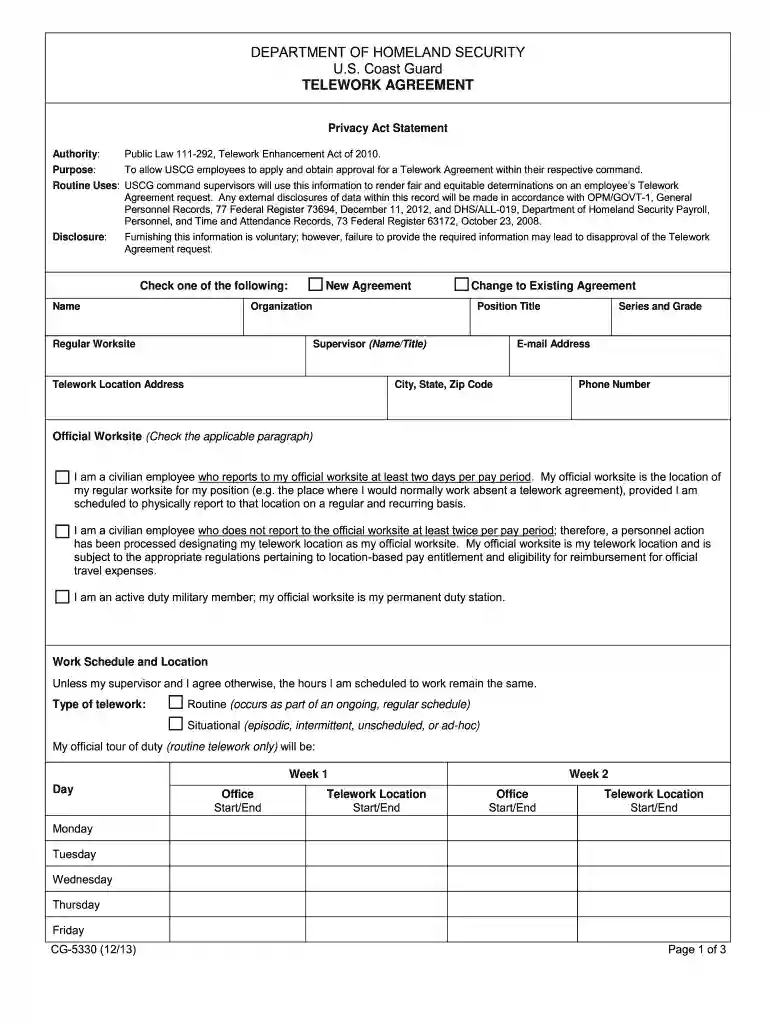
Definition and Purpose of Form CG-5330
Form CG-5330, also known as the Coast Guard Telework Agreement, is a crucial document that outlines the terms and conditions under which employees of the U.S. Coast Guard can participate in telework arrangements. This form establishes a mutual understanding between the employee and the agency regarding telework eligibility, responsibilities, and compliance with relevant policies.
Key Uses of Form CG-5330
- Determination of Eligibility: The form helps assess whether an employee qualifies for telework based on various factors such as job responsibilities, performance history, and operational requirements.
- Outline of Responsibilities: It details both employer and employee responsibilities, ensuring clarity around work expectations and deliverables.
- Regulatory Compliance: By using this form, the agency maintains compliance with federal regulations and policies related to telework.
Understanding this form is essential for employees considering telework options with the U.S. Coast Guard, as it guides them through the requirements and implications of remote work arrangements.
Steps to Complete the Form CG-5330
Completing Form CG-5330 requires careful attention to detail to ensure all necessary information is captured accurately. The following steps outline the process:
Review Eligibility Criteria:
- Employees should confirm that they meet the eligibility requirements outlined in the U.S. Coast Guard telework policy. Factors include performance evaluations and specific job functions.
Fill Out Employee Information:
- Provide basic personal information including name, position, and contact details. This section establishes the identity of the employee applying for telework.
Specify Telework Details:
- Clearly define the proposed telework schedule, including specific days and hours. Indicate whether the telework is full-time or part-time.
Agreement on Responsibilities:
- Both the employee and supervisor need to outline and agree upon the responsibilities and expectations for telework, including communication protocols and performance standards.
Sign and Submit:
- Ensure that both the employee and their supervisor sign the document to formalize the agreement. Keep a copy for personal records.
Each completed form must then be submitted to the appropriate personnel, typically the human resources department or direct supervisor, for approval.
Important Terms Related to Form CG-5330
Understanding key terms related to Form CG-5330 is vital for both employees and supervisors when navigating telework agreements. Here are some important definitions:
- Telework: A flexible work arrangement that allows employees to perform their job duties outside of the traditional office environment.
- Mandatory Requirements: Conditions set forth by the U.S. Coast Guard that must be met for telework eligibility including performance levels and operational needs.
- Employee Responsibilities: Duties and expectations outlined in the form that employees must adhere to while teleworking.
- Supervisor's Role: The responsibility of supervisors to monitor performance, ensure communication, and maintain operational integrity during telework periods.
Having a clear grasp of these terms will enhance the understanding and management of the telework process.
Key Elements of the Form CG-5330
A comprehensive understanding of the key elements of Form CG-5330 is critical for a successful telework agreement. The following are the critical components included in this form:
- Employee Identification: Basic details about the employee such as name, title, and contact information.
- Telework Agreement Duration: The specified time period during which the telework arrangement is effective, often aligning with performance evaluations or specific project timelines.
- Work Schedule: A clearly defined schedule indicating working hours and days the employee is expected to telework.
Additional Elements
- Communication Protocols: Specific expectations around how and when employees should communicate with their supervisors and team while working remotely.
- Performance Metrics: Agreed-upon standards for evaluating the employee’s performance while teleworking.
- Signatures: Required signatures from both the employee and the supervisor to validate the agreement.
These elements ensure transparency and accountability, helping both parties manage expectations effectively.
Common Scenarios for Using Form CG-5330
Form CG-5330 is relevant in various workplace scenarios that highlight its importance in facilitating telework arrangements in the Coast Guard.
- New Employees Seeking Remote Work: A new Coast Guard recruit may wish to establish a telework agreement upon completing their onboarding to maintain flexibility.
- Established Employees with Performance Records: An employee with a solid performance record may opt to request telework after adapting to workload requirements during busy operational periods.
- Project-Based Telework: Employees working on specific, time-limited projects may use the form to formalize temporary telework arrangements as determined by project demands.
These scenarios illustrate how Form CG-5330 can be utilized for various needs across the agency, highlighting its flexibility and relevance in modern work environments.
Filing Deadlines for Form CG-5330 Submissions
Timely submission of Form CG-5330 is crucial to ensure compliance with U.S. Coast Guard policies. The following outlines general timelines and best practices related to filing:
- Initial Submission: Employees should submit the form as soon as they express interest in a telework arrangement, ideally during early discussions of potential telework options.
- Annual Review: The form may require annual updates to reflect any changes in job responsibilities, performance, or operational needs. Employees should prepare to submit any revised agreements on a predetermined annual schedule.
- Project-Specific Submissions: For employees involved in short-term projects, the form's submission should occur before the project's commencement to facilitate clear telework expectations.
Following these deadlines helps maintain operational efficiency and adherence to the necessary regulatory framework.
Legal Use of Form CG-5330
Form CG-5330 holds legal significance within the context of federal employment and telework policies. Here are essential points related to its legal use:
- Binding Agreement: Once signed by both the employee and supervisor, the form acts as a legal agreement concerning the terms of telework, ensuring that both parties are committed to the outlined responsibilities.
- Regulatory Compliance: The form is designed to comply with applicable federal regulations regarding telework in federal positions, ensuring that all practices are within lawful bounds.
Potential Legal Implications
- Breach of Agreement: Failure to adhere to the agreed-upon terms may result in disciplinary actions, including revocation of telework privileges or other sanctions.
- Documentation of Responsibilities: Establishing clear responsibilities protects both the employee and the employer, providing a reference point should disputes arise related to work performance or telework obligations.
Understanding the legal implications ensures that both employees and supervisors engage with the agreement responsibly and within the scope of the law.