






Definition and Meaning of Meeting Verification
Meeting verification is a formal process used to confirm attendance at a meeting, often required for various professional or personal purposes. This process can serve several functions, including providing proof for employment records, fulfilling health program compliance requirements, and supporting attendance documentation for recovery or support group meetings.
Key components of meeting verification:
- Eligibility: Individuals who attended a meeting must be recognized as participants. This typically includes attendees of workshops, seminars, recovery sessions, or business meetings.
- Documentation: Verification often involves collecting signatures, timestamps, and sometimes, detailed meeting agendas. This documentation serves as credible proof of participation and may be needed for official reporting.
Meeting verification is essential for both individuals and organizations that need evidence substantiating attendance for legal, professional, or personal reasons.
How to Use the Meeting Verification Process
Using the meeting verification process involves several steps to effectively document attendance. This can include obtaining a form designed for recording essential meeting details.
- Select the Appropriate Form: Choose a meeting verification form that meets the specific needs of your situation.
- Fill Out Required Information: Include essential details such as the date, time, location, and agenda of the meeting. Don’t forget to list the names of the attendees.
- Signature Collection: Ensure that all attendees sign the verification form to confirm their presence.
- Distribute the Form: Send copies to all relevant parties who require the verification for their records.
- Maintain Records: Keep a copy of the completed verification for future reference or compliance checks.
Using the meeting verification effectively allows for clear communication and documentation required by organizations and individuals.
Steps to Complete the Meeting Verification
Completing a meeting verification form is a straightforward process when you follow a structured approach. Here are step-by-step instructions:
- Gather Necessary Information:
- Obtain the date, time, and purpose of the meeting.
- Compile a list of attendees, including their names and roles.
- Access the Verification Form:
- If you are using an online platform, locate the meeting verification template. Most software systems used for document collaboration, like DocHub, feature fillable forms.
- Input Details:
- Enter the meeting information into the corresponding fields clearly and accurately.
- Double-check for any inaccuracies or missing entries.
- Signature Section:
- Reserve space for the signatures of all attendees. This could be done electronically if the document permits.
- Review and Finalize:
- Revise the completed document for any errors and ensure that all signatures are obtained.
- Distribute Copies:
- Make copies for all relevant parties and store one securely for record-keeping.
Following these steps enhances the integrity of the meeting verification process and ensures accurate reporting.
Legal Use of the Meeting Verification
Meeting verifications can play an essential role in legal contexts, particularly for matters involving attendance documentation for programs requiring compliance.
Important Legal Considerations:
- Enforceability: Meeting verifications can serve as legal evidence that individuals attended specified events, which may be crucial for contractual obligations.
- Compliance: Some professional health and support programs require documented attendance to comply with guidelines and regulations.
- Litigation Support: In the event of disputes regarding attendance or participation, verified attendance can provide necessary proof in legal scenarios.
- Privacy Concerns: Be mindful of confidentiality when recording attendees’ names and details, especially in sensitive contexts like recovery meetings.
Understanding the legal implications surrounding meeting verification is vital for maintaining compliance and transparency.
Examples of Using the Meeting Verification Process
Meeting verification is applied in various settings, showcasing its versatility and importance. Below are specific scenarios where this documentation is commonly used:
- Corporate Events: Businesses often use meeting verification for official meetings, ensuring that employees' attendance is recorded for compliance with corporate policies or labor regulations.
- Educational Workshops: Educational institutions may require verification forms to document student attendance in classes or extracurricular activities for credits or financial aid eligibility.
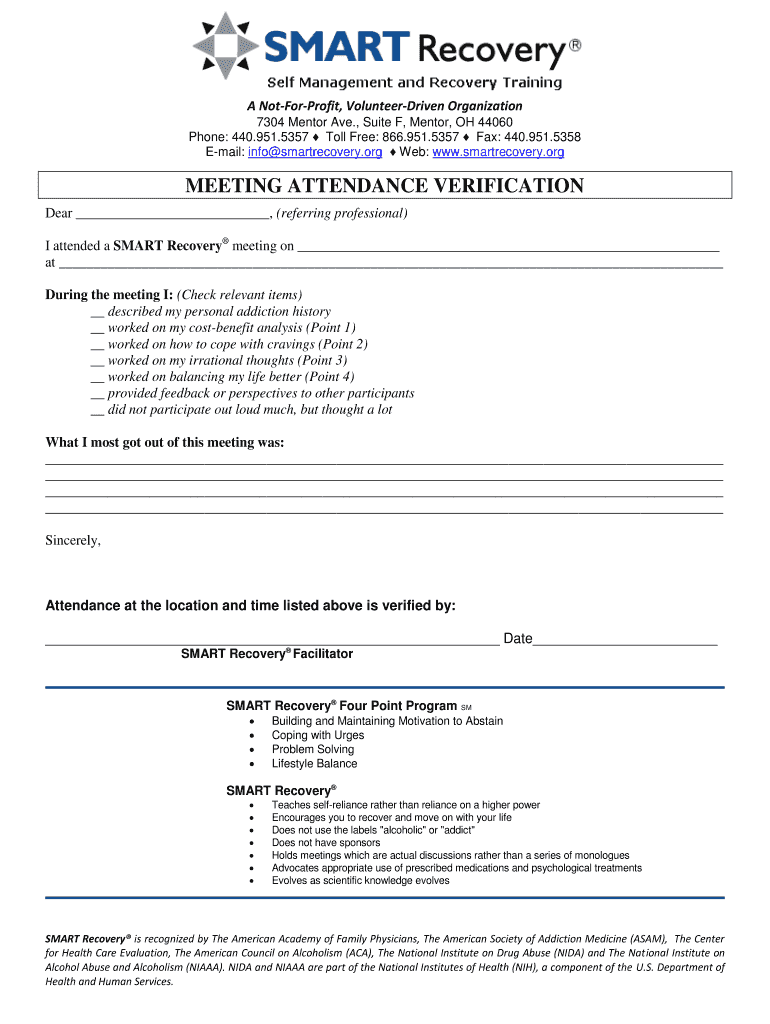
- Recovery Programs: Organizations such as SMART Recovery and Celebrate Recovery utilize meeting verifications to ensure participants meet requirements for engagement and accountability within the program.
- Medical and Health Records: Healthcare providers may leverage attendance verification for documenting participation in wellness workshops or support groups, which may affect insurance claims or legal documentation.
These examples illustrate how meeting verification serves a crucial role in various environments, helping to validate attendance for diverse purposes.