




01. Edit your submittal cover sheet online
Type text, add images, blackout confidential details, add comments, highlights and more.

Type text, add images, blackout confidential details, add comments, highlights and more.

Draw your signature, type it, upload its image, or use your mobile device as a signature pad.

Send submittal cover sheet template via email, link, or fax. You can also download it, export it or print it out.
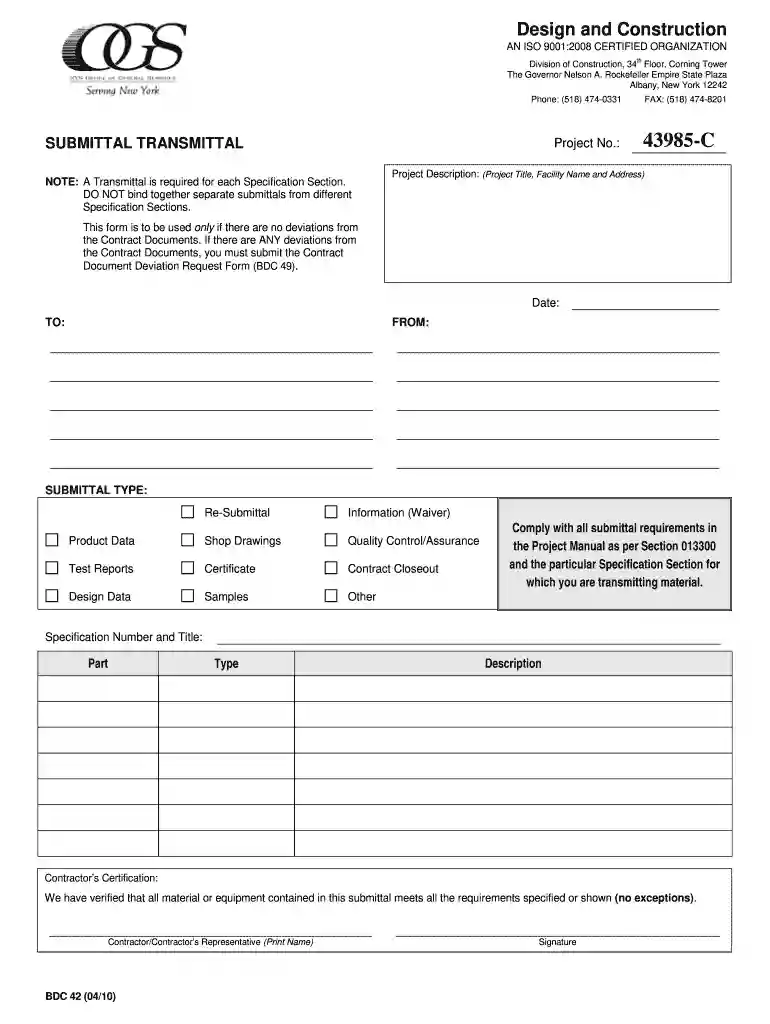
A submittal transmittal template is a vital document in construction and project management, facilitating the systematic submission of materials, documents, and project-related information to stakeholders, such as architects, engineers, and contractors. This template serves as a cover sheet, summarizing all the relevant details associated with the documents being submitted. The primary purpose is to ensure that all required materials adhere to contract specifications and regulatory compliance, thereby streamlining the review process.
The submittal transmittal may also provide critical data points, including:
In construction projects, proper usage of a submittal transmittal template helps maintain transparency and accountability, helping all parties understand what has been submitted and its current status in the review process.
Using a submittal transmittal template effectively requires adhering to a structured approach that maximizes clarity and communication among stakeholders. Follow these steps to ensure successful submissions:
This process establishes a clear line of communication and documentation between project stakeholders, thereby enhancing project efficiency and compliance.
Understanding the key elements of a submittal transmittal template is essential for effective document management within construction projects. Important components include:
These elements contribute to a well-organized submission that can minimize misunderstandings and facilitate a smoother review process.
The application of a submittal transmittal template varies depending on the specific needs of a project or scenario. Several common use cases illustrate its importance:
Each of these scenarios highlights how a submittal transmittal template enhances communication and documentation integrity in construction workflows, leading to better project outcomes.
The submittal transmittal template is widely utilized by a variety of stakeholders in the construction and project management sectors. Key users include:
The template serves as a conduit for effective communication amongst these diverse groups, ensuring that all necessary compliance documentation is shared and acknowledged.


Understanding the terminology surrounding the submittal transmittal template aids in mastering its usage. Key terms include:
Familiarity with these terms enables effective communication and understanding among all parties involved in the construction process.
We've got more versions of the submittal cover sheet form. Select the right submittal cover sheet version from the list and start editing it straight away!
| Versions | Form popularity | Fillable & printable |
|---|---|---|
| 2010 | 4.9 Satisfied (496 Votes) |
At DocHub, your data security is our priority. We follow HIPAA, SOC2, GDPR, and other standards, so you can work on your documents with confidence.
GENERAL SUBMITTAL TRANSMITTAL FORM. Please fill in all information as completely as possible. One submittal type per form. Highlighted areas areRead more
SUBMITTAL NO.: To: Facilities Planning Appendix 17.2b - Transmittal of Submittals Template.Read more
Complete the Document Review Status box below and then return original submittal and Submittal Transmittal Form to Construction DMC.Read more


