




01. Edit your dental referral form template word online
Type text, add images, blackout confidential details, add comments, highlights and more.

Type text, add images, blackout confidential details, add comments, highlights and more.

Draw your signature, type it, upload its image, or use your mobile device as a signature pad.

Send dental referral form sample via email, link, or fax. You can also download it, export it or print it out.
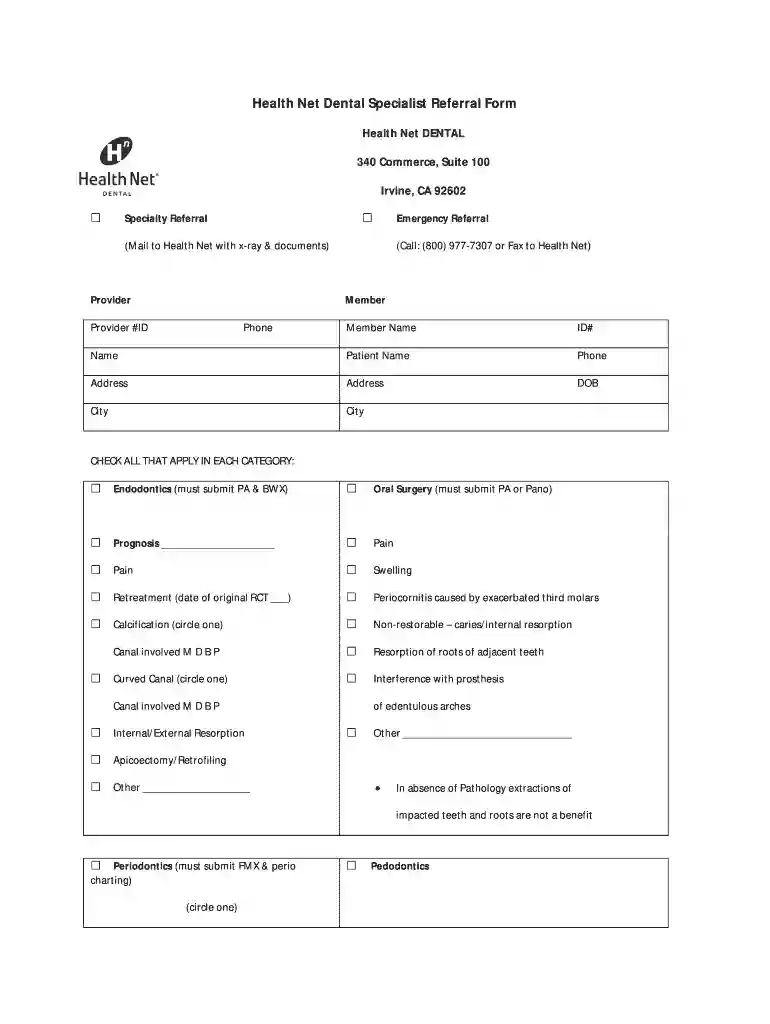
A dental referral form is a formal document used by dental practitioners to recommend patients to specialists for further evaluation and treatment. This form includes essential details such as the referring dentist’s information, the patient’s information, the reason for the referral, and any relevant medical history. The primary purpose of this document is to ensure that the patient receives the appropriate care tailored to their specific dental needs.
In the context of a dental practice, the referral form serves as a communication tool between general dentists and specialists, such as orthodontists, periodontists, or oral surgeons. By documenting the circumstances leading to the referral, the form helps establish a clear understanding of the patient's condition. A properly completed dental referral form aids in promoting continuity of care and enhances the overall patient experience during treatment transitions.
A well-structured dental referral form includes several critical elements to ensure effective communication between the referring dentist and the specialist. Understanding these components can facilitate the referral process and significantly improve patient outcomes.
Referring Dentist Information: This section captures the name, contact information, and practice details of the referring dentist. Having accurate contact details is essential for timely follow-up and coordination of care.
Patient Information: Basic demographic details, including the patient’s name, date of birth, and insurance information, are included here. This ensures the specialist has all necessary data to facilitate treatment.
Reason for Referral: This part outlines the specific dental issue or condition prompting the referral. Detailed descriptions help specialists understand the issue's complexity and urgency.
Relevant Medical History: Including the patient's existing medical conditions, medications, and previous treatments can provide context that may influence the specialist's approach to care.
Supporting Documents: The form may also require the submission of additional documentation like x-rays or treatment notes. This aids specialists in making informed decisions regarding the patient's care.
By encompassing these elements, the dental referral form acts as a comprehensive tool that enhances coordination among dental professionals.
Completing a dental referral form accurately is fundamental for ensuring that specialists understand the patient's needs. Here is a step-by-step guide outlining the process:
Gather Patient Information: Start by collecting all pertinent details regarding the patient. This includes their full name, contact information, and any relevant insurance data.
Assess the Reasons for Referral: Clearly define why the referral is necessary. Document any symptoms or conditions that need the specialist’s attention.
Document Medical History: Include any relevant medical history that the specialist should be aware of. This can include allergies, chronic conditions, and other treatments being undertaken.
Attach Supporting Documentation: If required, include necessary x-rays, treatment plans, or progress notes. These documents provide critical information for the specialist.
Review and Submit: Once the form is filled out, review all entries for accuracy before submitting it. Checks for completeness help prevent delays in patient care.
Following these steps can streamline the referral process and ensure that all essential information is communicated effectively.
The dental referral form holds legal significance in documenting patient relationships and treatment protocols. Legally, it is essential for several reasons:
Patient Consent and Privacy: The form must comply with HIPAA (Health Insurance Portability and Accountability Act) regulations to ensure the patient’s health information is kept confidential and secure. Obtaining patient consent before sharing their information with a specialist is crucial.
Care Documentation: The referral serves as a formal record of the intended treatment path for the patient. This record can be invaluable in the event of disputes or audits.
Billing and Insurance Verification: Many insurance providers require proper documentation of referrals to authorize specialist visits. A correctly formatted and detailed referral form can simplify this process.
Understanding the legal implications of the referral form emphasizes its critical role in protecting both the patient and the dental professionals involved.
The dental referral form is predominantly utilized by various dental professionals and office staff. Identifying the primary users helps clarify roles within the referral process:
General Dentists: They often initiate referrals to specialists when specific treatments fall outside their scope of practice, such as complex oral surgeries or specialized orthodontic care.
Dental Specialists: Upon receiving a referral, specialists use the form to understand the patient's needs better and plan their approach to treatment.
Dental Assistants and Office Managers: Administrative staff frequently handle the logistical aspect of referrals, ensuring that forms are accurately completed, submitted, and processed efficiently.
Insurance Providers: Insurance companies often require documentation of referrals to approve coverage for specialist visits.
These varied users highlight the collaborative nature of dental care and the importance of clear communication facilitated by the referral form.


Using a dental referral form effectively can be illustrated through practical examples in various scenarios:
Orthodontic Referrals: A general dentist may complete a dental referral form for a patient needing braces due to misalignment. The referring dentist documents the patient's dental history and the specific issues observed, enhancing the orthodontist's ability to devise a treatment plan.
Oral Surgery Referrals: When a patient requires wisdom teeth extraction, the dentist utilizes the referral form to communicate critical details, such as imaging results and the patient’s medical history. This ensures the oral surgeon is well-informed prior to treatment.
Periodontal Referrals: A patient exhibiting signs of gum disease may be referred to a periodontist. The referral form details the extent of the disease and previous treatments, providing the specialist with a comprehensive view of the patient’s oral health.
Through these examples, the importance of detailed and effective referrals in ensuring quality dental care becomes evident. Each scenario showcases how the referral form enhances understanding and communication between different dental professionals.
We've got more versions of the dental referral form template word form. Select the right dental referral form template word version from the list and start editing it straight away!
| Versions | Form popularity | Fillable & printable |
|---|---|---|
| 2011 | 4 Satisfied (26 Votes) |
At DocHub, your data security is our priority. We follow HIPAA, SOC2, GDPR, and other standards, so you can work on your documents with confidence.
Maryland Uniform Dental Consultation Referral Form. Date of Referral: Patient Information: Carrier Information: Name: (Last, First, MI). Name: Date of BirthRead more
We have consolidated links and information for many of the services and referral forms used by our community partners.Read more
New Mexico Insurance Code and New Mexico Administrative Code set forth the requirements for licensees, insurers and insurance products in the State of New.Read more


