
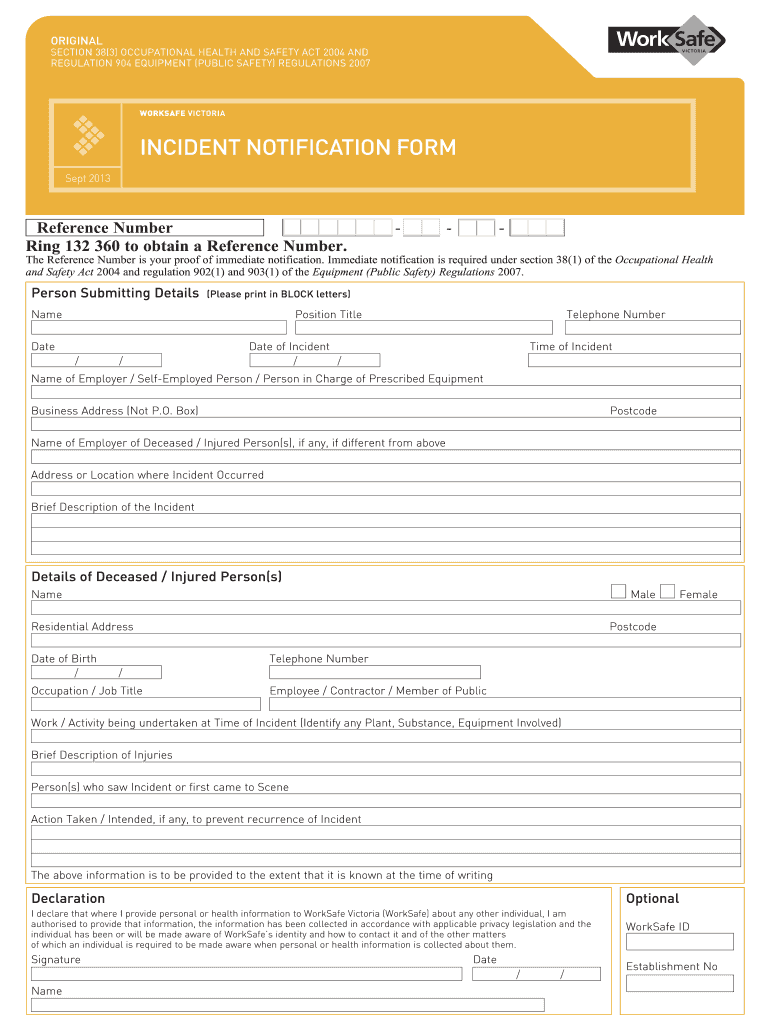







Definition and Meaning of the Incident Notification Form
The Incident Notification Form from WorkSafe Victoria serves a crucial role in the workplace safety framework, allowing for the formal reporting of workplace incidents as outlined by the Occupational Health and Safety Act 2004. This form encapsulates the specific details of incidents that must be reported to the relevant authorities to ensure compliance with state regulations regarding occupational health and safety.
Purpose of the Form
The primary purpose of the Incident Notification Form is to document workplace incidents effectively. It serves as the official record for both employers and employees when reporting any serious workplace accidents, injuries, or unsafe conditions.
- Assists in regulatory compliance and reporting requirements.
- Provides data useful for improving workplace safety protocols.
- Ensures legal obligations are met, protecting both employees and the employer.
Importance in Incident Management
An accurate and timely response to workplace incidents is vital for protecting employee welfare. The Incident Notification Form is a foundational component in this process, allowing organizations to:
- Investigate incidents promptly.
- Implement corrective actions to prevent recurrence.
- Enhance overall workplace safety culture.
How to Use the Incident Notification Form
Using the Incident Notification Form effectively involves understanding its structure and intended use within the reporting framework.
Step-by-Step Usage
- Identify the Incident: Recognize the need to report an incident based on severity or harm caused.
- Gather Required Information: Collect all necessary details, including personal information of the reporter, specifics of the incident, and any injuries sustained.
- Complete the Form: Accurately fill out all sections of the form, ensuring clarity and completeness.
- Submit the Form: Send the completed form to the designated WorkSafe authority within the required timeframe—typically within 48 hours for serious incidents.
Best Practices
- Ensure all relevant stakeholders have access to the form.
- Train employees on how to report incidents using the form.
- Maintain copies for internal records and audits.
Key Elements of the Incident Notification Form
A well-structured Incident Notification Form contains several critical components that need careful completion.
Required Information Sections
- Reporter’s Details: Name, position, and contact information of the person submitting the report.
- Incident Description: A detailed account of what occurred, including dates, times, and locations.
- Injuries Reported: Document any injuries sustained, noting the severity and any immediate first aid measures taken.
- Witness Information: Names and contact details of any individuals who were present during the incident.
Timeliness and Accuracy
Reporting is time-sensitive, particularly for serious incidents that require immediate notification. The accuracy of information is paramount, as discrepancies can affect investigations and subsequent safety measures.
Examples of Using the Incident Notification Form
Practical examples illustrate when and how to leverage the Incident Notification Form effectively.
Workplace Scenarios
- Slip and Fall Accidents: An employee slips on a wet floor and sustains an injury. The Incident Notification Form would document the circumstances leading to the fall, including maintenance records and safety protocols in place at the time.
- Equipment Malfunction: A piece of machinery fails, causing an employee to be injured. Reporting the incident via the form would include details about the equipment, maintenance history, and injuries sustained.
- Exposure to Hazardous Materials: If an employee is exposed to chemicals without proper personal protective equipment (PPE), the form should capture details about the incident, including the nature of the exposure and reported health effects.
Importance of Examples
Utilizing real-world scenarios helps clarify the expectations associated with completing the form and reinforces the significance of timely reporting.
Legal Use of the Incident Notification Form
The legal implications of using the Incident Notification Form are significant for both employers and employees.
Compliance and Accountability
Submitting the form is often a requirement under local laws. Failure to comply can result in:
- Legal penalties for the employer, including fines or sanctions.
- Liability for any injuries incurred due to negligence in reporting.
Record Keeping and Evidence
Maintaining thorough records of submitted forms can serve as crucial evidence in case of disputes or legal proceedings.
- The form can substantiate safety measures taken after an incident.
- It helps establish a pattern of response to workplace hazards, which can influence regulatory scrutiny.
Steps to Complete the Incident Notification Form
Completing the Incident Notification Form requires careful attention to detail to ensure all critical aspects are addressed.
Process Overview
- Initiate the Form: Choose the appropriate version of the form, either a digital or paper format.
- Provide Incident Details: Fill in the date, time, and location of the incident. Provide an exhaustive account of the events leading to the incident.
- Detail Injuries or Risks: Note any injuries and specify if medical attention was sought.
- Review and Submit: Double-check all entries for accuracy and completeness before submission. Ensure the form is forwarded to the designated authority promptly.
Importance of Thoroughness
Thoroughly completed forms minimize backtracking and misunderstandings during the investigation process, facilitating quicker resolutions to workplace safety concerns.
Important Terms Related to the Incident Notification Form
Familiarity with the terminology associated with the Incident Notification Form can aid understanding and compliance.
Key Terminology
- Notifiable Incidents: Incidents that meet specific criteria mandating reporting to local authorities.
- WorkSafe: The governing body responsible for occupational health and safety regulations in Victoria.
- OSHA Compliance: Regulations that mirror the requirements outlined by the Occupational Safety and Health Administration at the federal level in the United States.
Terminology Applications
Understanding these terms can clarify responsibilities and legal obligations associated with workplace incidents. They can serve as a reference point for employees to understand the gravity of certain incidents and the necessity for timely action.
This structured approach to understanding and utilizing the Incident Notification Form facilitates compliance with occupational health and safety laws while enhancing overall workplace safety.




