





Understanding Back Charge Letters in Construction
A back charge letter is critical in the construction industry, serving as a formal communication from a contractor or subcontractor that outlines additional costs incurred due to various circumstances, such as defective work or delays. This section provides a comprehensive view of what a back charge letter entails, its purpose, and how to effectively draft one.
Definition and Purpose of a Back Charge Letter
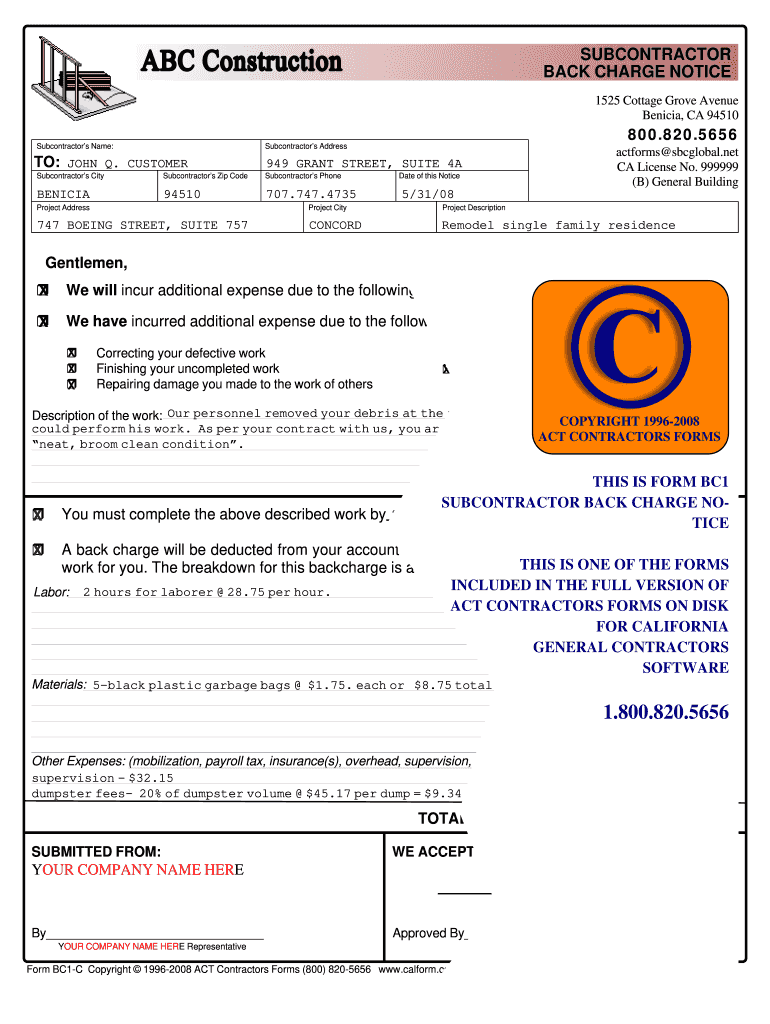
A back charge letter documents expenses that one party incurs due to deficiencies in work performed by another party. These letters are essential for ensuring clear communication about additional costs and responsibilities. Common reasons for issuing a back charge include:
- Defective Work: Work that does not meet the contract specifications.
- Delays: Costs incurred due to delays caused by another party.
- Cleanup: Expenses related to cleanup that is the responsibility of the other party.
The primary purpose of a back charge letter is to formally request reimbursement or adjustment for these charges, maintaining accountability in contractual obligations.
Structuring a Back Charge Letter
When drafting a back charge letter, it is vital to include specific elements to ensure clarity and legal enforceability:
- Date: The date the letter is issued.
- Contractor and Subcontractor Information: Names and contact details of both parties.
- Description of Work: A clear description of the defective or incomplete work.
- Breakdown of Charges: A detailed breakdown of costs, including labor, materials, and other expenses.
- Deadline for Payment: A clear due date for the payment to avoid further charges.
Each of these components plays a vital role in conveying the seriousness of the issue and the necessity for prompt resolution.
Sample Breakdown of Costs in a Back Charge
A well-prepared back charge letter should include a thorough breakdown of all incurred costs. This breakdown can enhance the letter's effectiveness by providing transparency. For example:
- Labor Costs: $30.00
- Materials: $15.00
- Cleanup Expenses: $8.94
- Total Charges: $53.94
Providing such details ensures all parties are on the same page regarding financial implications and can help resolve disputes more efficiently.
Legal Considerations in Back Charge Letters
Understanding the legal framework surrounding back charge letters is crucial:
- Contractual Obligations: Review the terms established in the contract. Ensure that the grounds for the back charge are valid according to the contract’s stipulations.
- Notification Requirements: Many contracts might specify a time frame within which the back charge must be communicated.
- Documentation: Keep comprehensive records of all correspondence and evidence related to the back charge to support your claim if disputes arise.
Confirming that your back charge letter aligns with the legal terms in the original contract can protect against potential disputes.
Examples and Scenarios for Effective Usage
Consider two scenarios where back charge letters may be necessary:
- Defective Work: A subcontractor fails to properly install plumbing, which leads to water damage. The contractor issues a back charge letter detailing the costs incurred for repairs and remedial work.
- Delay in Completion: A subcontractor delays the roofing installation, which results in the contractor losing time and incurring additional labor costs on other projects. The contractor issues a back charge letter stating the incurred costs to mitigate the delay.
Both examples illustrate the significance of timely documentation and communication regarding additional charges incurred due to another party’s actions.
Conclusion
A sample back charge letter to contractor must be precise, well-structured, and comprehensive. By incorporating these elements, contractors can effectively communicate issues while documenting incurred costs. Properly drafting a back charge letter not only facilitates prompt resolutions but also reinforces accountability within the construction process. Understanding the nuances of back charge letters can mitigate risks and foster clearer communication in contract management.