
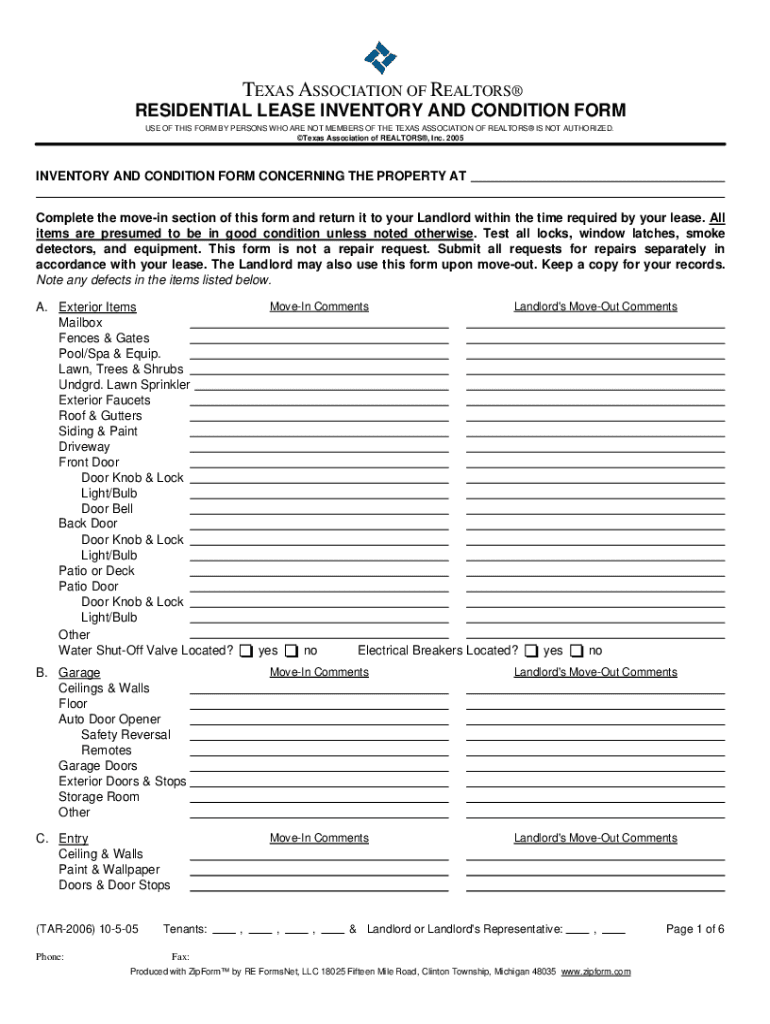







Overview of the Residential Lease Inventory and Condition Form
The Residential Lease Inventory and Condition Form serves as a vital document for tenants and landlords during the rental process in Texas. This form is designed to assess the current state of a rental property and document any pre-existing issues before the lease is signed. This ensures that both parties have a clear understanding of the property's condition, and it protects the rights and responsibilities of both tenants and landlords.
Purpose of the Form
- Establishes a baseline condition for the property at the time of move-in.
- Documents any defects or issues noted by the tenant.
- Provides a reference for the property’s condition upon move-out, which can help in resolving disputes regarding security deposits.
Key Features of the Form
The form typically includes sections for evaluating various areas of the rental property. Key areas covered in the form are:
- Exterior Items: Assess condition and appearance of the exterior areas, including landscaping, walkways, and building structure.
- Rooms: Specific checklists for each room including the kitchen, bedrooms, bathrooms, and living areas.
- Utilities: Documentation of the functionality of major appliances and utilities, such as heating, cooling, and plumbing fixtures.
Completing the Residential Lease Inventory and Condition Form
Completing the Residential Lease Inventory and Condition Form involves several critical steps that ensure its effectiveness as a binding agreement. Accuracy is crucial, as this document serves as a protective tool for both tenants and landlords.
Steps to Fill Out the Form
-
Initial Inspection:
- Walk through the property thoroughly to inspect each area.
- Pay close attention to details, noting any damages, stains, or defects.
-
Document Condition:
- In each relevant section of the form, specify the condition of the item or area, categorizing findings as "Good," "Fair," or "Poor."
- Use additional comments where necessary to provide specific details about issues noticed.
-
Sign and Submit:
- Once completed, the tenant should sign the form and provide a copy to the landlord.
- It is advisable for the tenant to keep a copy for their records as evidence.
Example of Common Issues Documented
- Kitchen Appliances: If a refrigerator does not cool adequately, note "Refrigerator – Fair (not cooling properly)."
- Bathroom Fixtures: Document issues like "Toilet – Poor (leaking at base)."
Timeframe for Submission
After completing the form, tenants typically have a specified period (often within seven days of moving in) to submit it to their landlords. Adhering to this timeframe is essential to protect the tenant's interests.
Importance of the Inventory and Condition Form
The necessity of the Residential Lease Inventory and Condition Form extends beyond mere completion; it plays a significant role in rental agreements.
Benefits of Utilizing the Form
- Clarity: It provides clear documentation of the property's state, which is crucial in discussions about security deposits and repairs.
- Legal Protection: Having formal documentation can mitigate disputes related to property damages, ensuring that both parties are held accountable for the state of the property during the lease term.
- Transparency: It encourages open communication between landlords and tenants regarding property conditions, fostering a better landlord-tenant relationship.
Legal Considerations
The use of this form is often mandated by state law, and failure to use such documentation can lead to legal vulnerabilities. Both tenants and landlords are encouraged to familiarize themselves with legal obligations regarding the inventory and condition form under Texas law.
Obtaining the Form
The Residential Lease Inventory and Condition Form can typically be obtained through various channels:
Sources for Acquisition
- Texas Association of Realtors: This organization provides a standard version of the document that is widely accepted.
- Real Estate Agents: Many realtors will have these forms available as part of their services.
- Online: Various legal document websites provide downloadable versions of the form that can be printed and filled out as needed.
Who Uses the Residential Lease Inventory and Condition Form?
This document is utilized primarily by:
- Tenants: To protect themselves against unwanted deductions from their security deposit based on pre-existing damage.
- Landlords: To maintain a record of the property's condition upon tenant move-in, ensuring clarity and accountability throughout the lease term.
Typical Users Include:
- Individual landlords managing their properties.
- Property management companies that oversee multiple rental units.
- Real estate professionals involved in leasing processes.
Understanding Key Terms Related to the Form
Familiarizing oneself with terminology related to the Residential Lease Inventory and Condition Form is beneficial for all parties involved.
Important Terms Defined
- Wear and Tear: Normal deterioration that occurs over time with the use of the rental property. This distinction is essential for assessing potential damages versus expected aging.
- Security Deposit: A sum paid by the tenant to cover potential damages; the condition form helps determine the amount that may be withheld based on property state upon move-out.
- Lease Agreement: The contract governing the rental relationship, often referencing the inventory form as part of the overall terms.
Studying Definitions of Common Issues
- Pre-existing Condition: An issue present before the tenant's lease began, essential for accurate record-keeping.
- Repair Responsibilities: Understanding who is responsible for fixing issues during tenancy.
This comprehensive guide will aid in utilizing the Residential Lease Inventory and Condition Form effectively, empowering tenants and landlords to maintain transparency and accountability throughout the rental experience in Texas.




