




01. Edit your form online
Type text, add images, blackout confidential details, add comments, highlights and more.

Type text, add images, blackout confidential details, add comments, highlights and more.

Draw your signature, type it, upload its image, or use your mobile device as a signature pad.

Send it via email, link, or fax. You can also download it, export it or print it out.
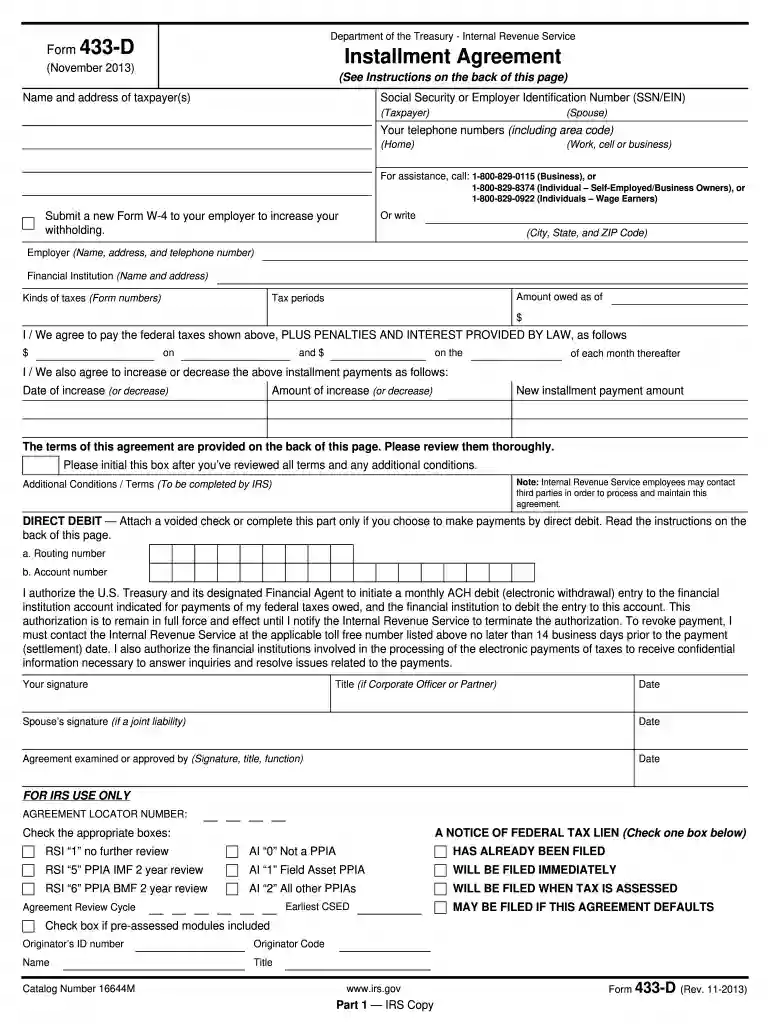
Form 433-D, also known as the Installment Agreement, is issued by the Internal Revenue Service (IRS) to facilitate a structured plan for taxpayers to pay off their federal tax liabilities over time. This form serves as a contractual agreement between the IRS and an individual or business, allowing the taxpayer to meet their tax obligations in manageable payments instead of a lump sum. Key components of the form include taxpayer identification, agreed payment amounts, and terms for direct debit payments, which streamline the process of fulfilling tax duties without financial strain.
Utilizing the 433-D form effectively requires understanding its structure and completing it accurately. Taxpayers should:
Filling out Form 433-D involves several detailed steps:
Understanding the features of Form 433-D is crucial for effective handling:
Form 433-D is a legally binding document. It obligates the taxpayer to adhere to the terms agreed upon, and the IRS to not pursue collection activities as long as the terms are met. Failure to comply can result in penalties, interest accrual, or immediate collection actions. It's critical to understand all terms before signing, as adjustments may be required if financial circumstances change.
The IRS provides explicit directions for the use of Form 433-D. These include instructions on how to complete the form, submission deadlines, and scenarios that justify its use. These guidelines ensure both parties understand the responsibilities and conditions of the installment agreement, helping prevent future misunderstandings.
Non-compliance with the 433-D Installment Agreement can result in severe repercussions. Penalties may include additional fees, accrued interest, and immediate enforcement of collection procedures by the IRS. Consistently failing to meet payments can void the agreement, leading to the full outstanding amount becoming due.
Form 433-D is available in both digital and paper formats:
Several scenarios warrant the use of Form 433-D:


When preparing Form 433-D, taxpayers need supporting documents:
To qualify for a 433-D Installment Agreement, taxpayers must meet specific criteria:

Individuals and small business entities with existing federal tax liabilities most commonly use Form 433-D to manage and schedule their payment to the IRS. This form is particularly advantageous for those facing temporary financial challenges who need to spread payments over time without incurring penalties.

Understanding specific terminology related to the form is vital:
By integrating this comprehensive understanding of Form 433-D, taxpayers can effectively manage their federal tax obligations while minimizing financial stress.
We've got more versions of the 433 d printable 2013 form form. Select the right 433 d printable 2013 form version from the list and start editing it straight away!
| Versions | Form popularity | Fillable & printable |
|---|---|---|
| 2024 | 4.9 Satisfied (54 Votes) | |
| 2022 | 4.8 Satisfied (43 Votes) | |
| 2020 | 4.8 Satisfied (53 Votes) | |
| 2018 | 4.4 Satisfied (134 Votes) | |
| 2017 | 4.4 Satisfied (469 Votes) | |
| 2015 | 4.2 Satisfied (56 Votes) | |
| 2013 | 4.3 Satisfied (50 Votes) | |
| 2012 | 4 Satisfied (42 Votes) | |
| 2010 | 4 Satisfied (40 Votes) | |
| 2007 | 4 Satisfied (32 Votes) |
At DocHub, your data security is our priority. We follow HIPAA, SOC2, GDPR, and other standards, so you can work on your documents with confidence.
The Manual is divided into sections stating Medi-Cal program requirements and regulatory/contractual standards to support you in providing high quality andRead more
Product Number Form 433-D Title Installment Agreement, Revision Date Jul 2024 ; Product Number Form 433-D (sp) Title Installment Agreement (Spanish version)Read more
Jan 5, 2026 This Court Forms page is only somewhat searchable. However if you have located a form number from this guide, you can find both a PDF and a WordRead more


