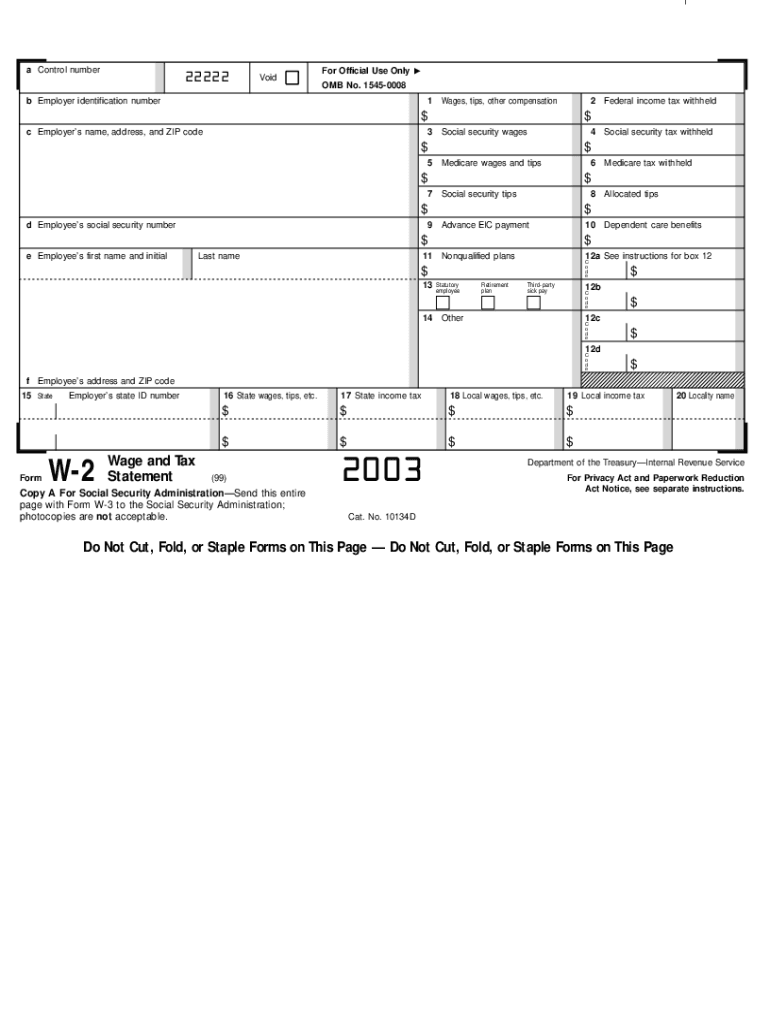







Definition and Meaning of the 2003 W-2 Form
The 2003 W-2 Form, known as the Wage and Tax Statement, is a critical document used by employers in the United States to report wages paid to employees and the taxes withheld during the year. This form is essential for both employers and employees in the process of filing annual tax returns. The W-2 Form provides detailed information about an employee’s earnings, specifically wages, tips, and other types of compensation. It also includes data on federal, state, and other income taxes withheld, as well as any contributions to social security and Medicare.
Key Elements of the 2003 W-2 Form
1. Employer and Employee Information
- Employer Information: Includes the employer's name, address, and Employer Identification Number (EIN).
- Employee Information: Contains the employee's name, address, and Social Security Number (SSN).
2. Income Details
- Wages, Tips, and Compensation: Displays the total taxable earnings for the year.
- Social Security and Medicare Wages: Separate fields that report earnings subject to social security and Medicare taxes.
3. Tax Withholdings
- Federal Income Tax Withheld: The total amount of federal income tax withheld from the employee's paycheck throughout the year.
- State and Local Tax Withheld: Amounts withheld for state and local taxes, if applicable.
IRS Guidelines
IRS guidelines for the W-2 Form are precise, emphasizing the need for accurate information reporting. Employers must ensure all data is correctly input into the appropriate boxes, each with its function. Completing the W-2 Form according to IRS standards is critical, as inaccuracies can lead to discrepancies in an employee's tax return, potentially triggering audits or penalties.
Steps to Complete the 2003 W-2 Form
- Collect Personal and Employment Data: Gather accurate information for both employer and employee to avoid errors.
- Report Earnings and Taxes: Input the employee's taxable wage details and taxes held throughout the fiscal year.
- Double-Check Entries: Carefully verify the data entered to ensure there are no mistakes, as errors can lead to significant implications.
- Distribute Copies: Employers must provide multiple copies to employees, which they need for federal and state tax purposes.
Who Issues the 2003 W-2 Form
Employers are responsible for issuing the W-2 Form. They must create and distribute these forms to all employees who are subject to income tax withholding or social security and Medicare taxes. Each form must be filed with the Social Security Administration (SSA) and a copy must be provided to each employee by the deadline established for the tax year.
Filing Deadlines and Important Dates
W-2 Forms for the 2003 tax year were required to be submitted by January 31, 2004. Employers needed to ensure all forms were delivered to employees by this date to provide ample time for individuals to complete their tax returns by the April 15 filing deadline. Completing and submitting forms on time both to the SSA and employees is imperative to comply with federal regulations.
Penalties for Non-Compliance
Failure to comply with the deadlines or inaccuracies in the W-2 Form can result in penalties. These penalties can include fines for late filing, omissions, or incorrect data input. Employers must understand these consequences to maintain compliance and prevent legal complications.
Digital vs. Paper Version of the 2003 W-2 Form
The digital version of the W-2 Form offers several advantages, including easier data management and reduced risk of errors through software compatibility with tax filing platforms like TurboTax and QuickBooks. Conversely, paper versions still hold relevance, particularly for those who prefer manual record-keeping or face limited access to digital resources. Both forms are legally valid, but the choice depends on the employer's and employee's preferences and resources.