
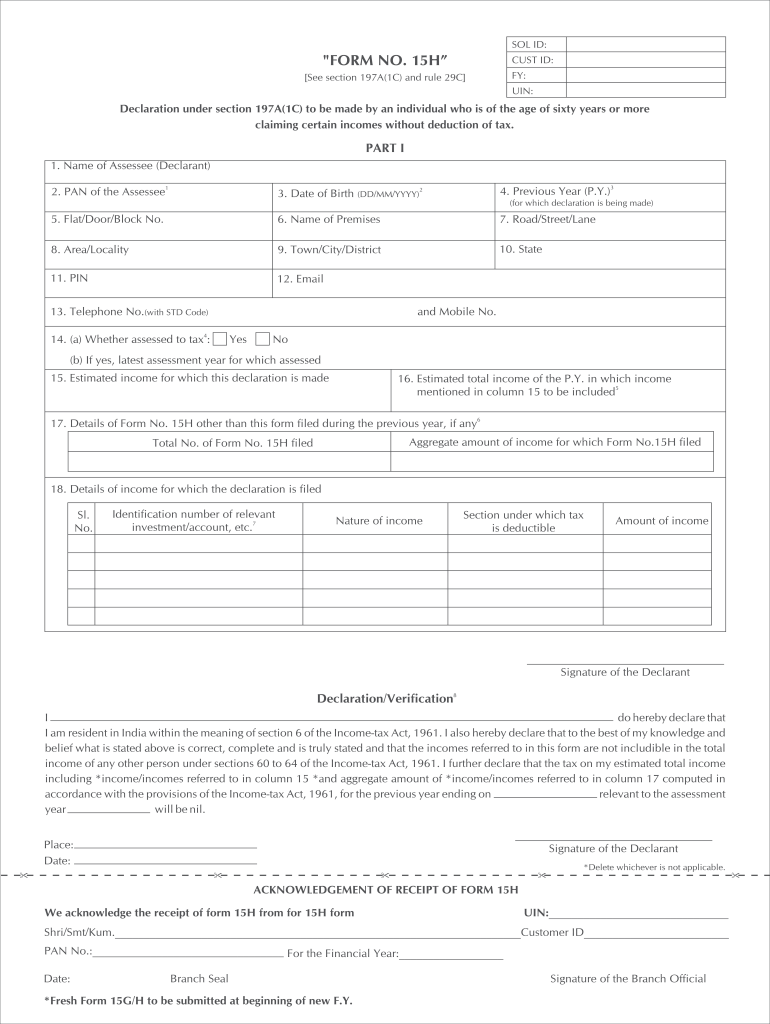







Definition and Purpose of Form 15G
Form 15G is designed for individuals, particularly those who are senior citizens or individuals with low income, to ensure that the income they receive remains tax-free by preventing tax deduction at source. This form is applicable for various income sources, including interest earned on fixed deposits, savings, and other financial instruments. By submitting Form 15G, individuals can declare their eligibility to receive income without tax deduction for the financial year, provided their total taxable income is below the prescribed threshold limit.
The main purpose of this form is to streamline the process of availing tax exemptions for eligible individuals and to facilitate smoother financial transactions without the burden of tax deductions at the source. It helps in easy tax management and compliance for those who meet the criteria, allowing them to retain more of their earnings.
How to Obtain Form 15G Download
The process for obtaining Form 15G is straightforward. You can download it from several reliable sources, including official bank websites and the Income Tax Department’s website. Here are the steps to ensure you obtain the correct version:
- Visit the Official Website: Access the Income Tax Department's website or trusted financial institutions that issue this form.
- Search for the Form: Look for the 'Downloads' or 'Forms' section. Many banks also provide direct access to the form on their websites under customer service or support sections.
- Select the Right Form: Ensure you are selecting Form 15G, as there may be other related forms like Form 15H.
- Download: Click the download link to retrieve the PDF file of Form 15G. Some websites may also offer a fillable PDF version for convenience.
- Check Validity: Confirm that the form's version is up to date, as tax regulations can change.
Once downloaded, you can directly fill in the details required or save the form for later use.
Steps to Complete Form 15G Download
Filling out Form 15G correctly is crucial to ensure your request for no tax deduction is processed smoothly. Follow these steps to complete the form accurately:
-
Personal Information:
- Provide your name, PAN (Permanent Account Number), and contact details. Ensure these details are accurate to avoid processing delays.
-
Income Details:
- Declare the expected income for the financial year. This must include the total income from all sources, such as interest, dividends, etc.
-
Confirmation of Eligibility:
- Confirm that your total taxable income is below the taxable threshold for the year, which typically varies based on age and income category.
-
Verification:
- The form usually requires a declaration that the information provided is true and accurate. Your signature is necessary to validate the document.
-
Submission:
- Submit the completed form to the financial institution or entity that will pay out the income. Keep a copy for your records.
This structured approach ensures that you meet all requirements and submit a complete form.
Important Elements of Form 15G
Form 15G consists of several critical fields that must be filled out to ensure it serves its intended purpose. Key elements include:
- Personal Details: This section requires your full name, date of birth, address, and PAN.
- Income Details: You must state the estimated income you expect to earn during the financial year, which includes the total from all sources of income.
- Signature: A declaration clause where you affirm that you meet the conditions for submitting the form and affix your signature.
- Verification Clause: This confirms that all information provided is accurate and true.
Accurate information in these elements is vital for approval and compliance with tax regulations.
IRS Guidelines for Form 15G
While Form 15G is primarily governed by local tax regulations, it must align with broader IRS guidelines concerning income declarations. Here are key points regarding IRS compliance:
- Applicable Tax Laws: IRS rules stipulate that individuals must report all income, thus highlighting the importance of accurately estimating total income in the form.
- Tax Thresholds: Ensure your income is below the annual taxable income limit set by the IRS to avoid unnecessary complications.
- Record Keeping: Maintain a copy of Form 15G and any related documents for your records. This plays a crucial role during tax filing season.
Awareness of IRS guidelines helps ensure compliance and avoids possible penalties that could arise if misreported.
Filing Deadlines and Important Dates
Adhering to the established deadlines is crucial when submitting Form 15G to avoid any penalties or tax deduction surprises. Here are important dates to remember:
- End of Financial Year: Form 15G typically must be submitted before the end of the financial year, which concludes on March 31st in the United States.
- Bank Submission Deadlines: Each financial institution may have its internal deadlines for receiving Form 15G, often set in advance of the financial year-end.
- Tax Filing Dates: Be aware of the overall tax filing deadlines laid out by the IRS, especially if you have additional income sources or forms to complete.
Staying informed of these critical dates ensures efficient management of your finances and avoids missed opportunities for tax benefits.
Important Terms Related to Form 15G
Understanding key terminology associated with Form 15G can significantly enhance your ability to navigate tax-related processes. Notable terms include:
- Tax Deducted at Source (TDS): This refers to the tax deducted by the payer before making the payment, which Form 15G aims to prevent for eligible individuals.
- PAN (Permanent Account Number): A unique ten-digit number assigned to taxpayers, essential for all financial transactions and forms.
- Exemption Limit: The threshold level of income, set by the IRS, below which no tax is payable. Form 15G can only be used if your income falls below this limit.
- Financial Institution: This includes banks or organizations that may require Form 15G for processing your financial transactions.
Being familiar with these terms aids in smooth interactions with financial institutions and tax authorities, enhancing compliance and easing navigation through the tax system.
Legal Use of Form 15G
The legal framework surrounding Form 15G allows its use to avoid tax at the source for eligible individuals. Here are significant aspects of its legal standing:
- Compliance with Tax Laws: Form 15G is compliant with the Income Tax Act, enabling tax exemptions legally for qualified income earners.
- Protection Against Penal Actions: Proper use and submission of Form 15G protect individuals from penalties that can arise due to improper deductions or underreporting of income.
- Validity for Claiming No TDS: When correctly filled out and submitted, Form 15G serves as legal proof of the tax exemption status, making it essential for income streams that fall below the taxable limit.
Awareness of the legal implications enhances the ability to use Form 15G effectively and safely within the regulatory framework.




