




Here's how it works
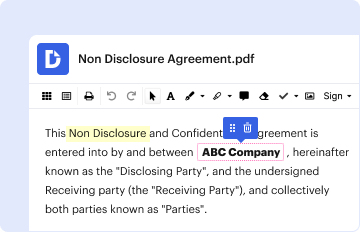
01. Edit your medical order for life sustaining treatment online
Type text, add images, blackout confidential details, add comments, highlights and more.
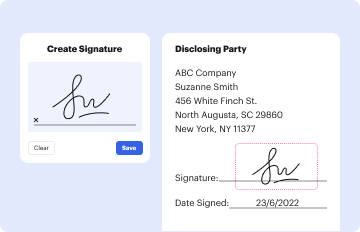
02. Sign it in a few clicks
Draw your signature, type it, upload its image, or use your mobile device as a signature pad.

03. Share your form with others
Send molst forms are only valid in the hospital and nursing home setting via email, link, or fax. You can also download it, export it or print it out.
How to use or fill out Patient Guide to Medical Orders for Life Sustaining Treatment with our platform

- Click ‘Get Form’ to open it in the editor.
- Begin by entering the patient's last name, first name, and middle initial along with their date of birth. Select the appropriate gender option.
- In Section 1, choose only one option regarding CPR status. Ensure that you understand the implications of each choice before making a selection.
- Proceed to Sections 2 through 9, filling out only those that apply. For each section, select one option that best reflects the patient's wishes regarding medical interventions.
- Once all applicable sections are completed, ensure that a physician or nurse practitioner signs and dates the form to validate it.
- Finally, distribute copies of the completed MOLST form to the patient or authorized decision maker within 48 hours.
Start using our platform today for free to complete your Patient Guide efficiently!
Fill out Patient Guide to Medical Orders for Life Sustaining Treatment ... online
It's free
It's free
See more Patient Guide to Medical Orders for Life Sustaining Treatment ... versions
We've got more versions of the Patient Guide to Medical Orders for Life Sustaining Treatment ... form. Select the right Patient Guide to Medical Orders for Life Sustaining Treatment ... version from the list and start editing it straight away!
Got questions?
We have answers to the most popular questions from our customers. If you can't find an answer to your question, please contact us.
Contact us
What is the difference between a POLST and a DNR order?
A POLST is more comprehensive than a Do Not Resuscitate order. A DNR is a stand-alone document that tells emergency medical personnel whether to perform CPR if your heart and breathing stop and you are unresponsive. A POLST includes your instructions about whether or not to perform CPR, but it doesnt stop there.
Can I download a POLST form?
National POLST Model Form A copy of this publication may be downloaded, stored, or printed for personal use only; all other uses require written permission.
How does a physician order for life-sustaining treatment (POLST) differ from a traditional advance directive?
However, POLSTs do not appoint someone to speak on your behalf (surrogate or health care agent) which Advance Directives generally do. In a POLST, you specify exactly what you want and dont want and for how long. They have the force of medical orders and must be honored by emergency medical technicians (EMTs).
What is the difference between a POLST and a MOLST?
POLST or POST (physician/provider orders for life-sustaining treatment). MOLST (medical orders for life-sustaining treatment). COLST (clinician orders for life-sustaining treatment). MOST (medical order for scope of treatment).
What is the difference between POLST and MOLST?
MOLST and POLST are two acronyms defining medical orders. The MOLST is the Medical Orders for Life-Sustaining Treatment and the POLST is the Physician Orders for Life-Sustaining Treatment. Theyre both the same thing, but in different states they call them by those two different names.
Security and compliance
At DocHub, your data security is our priority. We follow HIPAA, SOC2, GDPR, and other standards, so you can work on your documents with confidence.
Learn more


People also ask
What is the physician orders for life-sustaining treatment?
The Physician Orders for Life‑Sustaining Treatment (POLST) is a physicians order that outlines a plan for end of life care reflecting both a patients preferences and a physicians judgment based on a medical evaluation.