



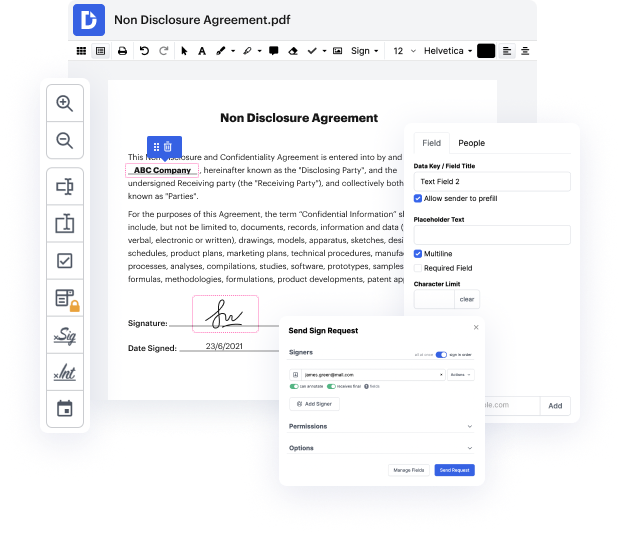
Document-centered workflows can consume a lot of your time, no matter if you do them regularly or only occasionally. It doesn’t have to be. The truth is, it’s so easy to inject your workflows with extra efficiency and structure if you engage the right solution - DocHub. Advanced enough to tackle any document-related task, our platform lets you alter text, pictures, comments, collaborate on documents with other parties, generate fillable forms from scratch or web templates, and digitally sign them. We even shield your data with industry-leading security and data protection certifications.
You can access DocHub instruments from any location or device. Enjoy spending more time on creative and strategic tasks, and forget about cumbersome editing. Give DocHub a try right now and see your Indemnity Agreement workflow transform!


When surety bonds are issued, they are assumed to carry zero risk for the surety company who writes them. The surety bond itself outlines the terms of the agreement between the principal, the surety company, and the obligee, including the amount that the surety will pay out on the behalf of the principal if a claim is filed against the bond. However, the bond form typically does not include language about the principals reimbursement to the surety. So how does the surety company confidently issue a surety bond while assuming they will suffer zero loss? This is the importance of an indemnity agreement. What is an indemnity agreement? An indemnity agreement is a two-party contract used by surety companies to transfer risk from one party to another. In a surety bond indemnity agreement, the party that is assuming the risk is the indemnitor, or principal, while the other party being absolved of liability is the indemnity, or the surety company. For the purpose of surety bonds, the agre