
Rewrite Text Contracts in Linux in no time
Aug 6th, 2022

0
forms filled out

0
forms signed

0
forms sent
01. Upload a document from your computer or cloud storage.
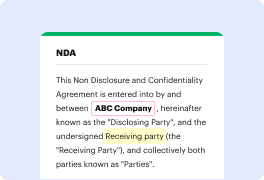
02. Add text, images, drawings, shapes, and more.
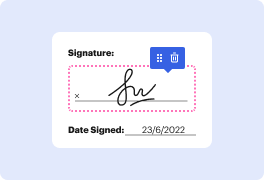
03. Sign your document online in a few clicks.

04. Send, export, fax, download, or print out your document.
How to Rewrite Text Contracts in Linux with DocHub
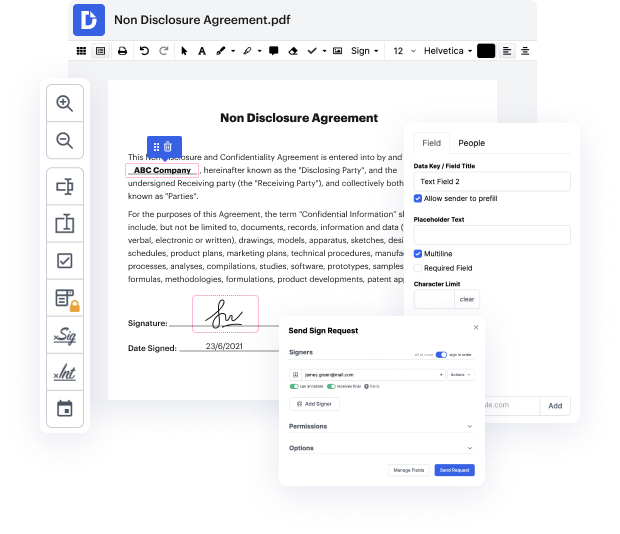
In today's digital age, managing your documents effectively is essential, and our platform offers a streamlined approach to editing, signing, and distributing contracts. Whether you're using the latest iOS 17 or planning to upgrade to iOS 19, our online editor allows you to rewrite text contracts in Linux effortlessly. With deep integration into Google Workspace, you can import, modify, and manage your documents for free, ensuring a seamless workflow.
Follow the steps to rewrite text contracts in Linux
- Open the website of our platform and log in to your account.
- Upload the text contract you wish to rewrite by selecting the import option.
- Once the document is loaded, use the editing tools to modify the text as needed. You can highlight sections, add comments, or make direct changes.
- After making the necessary edits, review your changes to ensure everything is accurate.
- Finally, download the rewritten contract, print it directly, or share it via email using the sharing options available.
Start rewriting your text contracts in Linux today with our powerful document management platform!
PDF editing simplified with DocHub

Seamless PDF editing
Editing a PDF is as simple as working in a Word document. You can add text, drawings, highlights, and redact or annotate your document without affecting its quality. No rasterized text or removed fields. Use an online PDF editor to get your perfect document in minutes.

Smooth teamwork
Collaborate on documents with your team using a desktop or mobile device. Let others view, edit, comment on, and sign your documents online. You can also make your form public and share its URL anywhere.

Automatic saving
Every change you make in a document is automatically saved to the cloud and synchronized across all devices in real-time. No need to send new versions of a document or worry about losing information.

Google integrations
DocHub integrates with Google Workspace so you can import, edit, and sign your documents directly from your Gmail, Google Drive, and Dropbox. When finished, export documents to Google Drive or import your Google Address Book and share the document with your contacts.

Powerful PDF tools on your mobile device
Keep your work flowing even when you're away from your computer. DocHub works on mobile just as easily as it does on desktop. Edit, annotate, and sign documents from the convenience of your smartphone or tablet. No need to install the app.

Secure document sharing and storage
Instantly share, email, and fax documents in a secure and compliant way. Set a password, place your documents in encrypted folders, and enable recipient authentication to control who accesses your documents. When completed, keep your documents secure in the cloud.






Drive efficiency with the DocHub add-on for Google Workspace
Access documents and edit, sign, and share them straight from your favorite Google Apps.
Install now
Got questions?
Here are some common questions from our customers that may provide you with the answer you're looking for. If you can't find an answer to your question, please don't hesitate to reach out to us.
Contact us
What is the default text editor for Linux GUI?
gedit. gedit is the default text editor for the GNOME desktop environment, so it is usually installed by default in Linux distributions like Ubuntu. It is a lightweight GUI editor that is very intuitive and simple to use. Despite its inherent simplicity, it still packs some very handy features like a spell checker.
What is the default editor in Linux?
In the common preinstall, we have Gedit as a plaintext editor and LibreOffice Writer installed by default. We also provide Nano and Vim as text-based editors by default; Nano because it is simple and Vim because its advanced.
Which text editor is used in Linux?
Vim editor is one of the most used and powerful command-line based editor of the Linux system. By default, it is supported by most Linux distros. It has enhanced functionalities of the old Unix Vi editor. It is a user-friendly editor and provides the same environment for all the Linux distros.
How to use text editor in Linux?
0:10 2:53 I for insert. And youll notice that the prompt at the bottom of the screen changes. And now we canMoreI for insert. And youll notice that the prompt at the bottom of the screen changes. And now we can use the editor. Just like any other. So we put in some text.
How to open editor in Linux terminal?
To start editing, press the i key to enter insert mode. This allows you to type and edit the text. After making your changes, press the Esc key to exit insert mode. To save the changes and exit vi, type :wq (colon, w, q) and press Enter.
How do you edit a text file in Linux?
For editing a file in Linux, we commonly used commands liike nano and vim. To edit a file using Nano, type nano filename in the terminal, make changes, press Ctrl + X to exit, and follow the prompts to save. For Vim, type vim filename, make changes, and use :wq to save and quit.
What is the default text editor in Linux?
The Vi application is the default text editor on most Linux systems, so its the primary interface you will use when you need to edit a configuration file. If youre used to a graphical text editor, such as Notepad++ or VS Code, Vi can be confusing at first.
What is the standard text editor in Linux?
There are two command-line text editors in Linux: vim and nano. You can use one of these two available options should you ever need to write a script, edit a configuration file, create a virtual host, or jot down a quick note for yourself.
See why our customers choose DocHub
Great solution for PDF docs with very little pre-knowledge required.

A Valuable Document Signer for Small Businesses.

I can create refillable copies for the templates that I select and then I can publish those.

Security and compliance
At DocHub, your data security is our priority. We follow HIPAA, SOC2, GDPR, and other standards, so you can work on your documents with confidence.
Learn more


