
Explore DocHub’s ChatGPT-assisted features to Edit Register with AI in Real Estate industry
*Powered by ChatGPT
Coming soon
Aug 6th, 2022

0
forms filled out

0
forms signed

0
forms sent
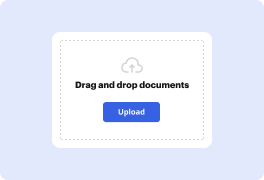
01. Upload a document from your computer or cloud storage service.
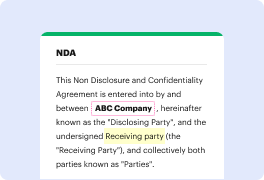
02. Modify your document or let the ai PDF editor summarize, rewrite, or proofread your PDF.
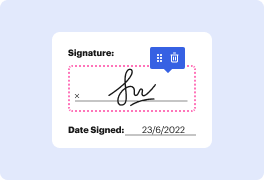
03. Sign your document online in a few clicks.

04. Send, export, fax, download, or print out your document.
How to easily manage paperwork and Edit Register using AI in Real Estate industry with DocHub
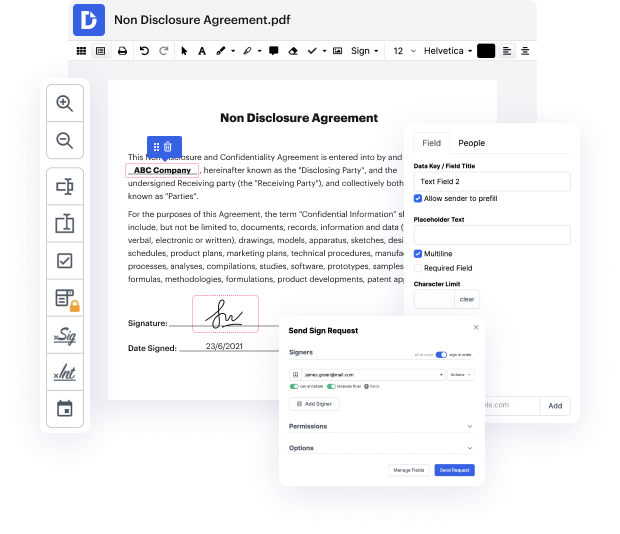
Have you ever imagined Artificial Intelligence to help you in handling business paperwork? Today you can do whatever you want, and even Edit Register with AI in Real Estate sector easily using our ChatGPT-powered solution. It will give you valuable recommendations for alterations, which you can apply in total or manually improve upon. Everything will take you only a few simple clicks.
Here’s the guideline on how to easily Edit Register using AI in Real Estate industry:
- Create an account or log into our system to start editing your files.
- Add your form to the Dashboard from your device or the cloud.
- Open our editor and launch the AI DocHub robot to work on your Register.
- Select the appropriate feature to Edit your template using AI.
- Check the recommendations and make extra adjustments on your own if needed.
- Verify your work, sign and request signatures (if necessary), and proceed to file-saving options.
Enjoy the advantages of GPT assistance within your document editor. Work on your business forms effectively and accomplish tasks rapidly with DocHub. Give it a try now!
A single solution for all your PDF needs

Lossless PDF editing
Edit a PDF as easily as you would a Word document. Add text, images, drawings, and highlight or white out information without affecting document quality. No rasterized text or removed fields.

Secure collaboration and document sharing
Improve teamwork with comments and document permissions that allow others to view, edit, and sign your documents online. Securely send your document via email, fax, public or private link, and export the finalized PDF to the cloud or download it to your device.

Quick data collection
Create and fill out PDF forms online on any device. Turn your form or document into a reusable template and share it via URL or email so anyone can fill out their own copy.

Legally-binding eSignatures
Instantly sign any document — type or draw your signature, or upload an image of it. Request eSignatures from others and track them every step of the way. No need to print and scan.

Google integrations
DocHub extends its PDF editing, form creation, and eSignature capabilities to Google Workspace so you can easily import, export, edit, fill out, and sign your documents directly from your favorite Google Apps.

AI PDF functionality
Improve productivity with DocHub's ai tools. Get quick summaries with the ai PDF summarizer, enhance document readability with an ai that reads PDF, and use the ai PDF editor to ensure the quality of your document’s content.






Drive efficiency with the DocHub add-on for Google Workspace
Access documents and edit, sign, and share them straight from your favorite Google Apps.
Install now
Got questions?
Here are some common questions from our customers that may provide you with the answer you're looking for. If you can't find an answer to your question, please don't hesitate to reach out to us.
Contact us
What are the 4 risks dangers of AI?
Here are the biggest risks of artificial intelligence: Lack of Transparency. Bias and Discrimination. Privacy Concerns. Ethical Dilemmas. Security Risks. Concentration of Power. Dependence on AI. Job Displacement.
What are the risks of AI in real estate?
Potential pitfalls of AI While AI can be a powerful tool for passive real estate investors, there are potential risks to consider: Data quality: AI is only as good as the data it analyzes. If the data is incomplete, inaccurate, or biased, the AIs conclusions may not be reliable.
What are the problems with AI in real estate?
Even though the adoption of AI in the real estate sector offers incredible potential, there are some challenges. Data privacy is a big one, as AI applications often require access to personal and financial data, raising concerns over secure data storage and ethical use.
How artificial intelligence is changing real estate?
AI can analyze millions of data points, such as property values, market trends, neighborhood features, amenities, and even personal information of the homeowners, to generate tailored recommendations for each buyer. For example, Hyro is a company that builds conversational AI for the real estate industry.
How is AI going to change real estate industry?
AI chatbots can play a role in tenant screening, much like their uses for customer service in other industries. They can answer questions about rental rates and availability and guide customers through the application process, alleviating some of the work required of human agents.
How does AI affect the real estate industry?
AI in property management AI chatbots can play a role in tenant screening, much like their uses for customer service in other industries. They can answer questions about rental rates and availability and guide customers through the application process, alleviating some of the work required of human agents.
How technology is changing the real estate industry?
The Benefits of Real Estate Technology The real estate industry has been transformed by the rise of online listings and property search engines. Today, just a fraction of home buyers start their search by contacting a bank or mortgage lender, with the vast majority opting to explore listings online.
What are the pros and cons of using technology in the real estate profession?
The pros of using real estate technology include the docHub of your branding platform and the ability to communicate quickly. The cons, however, are the risk that that communication may not be as authentic and fact-finding as you might think.
How to use AI in commercial real estate?
AVMs use AI algorithms to analyze large amounts of data, such as property features, location, market tends and historical sales data to estimate a propertys value fast and accurately. AVMs have made the valuation process more efficient and docHubly decreased the chances of human error.
How is AI used in housing?
AI can help find apartments and houses to rent by taking in all it can about the renters and then scour all it can about the local market. Its really based on massive amounts of data, including rental pricing, geolocation data, rental market data, data specific to the renter as well, Pinata CEO Lully Liu said.
See why our customers choose DocHub
Great solution for PDF docs with very little pre-knowledge required.

A Valuable Document Signer for Small Businesses.

I can create refillable copies for the templates that I select and then I can publish those.

Security and compliance
At DocHub, your data security is our priority. We follow HIPAA, SOC2, GDPR, and other standards, so you can work on your documents with confidence.
Learn more




