
Dispose Zip Code Letter For Free with DocHub and make the most of your documents



A proven way to Dispose Zip Code Letter For Free
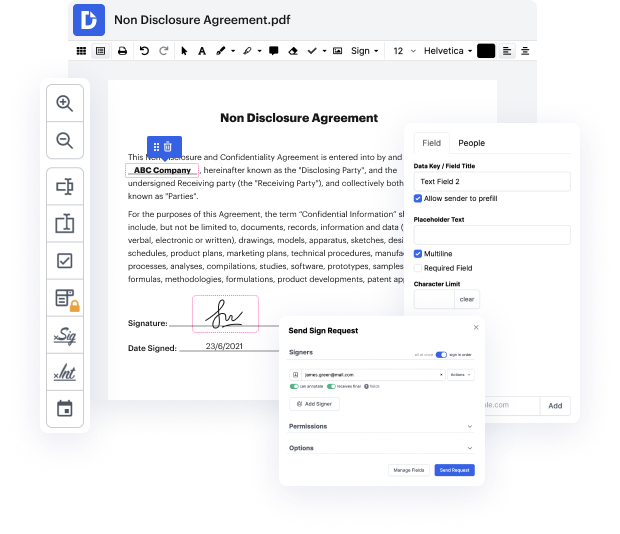
Editing documents can be a challenge. Each format comes with its peculiarities, which frequently results in confusing workarounds or reliance on unknown software downloads to avoid them. The good news is, there’s a solution that will make this process more enjoyable and less risky.
DocHub is a super simple yet comprehensive document editing solution. It has different tools that help you shave minutes off the editing process, and the ability to Dispose Zip Code Letter For Free is only a small part of DocHub’s functionality.
- Choose how you want to add your file – pick any available option to upload.
- In the editor, arrange to view your document as you prefer for easier navigation and editing.
- Check the top toolbar by hovering your cursor over its tools.
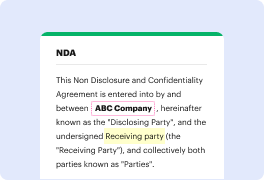
- Locate the option to Dispose Zip Code Letter For Free and make changes to your added file.
- In the topper-right corner, hit the menu symbol and select what you want to do further with your document.
- Hit the person icon to share it with your colleagues or send the document as an attachment.
No matter if if you need occasional editing or to tweak a huge document, our solution can help you Dispose Zip Code Letter For Free and apply any other desired changes quickly. Editing, annotating, certifying and commenting and collaborating on files is easy with DocHub. Our solution is compatible with different file formats - choose the one that will make your editing even more frictionless. Try our editor for free today!
PDF editing simplified with DocHub






Drive efficiency with the DocHub add-on for Google Workspace
How to Dispose Zip Code Letter For Free
In this YouTube video tutorial, the presenter discusses cleaning up resources in programming languages. The example used involves working with real resources, specifically files, in Java. The main function instantiates a class instance to manipulate an output file by pre-pending contents of other files, performing tasks, and then closing the file. The traditional way in Java to ensure resource closure, even in case of exceptions, is to use a finally block. The code snippet demonstrates opening a writer for the output file, looping through input files, writing their contents to the output, and ensuring resource closure.

Got questions?
What do I do with a letter that isnt mine?
Can you drop letters off at the post office?
How do I return unwanted letters to sender?
See why our customers choose DocHub


Security and compliance
At DocHub, your data security is our priority. We follow HIPAA, SOC2, GDPR, and other standards, so you can work on your documents with confidence.
Learn more