


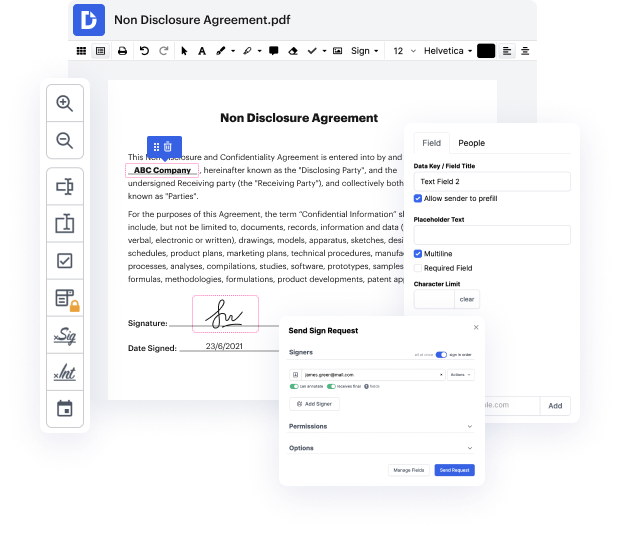
DocHub makes it quick and straightforward to conceal label in html. No need to instal any extra application – simply upload your html to your account, use the simple drag-and-drop user interface, and quickly make edits. You can even use your desktop or mobile device to adjust your document online from any place. That's not all; DocHub is more than just an editor. It's an all-in-one document management solution with form building, eSignature features, and the ability to let others fill in and sign documents.
Every file you upload you can find in your Documents folder. Create folders and organize records for easier search and retrieval. Additionally, DocHub guarantees the protection of all its users' data by complying with stringent protection protocols.


The Daily Code Snippet Sometimes you may want to hide label text to avoid redundancy if sighted users are able to determine the label through visual cues. In this case you can add css to create a class and hide the label element. Here is an example: amp;lt;label for=amp;quot;searchamp;quot; class=amp;quot;hiddenamp;quot;amp;gt;Search: amp;lt;/labelamp;gt; amp;lt;input type=amp;quot;textamp;quot; name=amp;quot;searchamp;quot; id=amp;quot;searchamp;quot;amp;gt; amp;lt;button type=amp;quot;submitamp;quot;amp;gt;Searchamp;lt;/buttonamp;gt; It is not necessary to add the additional text amp;quot;Search:amp;quot; because the submit button is already labeled amp;quot;Searchamp;quot;; however, someone using a screen reader would need to have the input element identified to them as a search element. Another way of handling this would be to add an aria-label attribute to identify the input rather than a amp;lt;labelamp;gt; element. amp;lt;input type=amp;quot;textam