



Dealing with documents means making minor modifications to them everyday. Sometimes, the task runs almost automatically, especially when it is part of your everyday routine. Nevertheless, sometimes, working with an uncommon document like a Strategic Alliance Agreement Template may take precious working time just to carry out the research. To ensure every operation with your documents is easy and swift, you need to find an optimal editing solution for this kind of tasks.
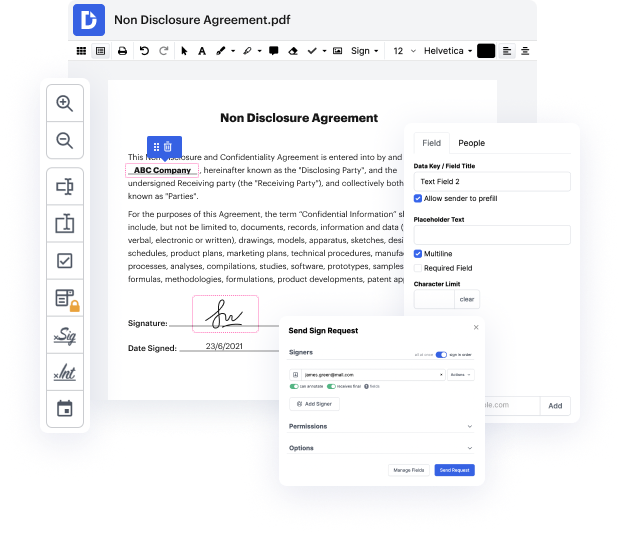
With DocHub, you are able to see how it works without spending time to figure it all out. Your instruments are laid out before your eyes and are easy to access. This online solution does not require any specific background - training or expertise - from its customers. It is all set for work even if you are new to software typically used to produce Strategic Alliance Agreement Template. Easily make, edit, and share papers, whether you deal with them daily or are opening a new document type for the first time. It takes moments to find a way to work with Strategic Alliance Agreement Template.
With DocHub, there is no need to research different document types to learn how to edit them. Have the essential tools for modifying documents close at hand to streamline your document management.


Companies in various industries are forming strategic alliances and partnerships to enhance their resources and capabilities, and improve their competitive position in both local and global markets. A strategic alliance is a formal agreement between multiple firms to collaborate towards a common goal. These partnerships may involve contractual agreements but typically do not include formal ownership. Joint ventures, on the other hand, are collaborative agreements that entail shared ownership and the establishment of a separate corporate entity jointly controlled by the participating companies. While joint ventures are more enduring, they also carry higher risks compared to other types of alliances. Many alliances fall short of expectations, with some studies suggesting that up to 60% may not achieve their intended outcomes.