
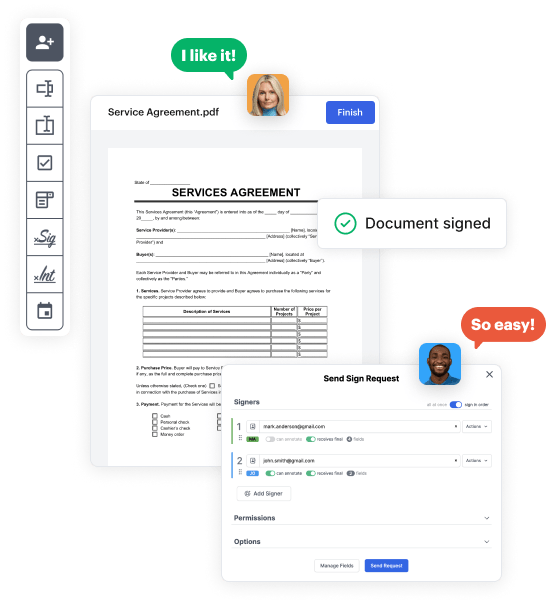
Create your Workplace Communication Form from scratch

Start Building Now
Title decoration

Here's how it works

01. Start with a blank Workplace Communication Form
Open the blank document in the editor, set the document view, and add extra pages if applicable.
02. Add and configure fillable fields
Use the top toolbar to insert fields like text and signature boxes, radio buttons, checkboxes, and more. Assign users to fields.
03. Distribute your form
Share your Workplace Communication Form in seconds via email or a link. You can also download it, export it, or print it out.

A detailed walkthrough of how to design your Workplace Communication Form online

Form edit decoration

Step 1: Start with DocHub's free trial.

Go to the DocHub website and sign up for the free trial. This provides access to every feature you’ll require to create your Workplace Communication Form without any upfront cost.

Step 2: Access your dashboard.

Sign in to your DocHub account and go to the dashboard.

Step 3: Craft a new document.

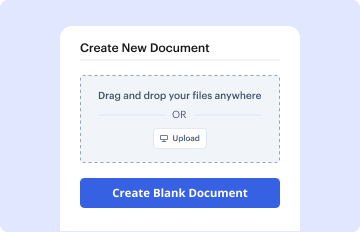
Click New Document in your dashboard, and choose Create Blank Document to craft your Workplace Communication Form from scratch.

Step 4: Use editing tools.

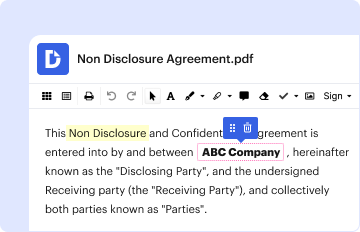
Place different elements such as text boxes, radio buttons, icons, signatures, etc. Arrange these fields to suit the layout of your document and designate them to recipients if needed.

Step 5: Modify the form layout.

Rearrange your document easily by adding, moving, deleting, or merging pages with just a few clicks.

Step 6: Set up the Workplace Communication Form template.

Convert your newly designed form into a template if you need to send multiple copies of the same document numerous times.

Step 7: Save, export, or share the form.

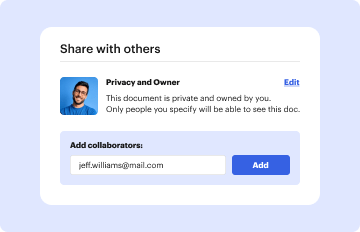
Send the form via email, share a public link, or even post it online if you want to collect responses from more recipients.


be ready to get more

Build your Workplace Communication Form in minutes

Start creating now

Got questions?

We have answers to the most popular questions from our customers. If you can't find an answer to your question, please contact us.
Contact us
Creating a Change Communication Plan Step 1: Assess the Situation, People, Channels, and Needs. Step 2: Create the Change Communications Plan. Step 3: Prepare Key People for Their Critical Influencer Role. Step 4: Execute the Communications Plan. Step 5: Evaluate What to Stop, Start, and Continue.
5 steps to planning an internal communications program Step 1: Identify the goals. Communication for the sake of communication will achieve little. Step 2: Know the audience. Step 3: Create a strategy. Step 4: Confirm the understanding. Step 5: Review, reassess and refine.
The five steps involved in creating a communications plan are: (1) establishing goals; (2) defining key audiences; (3) identifying key messages; (4) creating a tactical outdocHub plan; and (5) specifying a timeline for moving forward.
How to write a communications plan Think about the context. Establish the purpose. Define the audience. Develop key messages. Decide communications tools and channels. Be prepared. Evaluate. Further reading.
How to Write a Project Communication Plan in 6 Steps Determine Your Communication Needs. Determine the Communication Goals for Your Team. Name the Project and Outline the Goals. Identify Key Stakeholders, Clients, and Team Members. Create a Communication Schedule for the Project. Consolidate the Information into One Document.
be ready to get more

Build your Workplace Communication Form in minutes

Start creating now

Related Q&A to Workplace Communication Form

For example, a message crafted around this key message might read: We are committed to making this change a success, and to achieve that, we need your help. We have developed a clear plan for implementing the change, including timelines, milestones, and resource requirements, and we want to share it with you.
The first communications about a change should always focus on: 1) Why the change is happening, 2) Why its happening now, and 3) The risk of not changing. And the change team needs ensure that the communications continue reinforcing the why behind the change throughout the project lifecycle.
In previous years, I have outlined four types of communication, but I believe there are actually five types of communication: verbal, non-verbal, written, listening, and visual.

Additional resources on building your forms