Increase your work productivity with Wills and Testament

Papers managing takes up to half of your business hours. With DocHub, it is simple to reclaim your office time and boost your team's productivity. Get Wills and Testament collection and discover all form templates related to your day-to-day workflows.

The best way to use Wills and Testament:

  1. Open Wills and Testament and utilize Preview to obtain the relevant form.
  2. Click on Get Form to start working on it.
  3. Wait for your form to upload in our online editor and start editing it.
  4. Add new fillable fields, symbols, and pictures, modify pages, etc.
  5. Fill out your file or prepare it for other contributors.
  6. Download or share the form by link, email attachment, or invite.

Speed up your day-to-day file managing with our Wills and Testament. Get your free DocHub account today to explore all forms.

Video Guide on Wills and Testament management

video background

Commonly Asked Questions about Wills and Testament

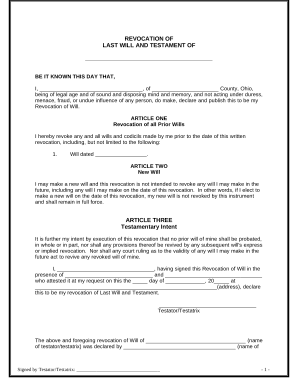
When the person who died (the Decedent) had a Will then the Will must be filed in Surrogates Court and admitted (approved) for probate. Probate is the process of proving that the Will is valid (legally acceptable).
What are the four basic types of wills? Simple will. A simple willsometimes known as basicis the type most people associate with the word will. With a simple will, you can decide who will receive your assets and name a guardian for any minor children. Testamentary trust will. Joint will. Living will.
For many people, the most important document in their estate plan is their last will and testament. This document will give you a say in how an executor should handle your assets upon your death. Without a will, your estate will be subject to state-created intestacy laws, which dont take into account your preferences.
With a last will, you choose who you want to inherit your property after you pass away. With a living will, you outline your preferences about future healthcare treatments, in case youre ever unable to communicate your wishes to doctors and loved ones.
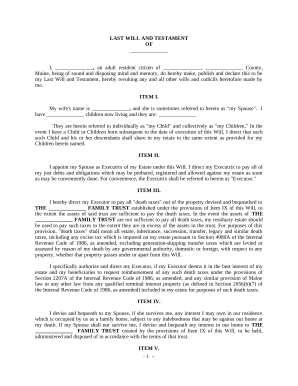
Though it has been thought a will historically applied only to real property, while testament applied only to personal property (thus giving rise to the popular title of the document as last will and testament), records show the terms have been used interchangeably.
A last will and testament, also known simply as a will, is a legal document that provides instructions for what should happen to a persons assets after his or her death. If a person dies without a will, they are said to be intestate, and state intestacy laws govern the distribution of the property of the decedent.