Enhance your form managing with Visitation Schedule Forms

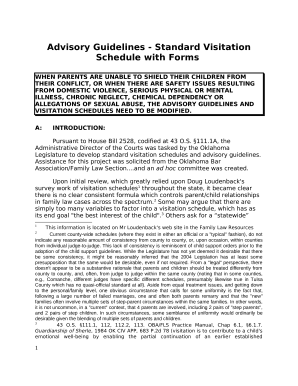
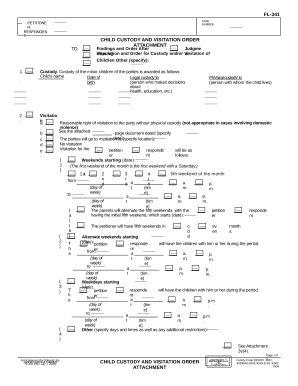
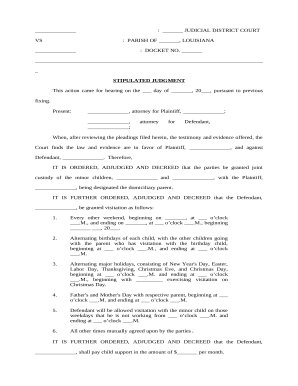
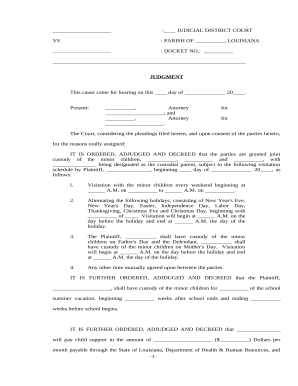
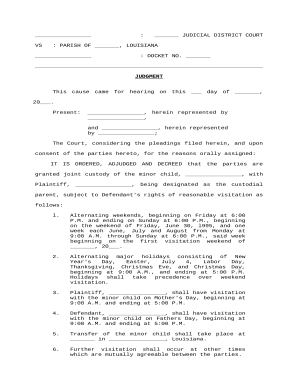
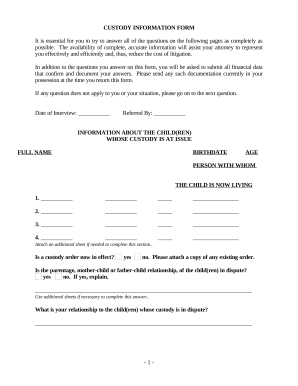
Your workflows always benefit when you can easily locate all the forms and documents you require on hand. DocHub delivers a a large collection templates to ease your day-to-day pains. Get a hold of Visitation Schedule Forms category and quickly browse for your document.

Begin working with Visitation Schedule Forms in a few clicks:

  1. Open Visitation Schedule Forms and get the document you need.
  2. Click on Get Form to open it in the editor.
  3. Start adjusting your document: add more fillable fields, highlight paragraphs, or blackout sensitive data.
  4. The application saves your modifications automatically, and after you are ready, you are able to download or share your form with other contributors.

Enjoy easy record management with DocHub. Discover our Visitation Schedule Forms category and discover your form right now!


Video Guide on Visitation Schedule Forms management

video background

Commonly Asked Questions about Visitation Schedule Forms

If the parents live within 100 miles of each other, the noncustodial parent has parenting time with the child every 1st, 3rd, and 5th weekend, one weeknight per week during the school year, about half of all holidays, and for an extended time during the summer.
The most popular custody schedules are Every Other Weekend, 3-2-2, Every Other Weekend Plus a Mid-Week Visit and Week About. Lets look at examples of all the top child visitation schedules by age.
For sole physical custody, a common schedule in New York gives the noncustodial parent visits every other weekend, plus one to two visits midweek. The parents then alternate custody on major holidays like Christmas, and the noncustodial parent gets two weeks with the child during summer break.
A childs preference to live with one parent may be taken into consideration, depending on the age of the child. The closer the child is to 18 years old, the more weight the court will give to the childs wishes. However, the court will look closely at the reasons why the child prefers to live with the other parent.
A Custody Order gives responsibility for the childs care and how the child is brought up to one or both of the childs parents or to someone else. There are two parts of custody: (1) legal custody and (2) physical custody. A New York court can make orders about the childs custody only until the child is 18 years old.
A parent seeking to visit with a child may file a petition in Family Court against the person or persons who have custody of the child. Custody and visitation matters are often heard together within the same hearing, but a visitation petition may also be filed as a separate matter.
Parents are obligated to follow a custody orders terms until a child docHubes 18 or is emancipated. A custodial parent can face legal consequences for preventing visits between a child and the noncustodial parent. A child who refuses visitation puts a parent in a perilous situation.
In New York, two main types of custody are physical and legal. Within each category, two primary custody arrangements exist sole and joint (or shared) custody. Physical custody refers to the right of a parent to reside and take care of their children daily. Essentially, its the parent the child primarily lives with.