


Create your Virginia Real Estate Law from scratch

Start Building Now
Title decoration

Here's how it works

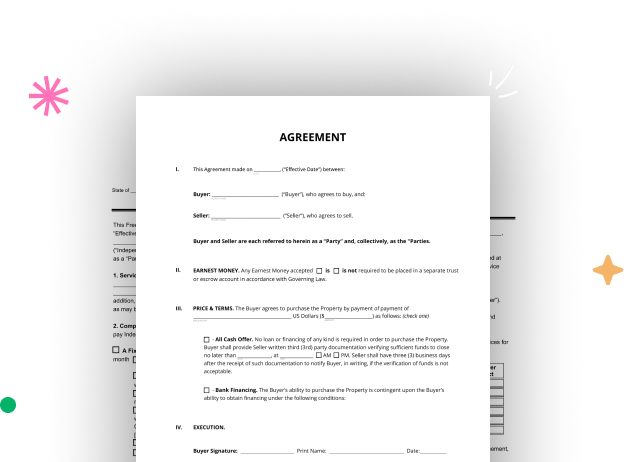
01. Start with a blank Virginia Real Estate Law
Open the blank document in the editor, set the document view, and add extra pages if applicable.
02. Add and configure fillable fields
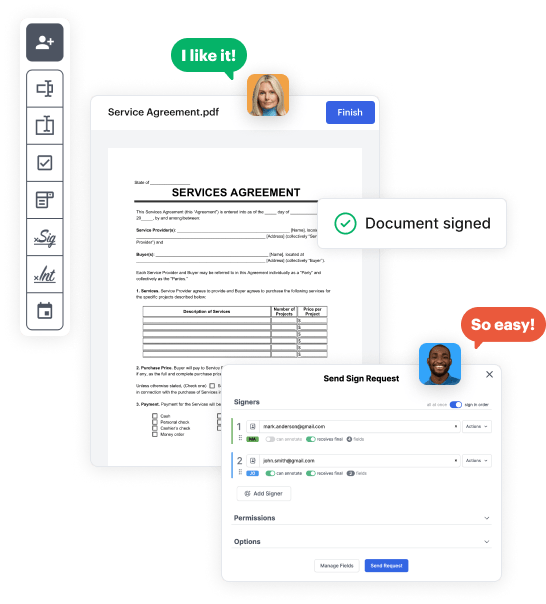
Use the top toolbar to insert fields like text and signature boxes, radio buttons, checkboxes, and more. Assign users to fields.
03. Distribute your form
Share your Virginia Real Estate Law in seconds via email or a link. You can also download it, export it, or print it out.

Create your Virginia Real Estate Law in a matter of minutes

Form edit decoration

Step 1: Access DocHub to set up your Virginia Real Estate Law.

Begin by logging into your DocHub account. Explore the advanced DocHub functionality free for 30 days.

Step 2: Navigate to the dashboard.

Once logged in, head to the DocHub dashboard. This is where you'll build your forms and handle your document workflow.

Step 3: Design the Virginia Real Estate Law.

Hit New Document and choose Create Blank Document to be taken to the form builder.

Step 4: Design the form layout.

Use the DocHub tools to insert and arrange form fields like text areas, signature boxes, images, and others to your form.

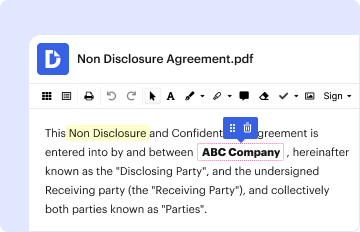
Step 5: Add text and titles.

Add needed text, such as questions or instructions, using the text tool to assist the users in your document.

Step 6: Configure field properties.

Modify the properties of each field, such as making them compulsory or arranging them according to the data you plan to collect. Designate recipients if applicable.

Step 7: Review and save.

After you’ve managed to design the Virginia Real Estate Law, make a final review of your form. Then, save the form within DocHub, export it to your preferred location, or distribute it via a link or email.


be ready to get more

Build your Virginia Real Estate Law in minutes

Start creating now

Got questions?

We have answers to the most popular questions from our customers. If you can't find an answer to your question, please contact us.
Contact us
The Department of Real Estate (DRE) not only administers and enforces the laws governing the sale of subdivided lots and common interest developments, including condominiums and planned developments, it also administers and enforces laws governing the sale of time-share interests.
The purpose of the law is to protect the public interest against fraud, misrepresentation, dishonesty, and incompetence in real estate transactions.
Although The Code of Virginia allows non-lawyers, such as title insurance companies, to close real estate transactions, there are many benefits to spending a little extra to have a licensed attorney on your side.
The Real Estate Board licenses salespersons, brokers, and firms representing others in property transactions. The Board also enforces Fair Housing Law in cases involving real estate licensees and their employees.
Principal broker means the individual broker who shall be designated by each firm to assure compliance with Chapter 21 ( 54.1-2100 et seq.) of Title 54.1 of the Code of Virginia, and this chapter, and to receive communications and notices from the board that may affect the firm or any licensee active with the firm.
be ready to get more

Build your Virginia Real Estate Law in minutes

Start creating now

Related Q&A to Virginia Real Estate Law

Department of Professional and Occupational Regulation Compliance and Investigations Division Complaint Analysis Resolution 9960 Mayland Drive, Suite 400 Richmond, Virginia 23233-1485 Email complaintanalysis@dpor.virginia.gov Fax (866) 282-3932 Office Hours 8:15 a.m. - 5:00 p.m.
Local Realtor associations enforce the NAR Code of Ethics. At the same time, NAR controls its code of ethics. Its articles offer standards for conduct with clients and customers, the public, and other Realtors.
An officer or employee of the United States of America, or of the Commonwealth or a political subdivision thereof, where the employee or officer is performing his official duties, provided that such individual does not furnish advisory service for compensation to the public or act as an independent contracting party in

Additional resources on building your forms


