
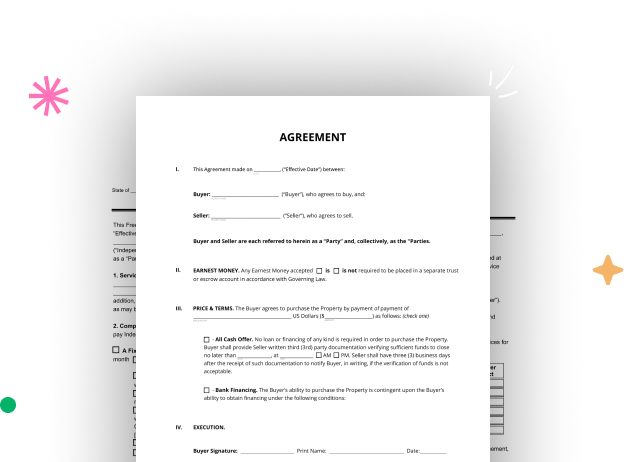

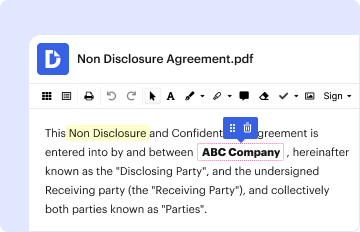


Create your Virginia Landlord-Tenant Law from scratch

Start Building Now
Title decoration

Here's how it works

01. Start with a blank Virginia Landlord-Tenant Law
Open the blank document in the editor, set the document view, and add extra pages if applicable.
02. Add and configure fillable fields
Use the top toolbar to insert fields like text and signature boxes, radio buttons, checkboxes, and more. Assign users to fields.
03. Distribute your form
Share your Virginia Landlord-Tenant Law in seconds via email or a link. You can also download it, export it, or print it out.

A detailed guide on how to build your Virginia Landlord-Tenant Law online

Form edit decoration

Step 1: Start with DocHub's free trial.

Go to the DocHub website and sign up for the free trial. This provides access to every feature you’ll require to create your Virginia Landlord-Tenant Law without any upfront cost.

Step 2: Access your dashboard.

Sign in to your DocHub account and go to the dashboard.

Step 3: Initiate a new document.

Hit New Document in your dashboard, and choose Create Blank Document to craft your Virginia Landlord-Tenant Law from scratch.

Step 4: Utilize editing tools.

Place different elements such as text boxes, radio buttons, icons, signatures, etc. Arrange these fields to match the layout of your form and designate them to recipients if needed.

Step 5: Organize the form layout.

Organize your form easily by adding, moving, deleting, or combining pages with just a few clicks.

Step 6: Create the Virginia Landlord-Tenant Law template.

Transform your freshly crafted form into a template if you need to send multiple copies of the same document numerous times.

Step 7: Save, export, or distribute the form.

Send the form via email, distribute a public link, or even publish it online if you wish to collect responses from more recipients.


be ready to get more

Build your Virginia Landlord-Tenant Law in minutes

Start creating now

Got questions?

We have answers to the most popular questions from our customers. If you can't find an answer to your question, please contact us.
Contact us
Starting July 1, 2020, all landlords must offer the Statement of Tenant Rights and Responsibilities to any prospective tenant. Both the landlord and tenant must sign a form at the end of the statement acknowledging that the tenant has received from the landlord the statement of tenant rights and responsibilities.
Virginia does not require a license to manage property. However, any actions taken as manager that are considered licensed activities will require a real estate license. Maintenance and inspections, for example, are not licensed activities, but advertising a property for lease or processing applications are.
There is no state-wide statute in Virginia for business licenses. Yet, local cities and counties may still have regulations and requirements that ask you to obtain these business licenses before you can rent out your properties.
A landlord shall not charge a tenant for late payment of rent unless such charge is provided for in the written rental agreement. No such late charge shall exceed the lesser of 10 percent of the periodic rent or 10 percent of the remaining balance due and owed by the tenant.
How to Rent Out Your House in Virginia Get Familiar with the Laws and Legislations. Prepare the Property to Rent. Market Your Rental Property on the Right Platforms. Screen Tenants Thoroughly. Set Reasonable Rental Rates and Lease Terms. Hire a Professional Property Manager. Bottom Line.
be ready to get more

Build your Virginia Landlord-Tenant Law in minutes

Start creating now

Related Q&A to Virginia Landlord-Tenant Law

Virginia does not require a special landlord license. However, renting properties is considered a business activity and may require a generic business license in some locales. For example, Arlington County requires landlords earning more than $10,000 annually in rental income to obtain a business license.
The Virginia Residential Landlord and Tenant Act (VRLTA), Sections 55-248.2 through 55-248.40 of the Code of Virginia, establishes the rights and obligations of landlords and tenants in the Commonwealth. Only the courts can enforce those rights and responsibilities.

Additional resources on building your forms


