
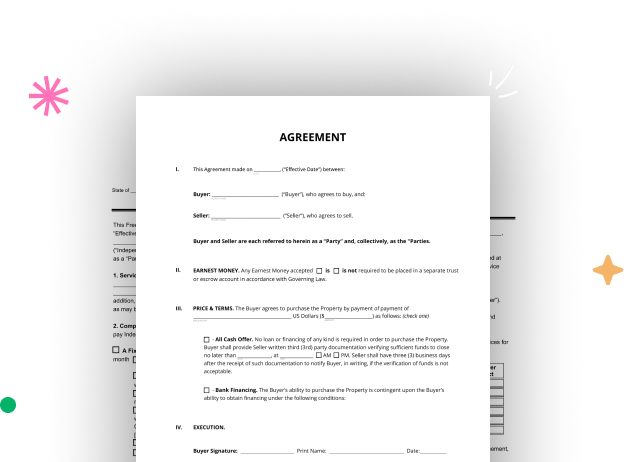



Create your Virginia Landlord-Tenant Law Form from scratch

Start Building Now
Title decoration

Here's how it works

01. Start with a blank Virginia Landlord-Tenant Law Form
Open the blank document in the editor, set the document view, and add extra pages if applicable.
02. Add and configure fillable fields
Use the top toolbar to insert fields like text and signature boxes, radio buttons, checkboxes, and more. Assign users to fields.
03. Distribute your form
Share your Virginia Landlord-Tenant Law Form in seconds via email or a link. You can also download it, export it, or print it out.

A detailed guide on how to build your Virginia Landlord-Tenant Law Form online

Form edit decoration

Step 1: Start with DocHub's free trial.

Visit the DocHub website and sign up for the free trial. This gives you access to every feature you’ll need to create your Virginia Landlord-Tenant Law Form with no upfront cost.

Step 2: Access your dashboard.

Log in to your DocHub account and navigate to the dashboard.

Step 3: Craft a new document.

Click New Document in your dashboard, and select Create Blank Document to create your Virginia Landlord-Tenant Law Form from the ground up.

Step 4: Use editing tools.

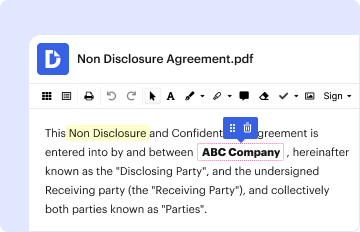
Insert various fields such as text boxes, radio buttons, icons, signatures, etc. Organize these fields to match the layout of your form and designate them to recipients if needed.

Step 5: Modify the form layout.

Rearrange your form effortlessly by adding, moving, deleting, or combining pages with just a few clicks.

Step 6: Set up the Virginia Landlord-Tenant Law Form template.

Transform your newly designed form into a template if you need to send many copies of the same document multiple times.

Step 7: Save, export, or share the form.

Send the form via email, share a public link, or even publish it online if you want to collect responses from a broader audience.


be ready to get more

Build your Virginia Landlord-Tenant Law Form in minutes

Start creating now

Got questions?

We have answers to the most popular questions from our customers. If you can't find an answer to your question, please contact us.
Contact us
A landlord shall not charge a tenant for late payment of rent unless such charge is provided for in the written rental agreement. No such late charge shall exceed the lesser of 10 percent of the periodic rent or 10 percent of the remaining balance due and owed by the tenant.
30-day letter (Notice to Quit) for contractual issues. This notice applies if the tenant is in violation of the lease/rental agreement. The landlord gives the tenant written notice to vacate the premises within 30 days.
55.1-1233. At the termination of the term of tenancy, whether by expiration of the rental agreement or by reason of default by the tenant, the tenant shall promptly vacate the premises, removing all items of personal property and leaving the premises in good and clean order, reasonable wear and tear excepted.
If, at the beginning of the tenancy, a condition exists in a rental dwelling unit that constitutes a fire hazard or serious threat to the life, health, or safety of tenants or occupants of the premises, including an infestation of rodents or a lack of heat, hot or cold running water, electricity, or adequate sewage
Focusing on financial aspects, particularly in respect to security deposits, VRLTA sets landlord restrictions in Virginia by capping the security deposit a landlord can charge. Landlords cannot demand more than two months rent as a deposit, preventing any exorbitant upfront charges.
be ready to get more

Build your Virginia Landlord-Tenant Law Form in minutes

Start creating now

Related Q&A to Virginia Landlord-Tenant Law Form

Starting July 1, 2020, all landlords must offer the Statement of Tenant Rights and Responsibilities to any prospective tenant. Both the landlord and tenant must sign a form at the end of the statement acknowledging that the tenant has received from the landlord the statement of tenant rights and responsibilities.
The Virginia Residential Landlord and Tenant Act (VRLTA), Sections 55-248.2 through 55-248.40 of the Code of Virginia, establishes the rights and obligations of landlords and tenants in the Commonwealth. Only the courts can enforce those rights and responsibilities.
The landlord may enter the dwelling unit without consent of the tenant in case of emergency. The landlord shall not abuse the right of access or use it to harass the tenant.

Additional resources on building your forms


