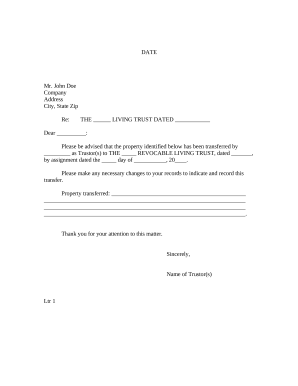
Get and handle Vermont Living Trust Forms online

Accelerate your file operations with our Vermont Living Trust Forms category with ready-made document templates that meet your needs. Access the form template, modify it, complete it, and share it with your contributors without breaking a sweat. Start working more effectively together with your forms.

How to use our Vermont Living Trust Forms:

  1. Open our Vermont Living Trust Forms and find the form you need.
  2. Preview your form to ensure it’s what you want, and click on Get Form to begin working on it.
  3. Edit, add new text, or point out important information with DocHub features.
  4. Complete your form and preserve the modifications.
  5. Download or share your document with other recipients.

Explore all of the possibilities for your online file administration with the Vermont Living Trust Forms. Get your free free DocHub account today!


Video Guide on Vermont Living Trust Forms management

video background

Commonly Asked Questions about Vermont Living Trust Forms

The 4 Biggest Mistakes Parents Make When Setting Up a Trust Fund Not choosing the right Trustee. Choosing the wrong Trustee is a common mistake parents make. Not being clear about the goals of the Trust. Not including asset protection provisions. Not reviewing the Trust annually.
A living trust is a form of estate planning that allows you to control your assets (your money and property) while you are still alive, but have it distributed to people or organizations you select when you die. Depending on your own financial situation they might be appropriate, but they are not for everyone. Living Trust Mills | State of California - Department of Justice - CA.gov ca.gov consumers general livingtrust ca.gov consumers general livingtrust
For a revocable living trust to take effect, it should be funded by transferring certain assets into the trust. Often people fund a living trust with real estate, financial accounts, life insurance, annuity certificates, personal property, business interests, and other assets.
When creating a living trust in Vermont, you sign your written trust document before a notary public. The trust is not in effect until you transfer ownership of assets into it. A living trust can provide the flexibility and control you want now and in the future.
A certificate of trust is a document used by the trustee to prove that they have the legal right to act on behalf of the trust and trustor.
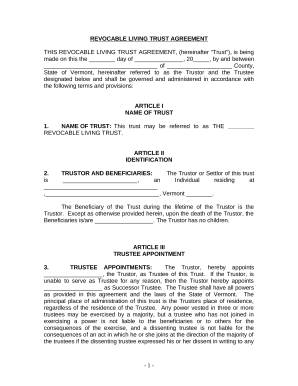
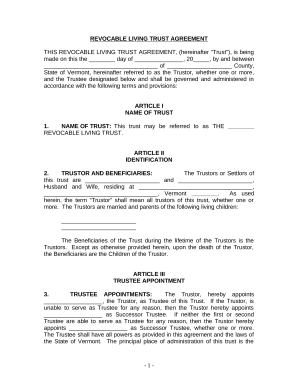
To make a living trust in Vermont, you: Choose whether to make an individual or shared trust. Decide what property to include in the trust. Choose a successor trustee. Decide who will be the trusts beneficiariesthat is, who will get the trust property. Create the trust document.
In Vermont, the cost of setting up a basic Revocable Living Trust generally ranges from $1,000 to $3,000. More complex trusts may cost even more. Online platforms like Snug provide more affordable options for creating wills and trusts, offering transparent pricing and quality estate planning services. Vermont: Make A Revocable Trust Online in 12 Minutes | Snug getsnug.com vermont-trusts getsnug.com vermont-trusts
The most important piece of trust documentation will be the trust deed. This agreement is, essentially, what creates the trust. Outlined within the trust deed will be key pieces of information like what properties or assets will be held within the trust and who the beneficiaries are.