


Create your Vermont Court Form from scratch

Start Building Now
Title decoration

Here's how it works

01. Start with a blank Vermont Court Form
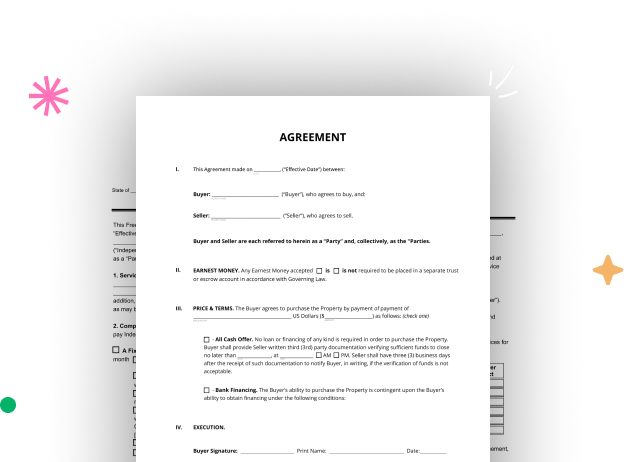
Open the blank document in the editor, set the document view, and add extra pages if applicable.
02. Add and configure fillable fields
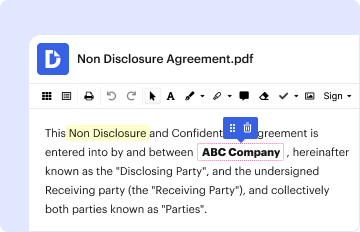
Use the top toolbar to insert fields like text and signature boxes, radio buttons, checkboxes, and more. Assign users to fields.
03. Distribute your form
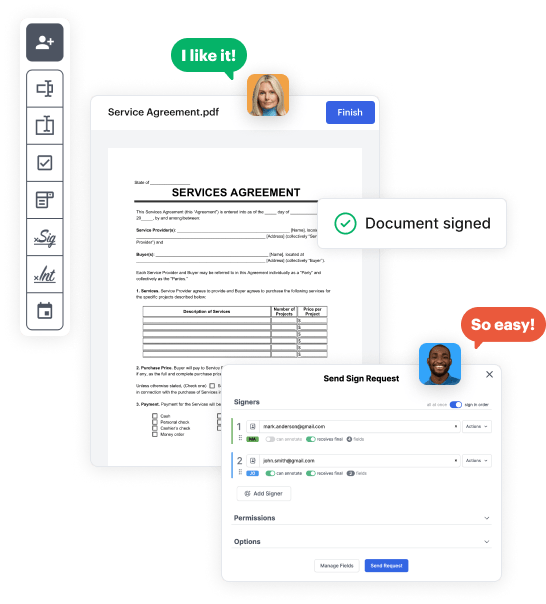
Share your Vermont Court Form in seconds via email or a link. You can also download it, export it, or print it out.

Craft Vermont Court Form from scratch by following these comprehensive instructions

Form edit decoration

Step 1: Start off by launching DocHub.

Begin by creating a free DocHub account using any available sign-up method. If you already have one, simply log in.

Step 2: Register for a free 30-day trial.

Try out the whole collection of DocHub's pro tools by signing up for a free 30-day trial of the Pro plan and proceed to build your Vermont Court Form.

Step 3: Create a new empty doc.

In your dashboard, click the New Document button > scroll down and choose to Create Blank Document. You will be taken to the editor.

Step 4: Organize the document’s view.

Utilize the Page Controls icon marked by the arrow to switch between two page views and layouts for more flexibility.

Step 5: Start adding fields to design the dynamic Vermont Court Form.

Use the top toolbar to place document fields. Insert and configure text boxes, the signature block (if applicable), add photos, and other elements.

Step 6: Prepare and configure the incorporated fields.

Organize the fillable areas you incorporated per your chosen layout. Modify each field's size, font, and alignment to make sure the form is user-friendly and neat-looking.

Step 7: Finalize and share your document.

Save the ready-to-go copy in DocHub or in platforms like Google Drive or Dropbox, or design a new Vermont Court Form. Share your form via email or get a public link to reach more people.


be ready to get more

Build your Vermont Court Form in minutes

Start creating now

Got questions?

We have answers to the most popular questions from our customers. If you can't find an answer to your question, please contact us.
Contact us
Service of court papers means that the other side must get copies of any paper you file with the court. In service a third person (NOT you) is the one who actually delivers the paperwork to the other side. The person who does this is called the server or process server.
Service within the state may be made as follows: (1) Upon an individual by delivering a copy of the summons and of the complaint to the individual personally or by leaving copies thereof at the individuals dwelling house or usual place of abode with some person of suitable age and discretion then residing therein or
Vermonts court system consists of four courts. The State supreme court and the superior court are authorized by the State constitution, as are the 19 probate courts, and the district court was created by statute in 1967 from independent municipal courts.
Service outside the state may be made by any person authorized to serve civil process by the laws of the place of service or by a person specially appointed to serve it. An affidavit of the person making service must shall be filed with the court, stating the time, manner, and place of service.
A Complaint for divorce with kids is usually served by the court. After the Complaint is filed with the court, a Case Managers Conference is scheduled. The court will then mail all of the documents and a notice of the Case Managers Conference to the other party.
be ready to get more

Build your Vermont Court Form in minutes

Start creating now

Related Q&A to Vermont Court Form

Fill out the Petition of Adult to Change Name (form 700-00122). You can find the form at the bottom of this web page. File the completed form with the probate division of the Superior Court in the county in which you live. You can file in person, by mail, or by email.
As amended through June 3, 2024. Rule 5 - Appearance Before a Judicial Officer (a)In General. When a person arrested with or without a warrant, or served a citation or summons, is brought or appears before a judicial officer as provided in Rules 3 and 4, the judicial officer shall proceed in ance with this rule.
The Superior Court has five divisions: civil, criminal, environmental, family, and probate. The Superior Court also has a Judicial Bureau, which has statewide jurisdiction. Each of these courts has a distinct role in providing justice.

Additional resources on building your forms


