

Create your Utah Property Transfer Form from scratch

Start Building Now
Title decoration

Here's how it works

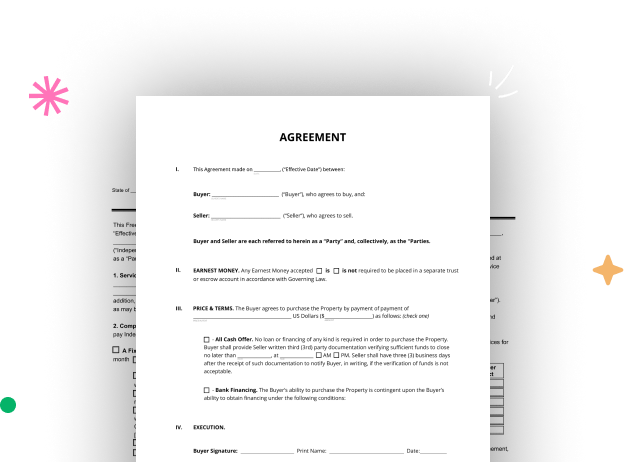
01. Start with a blank Utah Property Transfer Form
Open the blank document in the editor, set the document view, and add extra pages if applicable.
02. Add and configure fillable fields
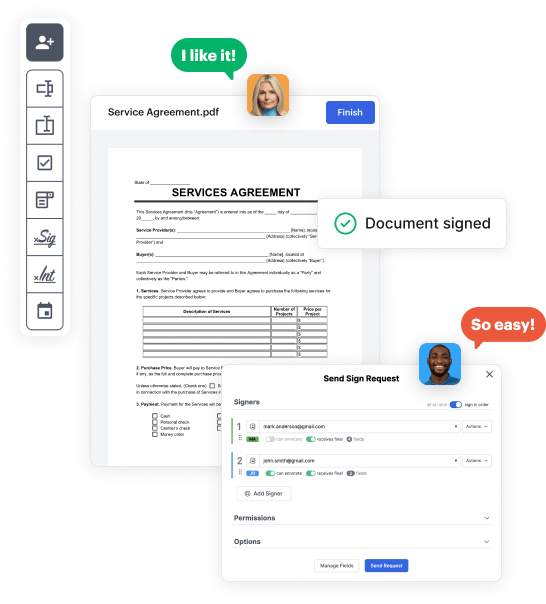
Use the top toolbar to insert fields like text and signature boxes, radio buttons, checkboxes, and more. Assign users to fields.
03. Distribute your form
Share your Utah Property Transfer Form in seconds via email or a link. You can also download it, export it, or print it out.

A brief guide on how to create a polished Utah Property Transfer Form

Form edit decoration

Step 1: Log in to DocHub to create your Utah Property Transfer Form.

First, log in to your DocHub account. If you don't have one, you can easily register for free.

Step 2: Head to the dashboard.

Once logged in, head to your dashboard. This is your primary hub for all document-focused processes.

Step 3: Launch new document creation.

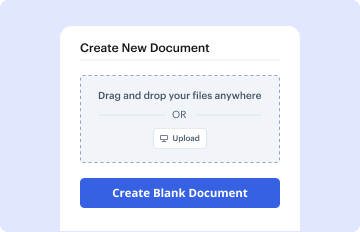
In your dashboard, choose New Document in the upper left corner. Choose Create Blank Document to design the Utah Property Transfer Form from a blank slate.

Step 4: Add template elements.

Add various elements like text boxes, photos, signature fields, and other elements to your template and designate these fields to intended individuals as necessary.

Step 5: Configure your template.

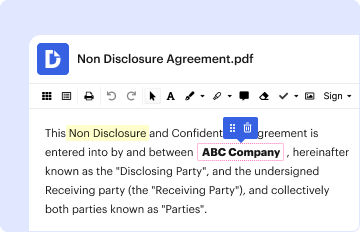
Personalize your template by inserting instructions or any other required details using the text feature.

Step 6: Review and adjust the document.

Meticulously review your created Utah Property Transfer Form for any typos or necessary adjustments. Leverage DocHub's editing tools to polish your template.

Step 7: Send out or export the template.

After completing, save your work. You can opt to keep it within DocHub, export it to various storage services, or forward it via a link or email.


be ready to get more

Build your Utah Property Transfer Form in minutes

Start creating now

Got questions?

We have answers to the most popular questions from our customers. If you can't find an answer to your question, please contact us.
Contact us
Utah Code Annotated ​ ​57-1-13. A quitclaim deed when executed as required by law shall have the effect of a conveyance of all right, title, interest, and estate of the grantor in and to the premises therein described and all rights, privileges, and appurtenances thereunto belonging, at the date of the conveyance.
Recording Local County Recorders Office. Signing The document must be signed in the presence of a notary public.
How to File a Quitclaim Deed in Utah Step 1: Reference the Original Deed. Step 2: Consult an Attorney. Step 3: Complete the Quitclaim Deed. Step 4: Complete the Water Rights Addendum. Step 5: Sign and docHub. Step 6: File with the County Recorder.
In Utah, ownership of real property, land and water rights, is transferred by a written and signed conveyance typically a deed. Prescribed forms of Quit Claim, special warranty and Warranty deeds are found in the Utah Code, ​see UCA 57-1-12, 12.5 and 13. (A copy of these forms is included in the seminar materials.)
There is no requirement to have a survey made when property is conveyed or sold. There is some wisdom, however, in doing so. The purchase of property is typically the largest investment one will make in his or her lifetime. A survey may reveal potential issues or problems before they become such.
be ready to get more

Build your Utah Property Transfer Form in minutes

Start creating now

Related Q&A to Utah Property Transfer Form

Statute: Utah Code 57-1-13 provides the statutory form for quitclaim deeds. It implements the word quitclaim for clarity. If a boundary line agreement operates as a quitclaim deed, it must meet the requirements in Utah Code 10-9a-524 or Utah Code 17-27a-523 (whichever is applicable).
How do I add/remove a name to/from my property? All name changes must be done with a recorded document. A title company or an attorney may assist you with these documents.
The form must be completed with the Grantor authorizing in front of a Notary Public. From there the Grantee would make the filing with the County Recorders Office (always be sure to check the fee in your county). After it has been filed the ownership of the property immediately transfers to the Grantee.

Additional resources on building your forms