


Create your US Rental Property Law from scratch

Start Building Now
Title decoration

Here's how it works

01. Start with a blank US Rental Property Law
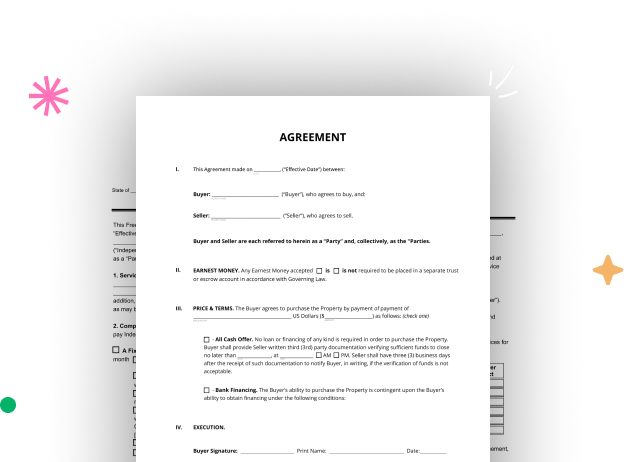
Open the blank document in the editor, set the document view, and add extra pages if applicable.
02. Add and configure fillable fields
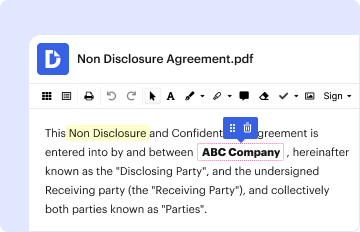
Use the top toolbar to insert fields like text and signature boxes, radio buttons, checkboxes, and more. Assign users to fields.
03. Distribute your form
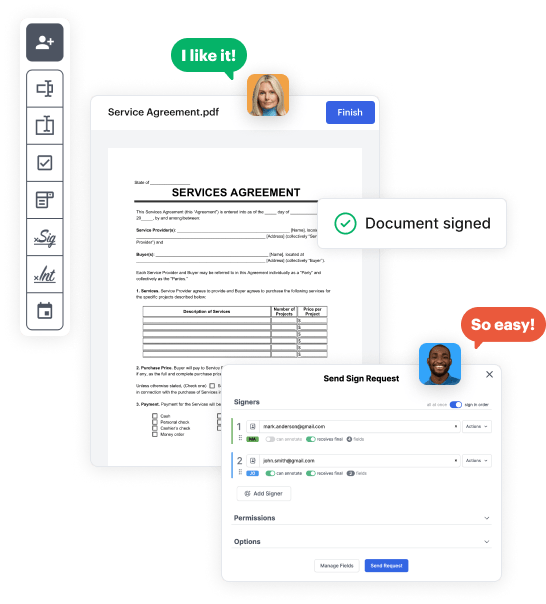
Share your US Rental Property Law in seconds via email or a link. You can also download it, export it, or print it out.

A detailed walkthrough of how to design your US Rental Property Law online

Form edit decoration

Step 1: Start with DocHub's free trial.

Visit the DocHub website and register for the free trial. This gives you access to every feature you’ll require to build your US Rental Property Law without any upfront cost.

Step 2: Navigate to your dashboard.

Log in to your DocHub account and go to the dashboard.

Step 3: Craft a new document.

Hit New Document in your dashboard, and choose Create Blank Document to design your US Rental Property Law from scratch.

Step 4: Use editing tools.

Add various fields such as text boxes, radio buttons, icons, signatures, etc. Organize these fields to match the layout of your document and designate them to recipients if needed.

Step 5: Organize the form layout.

Rearrange your document quickly by adding, repositioning, deleting, or combining pages with just a few clicks.

Step 6: Create the US Rental Property Law template.

Transform your freshly designed form into a template if you need to send many copies of the same document repeatedly.

Step 7: Save, export, or distribute the form.

Send the form via email, distribute a public link, or even post it online if you aim to collect responses from more recipients.


be ready to get more

Build your US Rental Property Law in minutes

Start creating now

Got questions?

We have answers to the most popular questions from our customers. If you can't find an answer to your question, please contact us.
Contact us
President Biden is calling on Congress to pass legislation presenting corporate landlords with a basic choice: either cap rent increases on existing units to no more than 5% or lose valuable federal tax breaks.
In fact, 72.5% of single-unit rental properties are owned by individuals, while 69.5% of properties with 25 or more units are owned by for-profit businesses. Most rental properties are owned by individuals, but only a small share of individuals own rental property, ing to IRS income-tax data.
Keep in mind that Nevada tenants can exercise their housing rights at any point of the lease, and the landlord may not send a notice of eviction or terminate the lease abruptly in retaliation.
In 2024, changes to rental laws may include adjustments to rent control policies, notice periods for rent increases, or revisions to tenant rights and eviction processes. Landlords and tenants should review the most current regulations to ensure compliance.
Nevada law requires a thirty-day notice to the tenant (or a seven-day notice if the tenant pays rent weekly), followed by a second five-day Notice to Quit for Unlawful Detainer (after the first notice period has elapsed) instructing the tenant to leave because tenants presence is now unlawful.
be ready to get more

Build your US Rental Property Law in minutes

Start creating now

Related Q&A to US Rental Property Law

You generally must include in your gross income all amounts you receive as rent. Rental income is any payment you receive for the use or occupation of property. Expenses of renting property can be deducted from your gross rental income. You generally deduct your rental expenses in the year you pay them.
Charges for Carpet, Painting, etc. In Nevada, landlords are allowed to deduct from the security deposit for any damages beyond normal wear and tear. However, they cannot charge for regular maintenance and upkeep that is expected over time.
The rent increase can be any amount because Nevada rent control laws do not limit the amount of rent landlords can charge, nor do they require any specific reason to be given for rent increases. This means any time the landlord feels that a change in the rental property market warrants increasing rent, they can do so.