
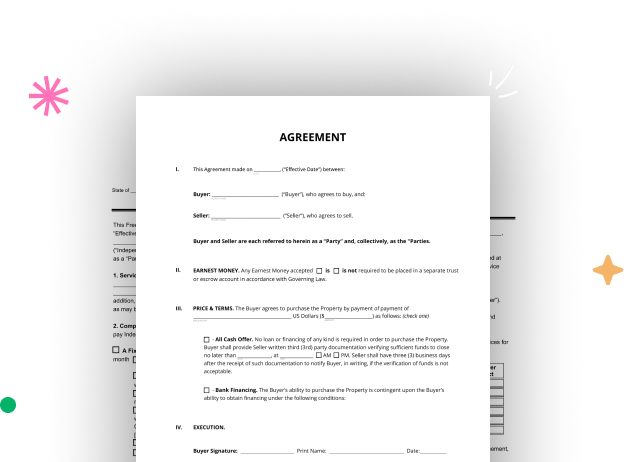
Create your US Quitclaim Deed from scratch

Start Building Now
Title decoration

Here's how it works

01. Start with a blank US Quitclaim Deed
Open the blank document in the editor, set the document view, and add extra pages if applicable.
02. Add and configure fillable fields
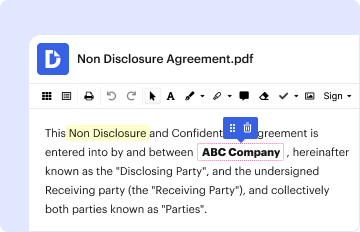
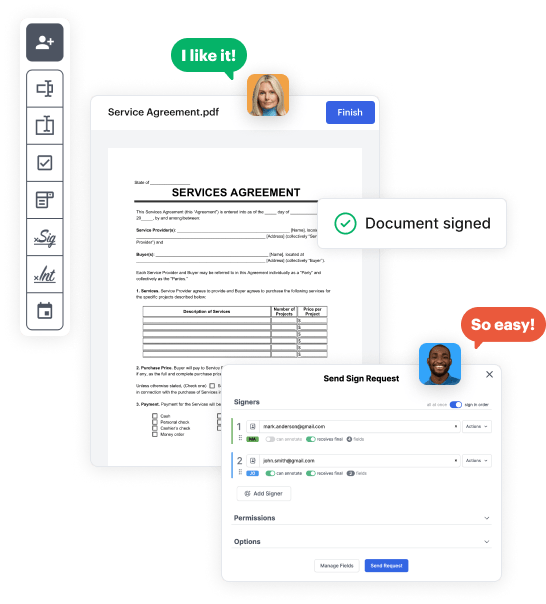
Use the top toolbar to insert fields like text and signature boxes, radio buttons, checkboxes, and more. Assign users to fields.
03. Distribute your form
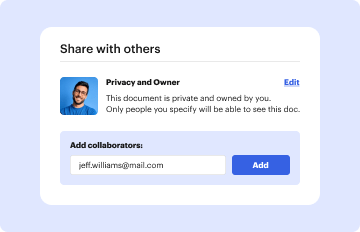
Share your US Quitclaim Deed in seconds via email or a link. You can also download it, export it, or print it out.

A brief guide on how to set up a polished US Quitclaim Deed

Form edit decoration

Step 1: Sign in to DocHub to begin creating your US Quitclaim Deed.

First, log in to your DocHub account. If you don't have one, you can simply register for free.

Step 2: Navigate to the dashboard.

Once logged in, access your dashboard. This is your main hub for all document-centric activities.

Step 3: Launch new document creation.

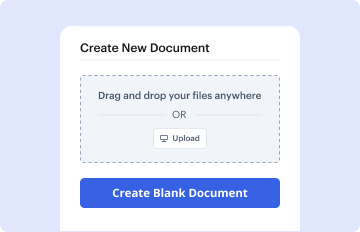
In your dashboard, choose New Document in the upper left corner. Choose Create Blank Document to design the US Quitclaim Deed from the ground up.

Step 4: Insert form fillable areas.

Place numerous fields like text boxes, images, signature fields, and other fields to your form and designate these fields to particular recipients as necessary.

Step 5: Configure your form.

Personalize your document by including directions or any other essential details utilizing the text tool.

Step 6: Double-check and adjust the document.

Carefully examine your created US Quitclaim Deed for any inaccuracies or required adjustments. Leverage DocHub's editing features to enhance your form.

Step 7: Distribute or download the form.

After finalizing, save your file. You can opt to keep it within DocHub, export it to various storage options, or forward it via a link or email.


be ready to get more

Build your US Quitclaim Deed in minutes

Start creating now

Got questions?

We have answers to the most popular questions from our customers. If you can't find an answer to your question, please contact us.
Contact us
Quitclaim deeds lack certain protections and promises found in other types of deed to real property. Because of this, they should only be used under certain circumstances. These include transferring real estate between close family membersfor instance, from a parent to a child.
While its technically possible for property owners to draft a quitclaim deed themselves, attempting to do so on behalf of someone else without the necessary qualifications, including title companies and non-lawyer services, can very likely be deemed an unauthorized practice of the law.
Whether theres been a death, divorce or change of personal circumstances, there may be a reason for you to remove a name from a property deed. This process is done using a deed of conveyance, which is either in the form of a quitclaim deed or a warranty deed.
Two ways to remove a persons name from the title include a quitclaim deed and warranty deed. The person being removed from the title may still be obligated to continue paying their share of the mortgage unless the loan is refinanced.
Upon divorce, a spouse may be surprised to learn that by signing a quitclaim deed or interspousal transfer deed, he or she relinquished a community interest in the house. The spouse on title could the awarded the house in full, subject to various other community interests or reimbursement rights.
be ready to get more

Build your US Quitclaim Deed in minutes

Start creating now

Related Q&A to US Quitclaim Deed

In which of the following situations could a quitclaim deed NOT be used? c. The answer is to warrant that a title is valid. The quitclaim deed carries no covenants or warranties.
You can use Online Quitclaim Deed to transfer a real estate to your partner, former spouse or when you need to possess a property. With this process, you can make the change. Once everything is set, you can move or move a new start.
You can use the Do-It-Yourself Quitclaim Deed (after Divorce) tool to get your quitclaim deed. You do not need a quitclaim deed to transfer ownership of cars or mobile homes.

Additional resources on building your forms


