
Create your US Property Law from scratch

Start Building Now
Title decoration

Here's how it works

01. Start with a blank US Property Law
Open the blank document in the editor, set the document view, and add extra pages if applicable.
02. Add and configure fillable fields
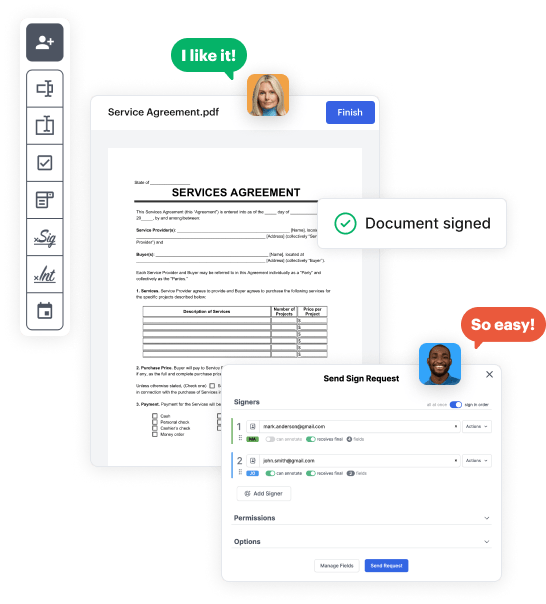
Use the top toolbar to insert fields like text and signature boxes, radio buttons, checkboxes, and more. Assign users to fields.
03. Distribute your form
Share your US Property Law in seconds via email or a link. You can also download it, export it, or print it out.

A detailed walkthrough of how to craft your US Property Law online

Form edit decoration

Step 1: Start with DocHub's free trial.

Visit the DocHub website and register for the free trial. This provides access to every feature you’ll need to create your US Property Law with no upfront cost.

Step 2: Navigate to your dashboard.

Sign in to your DocHub account and proceed to the dashboard.

Step 3: Craft a new document.

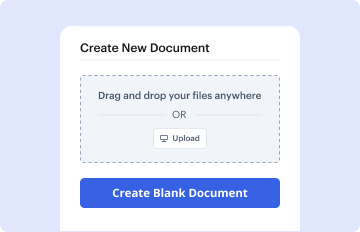
Click New Document in your dashboard, and choose Create Blank Document to craft your US Property Law from the ground up.

Step 4: Utilize editing tools.

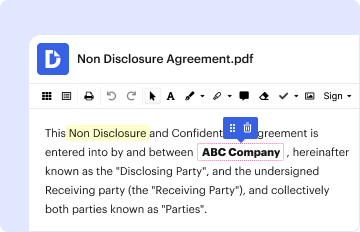
Add different fields such as text boxes, radio buttons, icons, signatures, etc. Organize these fields to suit the layout of your document and assign them to recipients if needed.

Step 5: Organize the form layout.

Organize your document effortlessly by adding, repositioning, removing, or merging pages with just a few clicks.

Step 6: Craft the US Property Law template.

Convert your freshly crafted form into a template if you need to send multiple copies of the same document numerous times.

Step 7: Save, export, or share the form.

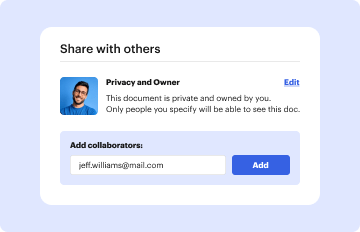
Send the form via email, share a public link, or even publish it online if you want to collect responses from more recipients.


be ready to get more

Build your US Property Law in minutes

Start creating now

Got questions?

We have answers to the most popular questions from our customers. If you can't find an answer to your question, please contact us.
Contact us
Thus, the three basic elements of private property are (1) exclusivity of rights to choose the use of a resource, (2) exclusivity of rights to the services of a resource, and (3) rights to exchange the resource at mutually agreeable terms.
A property owner in California enjoys a number of rights collectively known as the bundle of rights. These five rights associated with owning real property are: (1) possession; (2) control; (3) exclusion; (4) enjoyment and (5) disposition.
The Fifth Amendment of the U.S. Constitution provides that [n]o person shall be deprived of life, liberty or property without due process of law; nor shall private property be taken for public use, without just compensation.
The Fifth Amendment protects the right to private property in two ways. First, it states that a person may not be deprived of property by the government without due process of law, or fair procedures.
Property laws shape how we interact with our possessions and those of others. If youre a homeowner, you can renovate your house and yard. You also have the right to sell or destroy your personal belongings, such as cars and smartphones. However, you cant discard or sell someone elses property without permission.
be ready to get more

Build your US Property Law in minutes

Start creating now

Related Q&A to US Property Law

Real Property (Land Law) Overview Real property refers to land, including the land itself and any structures, fixtures, and rights associated with it. Land, in its general usage, includes not only the surface of the earth but also everything of a permanent nature over or under it, including structures and minerals.
Article 23 of the declaration states: Every Person has the right to own such private property as meets the essential needs of decent living and helps to maintain the dignity of the individual and of the home.
Property law in the United States is the area of law that governs the various forms of ownership in real property (land and buildings) and personal property, including intangible property such as intellectual property. Property refers to legally protected claims to resources, such as land and personal property.

Additional resources on building your forms


