

Create your US Paternity Legal Form from scratch

Start Building Now
Title decoration

Here's how it works

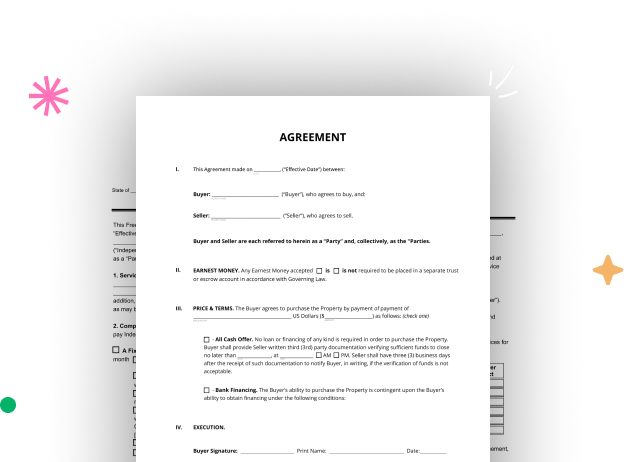
01. Start with a blank US Paternity Legal Form
Open the blank document in the editor, set the document view, and add extra pages if applicable.
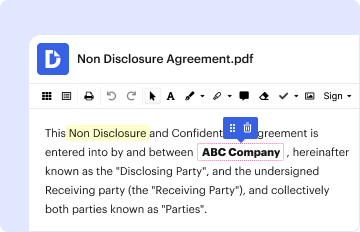
02. Add and configure fillable fields
Use the top toolbar to insert fields like text and signature boxes, radio buttons, checkboxes, and more. Assign users to fields.
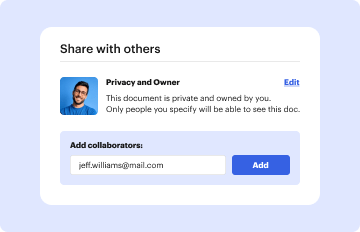
03. Distribute your form
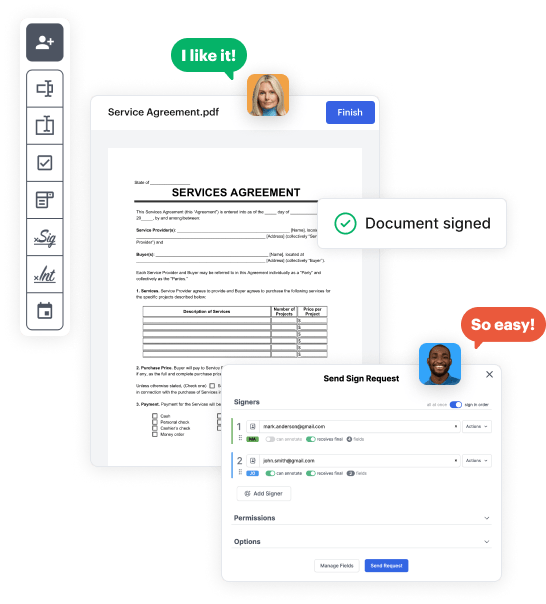
Share your US Paternity Legal Form in seconds via email or a link. You can also download it, export it, or print it out.

A detailed guide on how to design your US Paternity Legal Form online

Form edit decoration

Step 1: Start with DocHub's free trial.

Navigate to the DocHub website and register for the free trial. This provides access to every feature you’ll need to build your US Paternity Legal Form without any upfront cost.

Step 2: Navigate to your dashboard.

Log in to your DocHub account and navigate to the dashboard.

Step 3: Craft a new document.

Hit New Document in your dashboard, and choose Create Blank Document to create your US Paternity Legal Form from the ground up.

Step 4: Use editing tools.

Insert different elements such as text boxes, radio buttons, icons, signatures, etc. Arrange these fields to match the layout of your document and assign them to recipients if needed.

Step 5: Modify the form layout.

Rearrange your document in seconds by adding, moving, removing, or combining pages with just a few clicks.

Step 6: Craft the US Paternity Legal Form template.

Convert your newly crafted form into a template if you need to send multiple copies of the same document numerous times.

Step 7: Save, export, or distribute the form.

Send the form via email, distribute a public link, or even publish it online if you wish to collect responses from more recipients.


be ready to get more

Build your US Paternity Legal Form in minutes

Start creating now

Got questions?

We have answers to the most popular questions from our customers. If you can't find an answer to your question, please contact us.
Contact us
The best way to establish the fathers paternity is by naming him on the babys birth certificate. (However, as discussed below, some states require unmarried parents to sign an acknowledgment of paternity first.) Part of the process for getting a birth certificate usually is to give the baby a name.
Paternity can be quickly established when both parents sign a Voluntary Declaration of Paternity form. This document indicates that two people acknowledge they are a childs parents and that the man is the biological father.
An Acknowledgment of Paternity (AOP) is a legal document that allows parents who arent married to establish legal paternity.
The Parentage or Filiation Petition may be filed by the mother, the alleged father, intended legal parent, the child or its guardian. If the child is receiving cash assistance, the Department of Social Services will file a petition against the alleged parent, seeking an order of filiation and an order of support.
However, in some states, there is a statute of limitations for establishing paternity, typically from two to five years after the childs birth. After this period, establishing paternity may become more challenging and require additional legal steps.
be ready to get more

Build your US Paternity Legal Form in minutes

Start creating now

Related Q&A to US Paternity Legal Form

All thats needed to perform a DNA paternity test is a DNA sample from the possible father, child in question, and mother of the child (her participation is optional, but recommended).
In the United States, where a child is conceived or born during wedlock, the husband is legally presumed to be the father of the child. Some states have a legal process for a husband to disavow paternity, such that a biological father can be named as the parent of a child conceived or born during a marriage.
3 ways to establish paternity Birth certificate. If a birth certificate declares the father and he signs it, this is a legally binding qualification of paternity. DNA test. There are two ways to do DNA testingeither before or after the birth of the child. Court order.

Additional resources on building your forms

