Create your US Legal Will from scratch

Start Building Now
Title decoration

Here's how it works

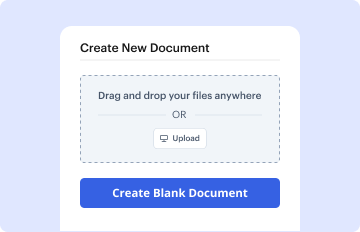
01. Start with a blank US Legal Will
Open the blank document in the editor, set the document view, and add extra pages if applicable.
02. Add and configure fillable fields
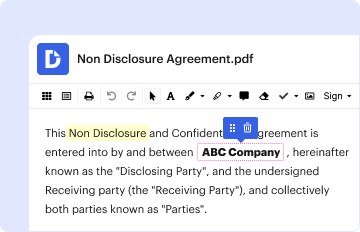
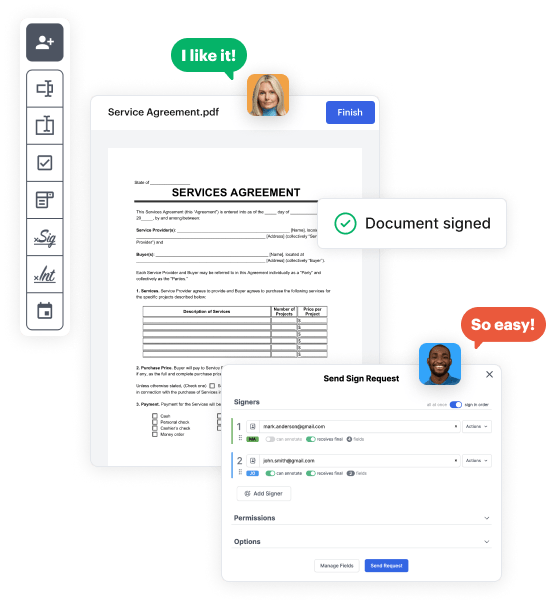
Use the top toolbar to insert fields like text and signature boxes, radio buttons, checkboxes, and more. Assign users to fields.
03. Distribute your form
Share your US Legal Will in seconds via email or a link. You can also download it, export it, or print it out.

A simple guide on how to set up a polished US Legal Will
Form edit decoration

Step 1: Log in to DocHub to begin creating your US Legal Will.

First, sign in to your DocHub account. If you don't have one, you can easily sign up for free.

Step 2: Go to the dashboard.

Once you’re in, head to your dashboard. This is your central hub for all document-based operations.

Step 3: Start new document creation.

In your dashboard, choose New Document in the upper left corner. Select Create Blank Document to craft the US Legal Will from a blank slate.

Step 4: Incorporate template elements.

Place different fields like text boxes, photos, signature fields, and other options to your template and assign these fields to certain individuals as necessary.

Step 5: Customize your template.

Customize your template by including directions or any other necessary information using the text option.

Step 6: Review and modify the form.

Attentively examine your created US Legal Will for any inaccuracies or needed adjustments. Take advantage of DocHub's editing tools to perfect your template.

Step 7: Distribute or download the template.

After completing, save your file. You may select to save it within DocHub, export it to various storage solutions, or send it via a link or email.


be ready to get more

Build your US Legal Will in minutes

Start creating now

Got questions?

We have answers to the most popular questions from our customers. If you can't find an answer to your question, please contact us.
Contact us
Yes, in California, a will can be either typewritten or handwritten.
You do not have to register your own will, but its a very good idea. There is absolutely nothing in the law that requires a will to be registered for it to be valid. You can simply write your will, do what you need to make it legal, and store it in a safe place for your loved ones to read later.
Wills were in existence long before computers and word processing programs, and long before typewriters. If a handwritten will meets all of the legal requirements for a typed will (such as being witnessed or docHubd), it is a valid will, but it is not a holographic will. Holographic will: Is a handwritten will valid? - articles holographic-will- articles holographic-will-
The Average Cost of a Will Drawn Up by a Lawyer But on average, a flat fee for a simple will is about $300. Youll pay a higher flat fee if you have a larger, more complicated estate. In that case, your fee could be $1,000 or more. The cost of a will varies more with hourly fees. How Much Does a Will Cost? - Ramsey Solutions Ramsey Solutions retirement how-mu Ramsey Solutions retirement how-mu
Handwritten wills, also referred to as holographic wills, are still fairly common. In California, this type of will is valid, whether witnessed or not, provided the signature and the main components are in the handwriting of the person who created it, also known as the testator.
be ready to get more

Build your US Legal Will in minutes

Start creating now

Related Q&A to US Legal Will

Yes, a DIY will is still a valid will, as long as it meets the legal requirements in your state. For example, if you write your will by hand (known as a holographic will), you should still have two witnesseswho saw you sign the will and dont stand to inherit anything from yousign it. How to Make a Will Without a Lawyer in 2024 The National Council on Aging (NCOA) adviser estate-planning how The National Council on Aging (NCOA) adviser estate-planning how
These states include; Alaska, Arizona, Arkansas, California, Colorado, Hawaii, Idaho, Kentucky, Louisiana, Maine, Michigan, Mississippi, Montana, Nebraska, Nevada, New Jersey, North Carolina, North Dakota, Oklahoma, Pennsylvania, South Dakota, Tennessee, Texas, Utah, Virginia, West Virginia, and Wyoming.

Additional resources on building your forms