
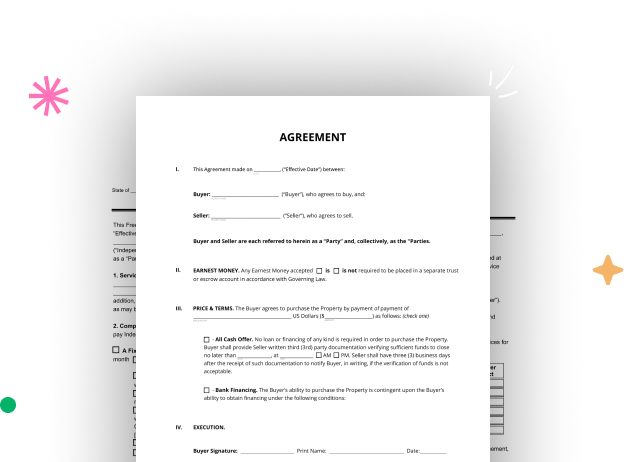


Create your US Legal Real Estate Deed from scratch

Start Building Now
Title decoration

Here's how it works

01. Start with a blank US Legal Real Estate Deed
Open the blank document in the editor, set the document view, and add extra pages if applicable.
02. Add and configure fillable fields
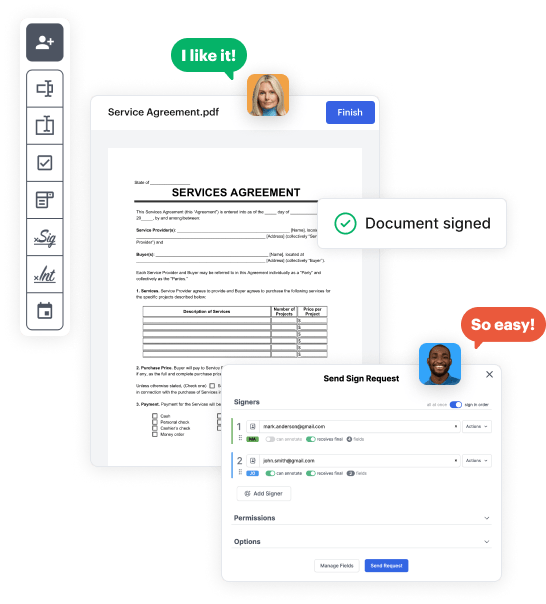
Use the top toolbar to insert fields like text and signature boxes, radio buttons, checkboxes, and more. Assign users to fields.
03. Distribute your form
Share your US Legal Real Estate Deed in seconds via email or a link. You can also download it, export it, or print it out.

Create your US Legal Real Estate Deed in a matter of minutes

Form edit decoration

Step 1: Access DocHub to set up your US Legal Real Estate Deed.

Begin by accessing your DocHub account. Explore the pro DocHub functionality at no cost for 30 days.

Step 2: Navigate to the dashboard.

Once signed in, head to the DocHub dashboard. This is where you'll build your forms and handle your document workflow.

Step 3: Design the US Legal Real Estate Deed.

Click on New Document and choose Create Blank Document to be redirected to the form builder.

Step 4: Set up the form layout.

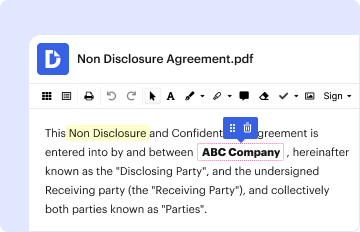
Use the DocHub tools to insert and arrange form fields like text areas, signature boxes, images, and others to your document.

Step 5: Add text and titles.

Include needed text, such as questions or instructions, using the text field to assist the users in your form.

Step 6: Configure field properties.

Alter the properties of each field, such as making them mandatory or formatting them according to the data you expect to collect. Designate recipients if applicable.

Step 7: Review and save.

After you’ve managed to design the US Legal Real Estate Deed, make a final review of your document. Then, save the form within DocHub, send it to your chosen location, or share it via a link or email.


be ready to get more

Build your US Legal Real Estate Deed in minutes

Start creating now

Got questions?

We have answers to the most popular questions from our customers. If you can't find an answer to your question, please contact us.
Contact us
If the deed is not recorded, the party holding the deed may not be recognized under the law as the legal property owner to third parties, though the deed may be legally effective to transfer the property from the grantor to the grantee.
While recording a deed does not affect its validity, it is extremely important to record since recordation protects the grantee.
For a deed to be valid, it must contain several essential elements, including the operative words of conveyance, description of the property, signatures, delivery, proper formatting and execution, absence of defects and encumbrances, legal capacity of parties, proper recording, and voluntary execution.
A: An unrecorded deed is still valid and should be recorded asap, as NYS is a race state meaning of two valid deeds, the first filed has priority even if the other was more recent. Upon the death of one joint tenant, the survivor automatically obtains full ownership.
If you need assistance in preparing a deed, you will need to contact an attorney. And once you have prepared your document, we would be happy to assist you with recording it in our office.
be ready to get more

Build your US Legal Real Estate Deed in minutes

Start creating now

Related Q&A to US Legal Real Estate Deed

Check List for Recording Documents Avoiding Rejections: Grantor/Transferor/Seller is the same. Grantee/Transferee/Buyer is the same. Deed must be completed with names and address of Grantor(s) Grantee(s) Grantor(s) must be properly acknowledged by a notary public. All signatures must be original.
Below is a detailed and easy to follow step-by-step guide on how to get a property deed: Step 1: Get a Deed Form. Step 2: Legally Describe the Property. Step 3: Identify the Parties Involved. Step 4: Date and Signature. Step 5: File the Property Deed.
A deed is void at its inception if it attempts to transfer property to an inadequately designed grantee. Delivery and acceptance of the deed is presumed if it has been recorded. Both the grantor and the grantee sign the deed. It is not necessary for the grantor to physically deliver the deed to the grantee.

Additional resources on building your forms


