

Create your US Legal Health Care Form from scratch

Start Building Now
Title decoration

Here's how it works

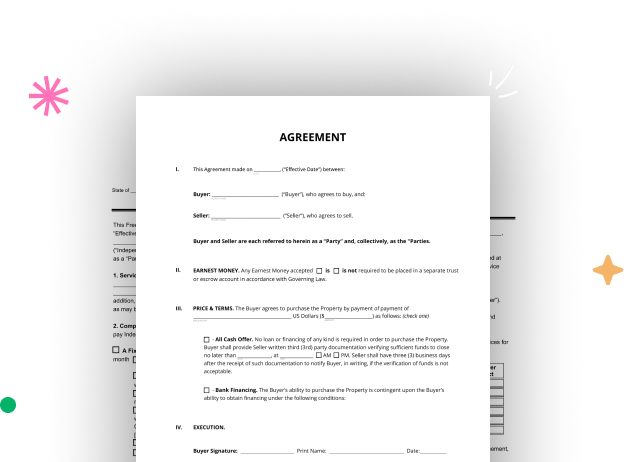
01. Start with a blank US Legal Health Care Form
Open the blank document in the editor, set the document view, and add extra pages if applicable.
02. Add and configure fillable fields
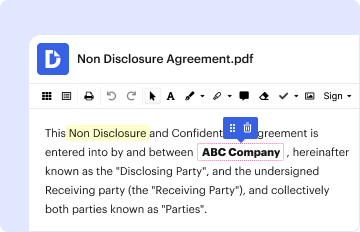
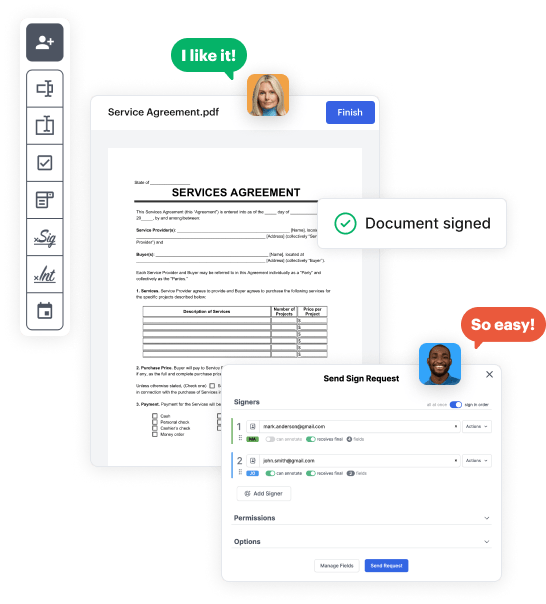
Use the top toolbar to insert fields like text and signature boxes, radio buttons, checkboxes, and more. Assign users to fields.
03. Distribute your form
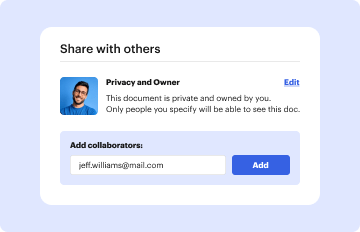
Share your US Legal Health Care Form in seconds via email or a link. You can also download it, export it, or print it out.

A detailed walkthrough of how to craft your US Legal Health Care Form online

Form edit decoration

Step 1: Start with DocHub's free trial.

Go to the DocHub website and sign up for the free trial. This provides access to every feature you’ll need to create your US Legal Health Care Form with no upfront cost.

Step 2: Access your dashboard.

Log in to your DocHub account and proceed to the dashboard.

Step 3: Initiate a new document.

Hit New Document in your dashboard, and select Create Blank Document to design your US Legal Health Care Form from the ground up.

Step 4: Utilize editing tools.

Insert different fields such as text boxes, radio buttons, icons, signatures, etc. Organize these elements to suit the layout of your document and designate them to recipients if needed.

Step 5: Modify the form layout.

Rearrange your document in seconds by adding, moving, deleting, or combining pages with just a few clicks.

Step 6: Create the US Legal Health Care Form template.

Convert your freshly designed form into a template if you need to send multiple copies of the same document multiple times.

Step 7: Save, export, or share the form.

Send the form via email, share a public link, or even post it online if you want to collect responses from more recipients.


be ready to get more

Build your US Legal Health Care Form in minutes

Start creating now

Got questions?

We have answers to the most popular questions from our customers. If you can't find an answer to your question, please contact us.
Contact us
A: You need a legal document to formalize your selection of a health care proxy. Its called a durable power of attorney for health care. You can have an attorney create the document, often as part of your advance directive, or you can find a document online for free, typically on your state health department website.
You do this by completing the standard health care proxy form, noting the person you are designating to make decisions, noting any specific decision that you want the person you are designating to make, and by signing the document in front of two witnesses.
Your health care proxy can only make medical decisions for you. If you want to appoint an individual to make financial decisions on your behalf, consult a lawyer about granting power of attorney to someone you trust.
A health care proxy is a legal document that lets you choose an adult you trust to make medical decisions for you in case you are unable to communicate. The person you choose or appoint is called a health care agent.
The Bottom Line A healthcare proxy makes decisions related to healthcare on your behalf and can only act if you are medically or legally incapacitated. A power of attorney makes legal and financial decisions on your behalf and acts based on the scope of authority and under the conditions you have given them.
be ready to get more

Build your US Legal Health Care Form in minutes

Start creating now

Related Q&A to US Legal Health Care Form

You do not need a lawyer to create a health care proxy; just make sure the form is signed and witnessed ing to the directions on the form. Give copies to your health care providers, health care proxy, spouse, and any close friends who you think might be involved in your care.
The two most common advance directives for health care are the living will and the durable power of attorney for health care.
Unlike a Living Will which can be prepared well before the end of your life, the MOLST form is a medical document traditionally executed when the patient wants to avoid or receive any or all life-sustaining treatment, is in a long term care facility or requires long-term care services and/or may die within the next

Additional resources on building your forms


