Create your US Legal Garnishment Form from scratch

Start Building Now
Title decoration

Here's how it works

01. Start with a blank US Legal Garnishment Form
Open the blank document in the editor, set the document view, and add extra pages if applicable.
02. Add and configure fillable fields
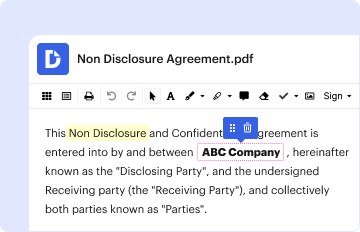
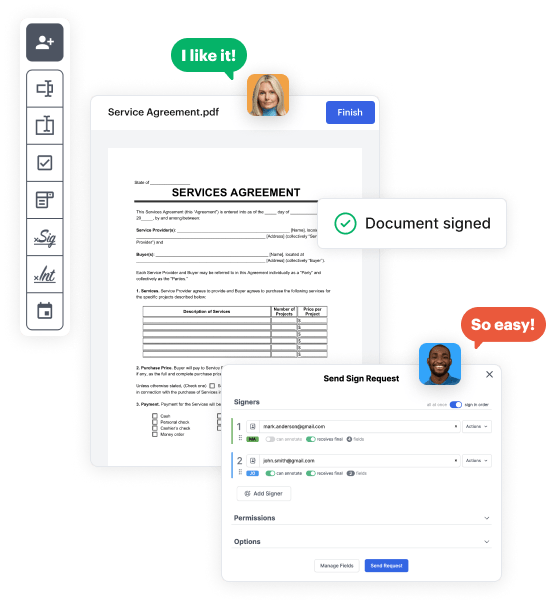
Use the top toolbar to insert fields like text and signature boxes, radio buttons, checkboxes, and more. Assign users to fields.
03. Distribute your form
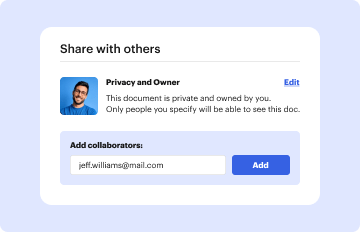
Share your US Legal Garnishment Form in seconds via email or a link. You can also download it, export it, or print it out.

A detailed guide on how to design your US Legal Garnishment Form online
Form edit decoration

Step 1: Start with DocHub's free trial.

Navigate to the DocHub website and register for the free trial. This provides access to every feature you’ll need to build your US Legal Garnishment Form without any upfront cost.

Step 2: Access your dashboard.

Log in to your DocHub account and navigate to the dashboard.

Step 3: Initiate a new document.

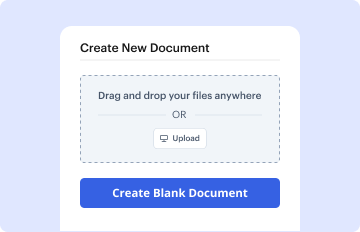
Hit New Document in your dashboard, and choose Create Blank Document to design your US Legal Garnishment Form from scratch.

Step 4: Utilize editing tools.

Place various elements such as text boxes, radio buttons, icons, signatures, etc. Arrange these fields to suit the layout of your document and assign them to recipients if needed.

Step 5: Organize the form layout.

Organize your document effortlessly by adding, repositioning, removing, or combining pages with just a few clicks.

Step 6: Set up the US Legal Garnishment Form template.

Turn your freshly crafted form into a template if you need to send many copies of the same document numerous times.

Step 7: Save, export, or share the form.

Send the form via email, share a public link, or even publish it online if you wish to collect responses from more recipients.


be ready to get more

Build your US Legal Garnishment Form in minutes

Start creating now

Got questions?

We have answers to the most popular questions from our customers. If you can't find an answer to your question, please contact us.
Contact us
Wages may not be garnished by more than one creditor at a time unless the primary garnishment does not take the full 25% allowed by law. (These garnishment restrictions do not apply to certain bankruptcy court orders or debts due for federal or state taxes.)
Some states, such as Pennsylvania, North Carolina, South Carolina and Texas, do not allow wage garnishment except for tax, child support, student loan, or court-ordered fines. Other states normally limit the percentage of wage that can be garnished.
At a minimum, your written objection to the garnishment should include the following information: the case number and case caption (ex: XYZ Bank vs. John Doe) the date of your objection. your name and current contact information. the reasons (or grounds) for your objection, and. your signature.
Garnishment, or wage garnishment, is when money is legally withheld from your paycheck and sent to another party. It refers to a legal process that instructs a third party to deduct payments directly from a debtors wage or bank account.
Wage garnishment is a legal procedure in which a persons earnings are required by court order to be withheld by an employer for the payment of a debt such as child support.
be ready to get more

Build your US Legal Garnishment Form in minutes

Start creating now

Related Q&A to US Legal Garnishment Form

The wage garnishment provisions of the Consumer Credit Protection Act (CCPA) protect employees from discharge by their employers because their wages have been garnished for any one debt, and it limits the amount of an employees earnings that may be garnished in any one week.
The pay of a federal employee may be garnished for any debt other than alimony or child support through legal process issued by an appropriate authority within any state, territory or possession of the United States.
We often get asked, how do I stop IRS wage garnishments, and what is the maximum amount the IRS can garnish from your paycheck? Generally, the IRS will take 25 to 50% of your disposable income.

Additional resources on building your forms