Enhance your document managing with US Legal Forms for Appeals

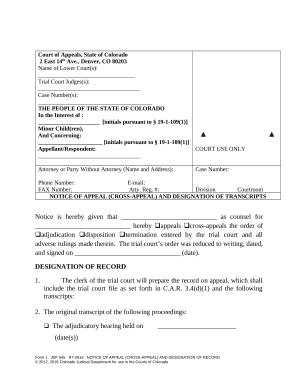
Your workflows always benefit when you are able to get all of the forms and documents you need at your fingertips. DocHub delivers a a huge collection of forms to ease your daily pains. Get hold of US Legal Forms for Appeals category and easily discover your form.

Begin working with US Legal Forms for Appeals in a few clicks:

  1. Access US Legal Forms for Appeals and discover the document you require.
  2. Click Get Form to open it in the editor.
  3. Start changing your document: add more fillable fields, highlight paragraphs, or blackout sensitive details.
  4. The app saves your adjustments automatically, and once you are ready, you are able to download or distribute your form with other contributors.

Enjoy easy record management with DocHub. Explore our US Legal Forms for Appeals collection and discover your form today!


Video Guide on US Legal Forms for Appeals management

video background

Commonly Asked Questions about US Legal Forms for Appeals

In a petition for a writ of certiorari, a party asks the Court to review its case. The Supreme Court agrees to hear about 100-150 of the more than 7,000 cases that it is asked to review each year.
It is important to first understand that appeals can be as of right or discretionary. Appeals can also be collateral or direct in nature.
A litigant who loses in a federal court of appeals, or in the highest court of a state, may file a petition for a writ of certiorari, which is a document asking the U.S. Supreme Court to review the case.
GET TO THE POINT IN A FOCUSED, CONCISE MANNER. SET UP THE BRIEF DOCUMENT EARLY ON. CHOOSE YOUR ISSUES WITH CARE. RESEARCH AND WRITE A STANDARD OF REVIEW THAT FITS YOUR CASE. TELL A STORY IN YOUR STATEMENT OF THE FACTS. WRITE THE ARGUMENT IN A CLEAR OUTLINE FORM USING DETAILED SUBHEADINGS.
Writs of Certiorari The primary means to petition the court for review is to ask it to grant a writ of certiorari. This is a request that the Supreme Court order a lower court to send up the record of the case for review.
Here are the steps of the Supreme Court appeal process Step 1: A petition for certiorari is sent. Step 2: Each petition is reviewed by Justices. Step 3: If granted, appeal briefs are written. Step 4: Oral arguments are heard. Step 5: The Justices conference with each other. Step 6: An opinion is made.
The Right to Appeal An appeal is available if, after a trial in the U.S. District Court, the losing side has issues with the trial court proceedings, the law that was applied, or how the law was applied. Generally, on these grounds, litigants have the right to an appellate court review of the trial courts actions.
In almost all instances, the Supreme Court does not hear appeals as a matter of right; instead, parties must petition the Court for a writ of certiorari. It is the Courts custom and practice to grant cert if four of the nine Justices decide that they should hear the case.