

US Criminal Law Forms - Page 6

Manage US Criminal Law Forms easily online

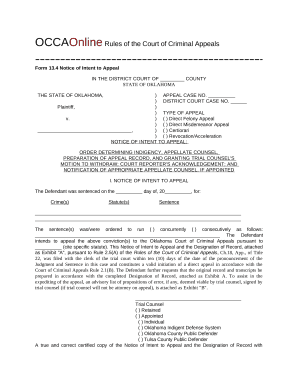
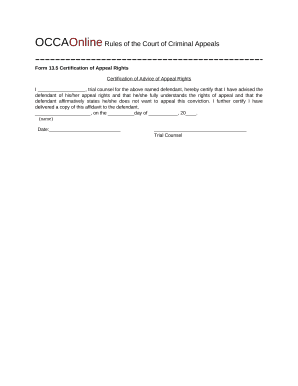
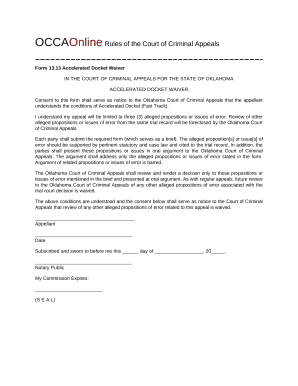
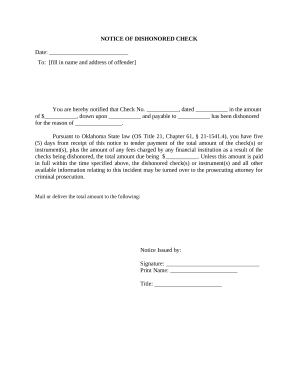
Document managing can stress you when you can’t find all the forms you need. Luckily, with DocHub's extensive form categories, you can get everything you need and promptly deal with it without switching between apps. Get our US Criminal Law Forms and start working with them.

How to use our US Criminal Law Forms using these easy steps:

  1. Browse US Criminal Law Forms and choose the form you need.
  2. Review the template and click Get Form.
  3. Wait for it to open in the online editor.
  4. Change your form: include new information and images, and fillable fields or blackout some parts if necessary.
  5. Fill out your form, preserve modifications, and prepare it for delivering.
  6. When all set, download your form or share it with your contributors.

Try out DocHub and browse our US Criminal Law Forms category with ease. Get your free account today!


Video Guide on US Criminal Law Forms management

video background

Commonly Asked Questions about US Criminal Law Forms

There are four main sources of law in the American legal system, and they are constitutions, statutes, regulations, and case law. The responsibility related to the main sources of law is divided between the three branches of government, which are the judicial branch, legislative branch, and executive branch.
There are two kinds of criminal cases: Felonies and Misdemeanors. A felony offense is one that can be punished by death or by a prison sentence of a year or more. If the felony offense is one that can be punished by death, it is called a capital offense.
Statutory laws Statutory law is made up of written laws enacted by federal, state, and local legislative bodies. These statutes or ordinances define specific criminal offenses, their elements, and the penalties associated with them.
It includes enacted law like statutes, rule and regulations; contracts (private and public); personal legal documents like wills and trusts; and public legal documents like notices and instructions. Legal drafting requires no legal authority citation and generally is written without a stylized voice.
1:23 3:10 While the codified laws are often easily found in one of those 29 codes the uncodified laws areMoreWhile the codified laws are often easily found in one of those 29 codes the uncodified laws are sometimes more difficult to locate for example a researcher may need to review the California statutes.
Crimes can be generally separated into four categories: felonies, misdemeanors, inchoate offenses, and strict liability offenses.
The written form of the criminal law is called penal code. specifying the nature of, appropriate punishment for, particular offenses. specify acceptable methods for dealing lawbreakers, evidence and admissibility. i.e. general rules of evidence, search and seizure, procedures to be followed in an arrest.
Studies estimate that there are nearly 5,000 federal statutes and as many as 300,000 regulations that can subject people to possible criminal penalties.
