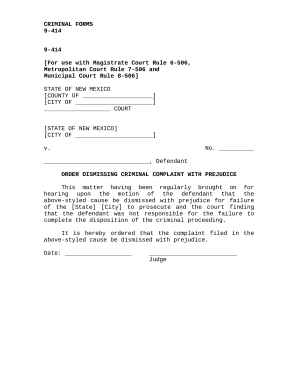
Enhance your efficiency with US Court Orders

Form managing takes up to half of your office hours. With DocHub, you can easily reclaim your office time and improve your team's productivity. Access US Court Orders category and discover all form templates relevant to your day-to-day workflows.

Effortlessly use US Court Orders:

  1. Open US Court Orders and employ Preview to obtain the appropriate form.
  2. Click on Get Form to start working on it.
  3. Wait for your form to upload in our online editor and start editing it.
  4. Add new fillable fields, icons, and images, adjust pages, and many more.
  5. Fill your document or set it for other contributors.
  6. Download or deliver the form by link, email attachment, or invite.

Accelerate your day-to-day file managing with our US Court Orders. Get your free DocHub account today to discover all templates.


Video Guide on US Court Orders management

video background

Commonly Asked Questions about US Court Orders

The Supreme Court of the United States is the highest court in the American judicial system, and has the power to decide appeals on all cases brought in federal court or those brought in state court but dealing with federal law.
All court opinions are available through PACER for free for registered users.
The Supreme Court of the United States is the highest court in the land and the only part of the federal judiciary specifically required by the Constitution.
The Supreme Court is the highest court in the United States. Article III of the U.S. Constitution created the Supreme Court and authorized Congress to pass laws establishing a system of lower courts.
Nine Justices make up the current Supreme Court: one Chief Justice and eight Associate Justices.
The Supreme Court of India is the apex judicial body under the Constitution of India. Article 124 of the Constitution states that There shall be a Supreme Court of India. The Supreme Court came into existence on 26 January 1950 with the coming into force of the Constitution.
A court order is an official proclamation by a judge (or panel of judges) that defines the legal relationships between the parties to a hearing, a trial, an appeal or other court proceedings. Such ruling requires or authorizes the carrying out of certain steps by one or more parties to a case.
The chief justice of India (ISO: Bhārat kē Mukhya Nyāyādhīśa) is the highest-ranking officer of the Indian judiciary and the chief judge of the Supreme Court of India.