
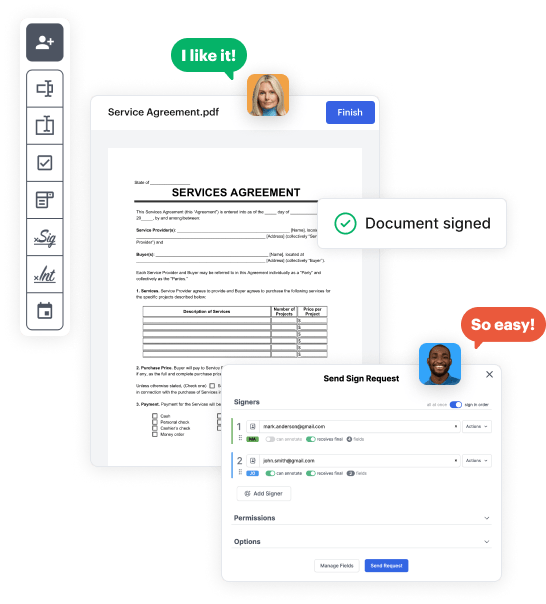
Create your US Court Legal Document from scratch

Start Building Now
Title decoration

Here's how it works

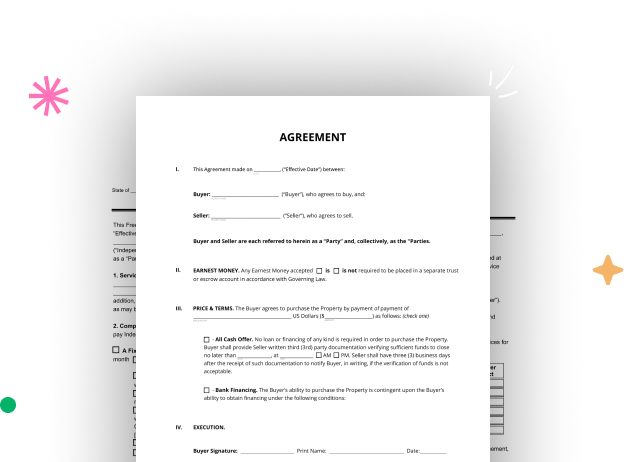
01. Start with a blank US Court Legal Document
Open the blank document in the editor, set the document view, and add extra pages if applicable.
02. Add and configure fillable fields
Use the top toolbar to insert fields like text and signature boxes, radio buttons, checkboxes, and more. Assign users to fields.
03. Distribute your form
Share your US Court Legal Document in seconds via email or a link. You can also download it, export it, or print it out.

A detailed walkthrough of how to design your US Court Legal Document online

Form edit decoration

Step 1: Start with DocHub's free trial.

Navigate to the DocHub website and register for the free trial. This provides access to every feature you’ll need to build your US Court Legal Document without any upfront cost.

Step 2: Access your dashboard.

Log in to your DocHub account and navigate to the dashboard.

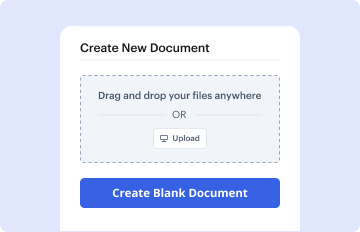
Step 3: Initiate a new document.

Hit New Document in your dashboard, and choose Create Blank Document to craft your US Court Legal Document from the ground up.

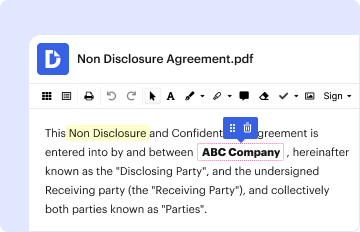
Step 4: Utilize editing tools.

Insert various elements such as text boxes, radio buttons, icons, signatures, etc. Arrange these fields to match the layout of your form and assign them to recipients if needed.

Step 5: Organize the form layout.

Organize your form effortlessly by adding, repositioning, removing, or combining pages with just a few clicks.

Step 6: Set up the US Court Legal Document template.

Transform your freshly designed form into a template if you need to send multiple copies of the same document multiple times.

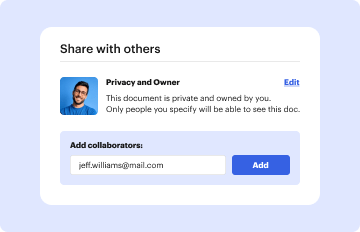
Step 7: Save, export, or share the form.

Send the form via email, share a public link, or even publish it online if you aim to collect responses from more recipients.


be ready to get more

Build your US Court Legal Document in minutes

Start creating now

Got questions?

We have answers to the most popular questions from our customers. If you can't find an answer to your question, please contact us.
Contact us
A subpoena is a court order that requires a party (or a witness who is not a party) to come to court to testify. It can also require the person to bring certain papers to the court hearing or trial.
The Constitution also grants Congress the power to establish courts inferior to the Supreme Court, and to that end Congress has established the United States district courts, which try most federal cases, and 13 United States courts of appeals, which review appealed district court cases.
Article III of the U.S. Constitution created the Supreme Court and authorized Congress to pass laws establishing a system of lower courts. In the federal court systems present form, 94 district-level trial courts and 13 courts of appeals sit below the Supreme Court.
Federal case files are maintained electronically and are available through the internet-based Public Access to Court Electronic Records (PACER) service. PACER allows anyone with an account to search and locate appellate, district, and bankruptcy court case and docket information. Register for a PACER account.
PACER provides the public with instantaneous access to more than 1 billion documents filed at all federal courts. Registered users can: Search for a case in the federal court where the case was filed, or. Search a nationwide index of federal court cases.
be ready to get more

Build your US Court Legal Document in minutes

Start creating now

Related Q&A to US Court Legal Document

The main type of record the federal courts create and maintain is a case file, which contains a docket sheet and all documents filed in a case. Case files and court records can be found on PACER.gov.
PACER can be used to retrieve most federal court dockets and filings, and anyone is able to register for an account. Users who download documents from PACER pay a per-page download charge of ten cents per page.

Additional resources on building your forms


