
Create your US Construction Lien Legal Form from scratch

Start Building Now
Title decoration

Here's how it works

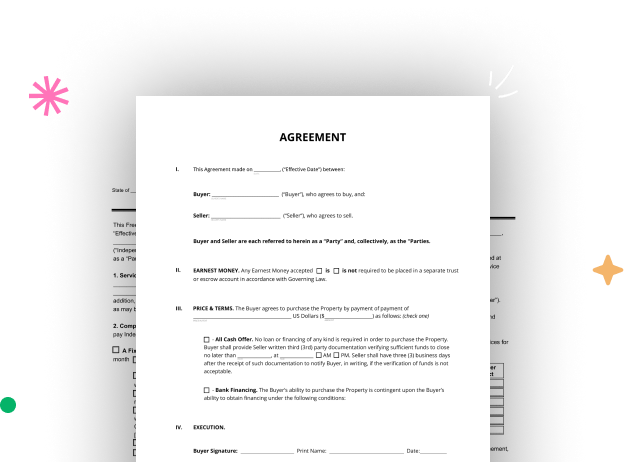
01. Start with a blank US Construction Lien Legal Form
Open the blank document in the editor, set the document view, and add extra pages if applicable.
02. Add and configure fillable fields
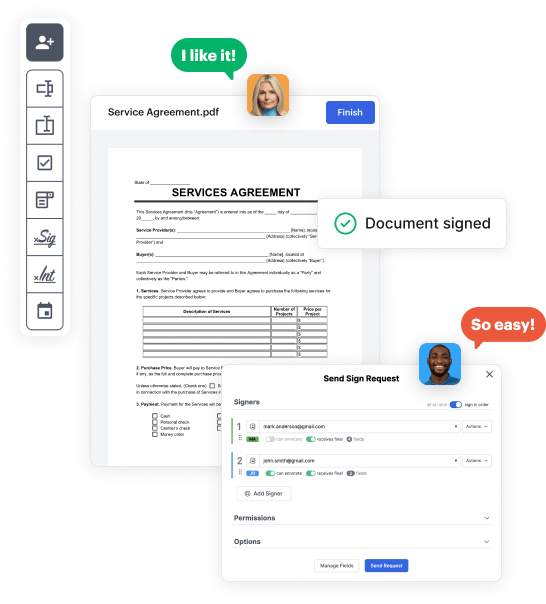
Use the top toolbar to insert fields like text and signature boxes, radio buttons, checkboxes, and more. Assign users to fields.
03. Distribute your form
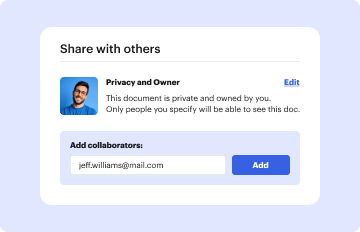
Share your US Construction Lien Legal Form in seconds via email or a link. You can also download it, export it, or print it out.

A detailed walkthrough of how to build your US Construction Lien Legal Form online

Form edit decoration

Step 1: Start with DocHub's free trial.

Go to the DocHub website and sign up for the free trial. This gives you access to every feature you’ll require to build your US Construction Lien Legal Form with no upfront cost.

Step 2: Access your dashboard.

Log in to your DocHub account and go to the dashboard.

Step 3: Initiate a new document.

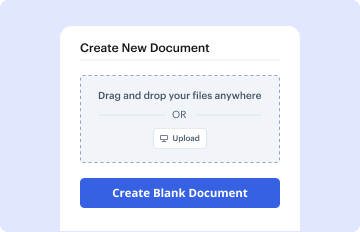
Hit New Document in your dashboard, and select Create Blank Document to create your US Construction Lien Legal Form from scratch.

Step 4: Use editing tools.

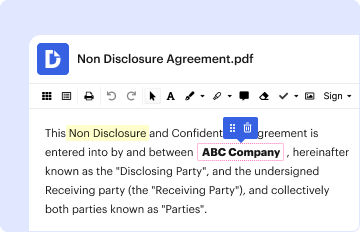
Insert various elements such as text boxes, radio buttons, icons, signatures, etc. Organize these fields to match the layout of your form and designate them to recipients if needed.

Step 5: Modify the form layout.

Organize your form quickly by adding, moving, deleting, or merging pages with just a few clicks.

Step 6: Set up the US Construction Lien Legal Form template.

Turn your freshly crafted form into a template if you need to send multiple copies of the same document numerous times.

Step 7: Save, export, or share the form.

Send the form via email, share a public link, or even post it online if you want to collect responses from more recipients.


be ready to get more

Build your US Construction Lien Legal Form in minutes

Start creating now

Got questions?

We have answers to the most popular questions from our customers. If you can't find an answer to your question, please contact us.
Contact us
Prior to filing a lien, a lienor who does not have a direct contract with the owner, must serve the owner with a Notice to Owner. The Notice to Owner must state the lienors name and address, and a description of the real property and the nature of the services or materials being furnished.
A lien can be registered by your contractor, a sub-contractor, or even the business from which your contractor bought your fixtures and materials. To the surprise of many homeowners, there does not have to be a direct contractual relationship between the person who registers the lien and the homeowner.
Filing your own lien in Florida has varying costs. Depending on the supporting documentation and length of your lien paperwork, it can cost as little as $10 for the first page and an additional $8.50 for each additional page. Find your local county recorder to view specific filing fees in each location.
How to Put a Lien on a Property in Florida File a Florida Notice to Owner. Record the Lien with the Local County Clerk. File an Amended Lien Claim if Necessary. Enforce the Lien Against the Property Owner. Discharge or Release the Lien Once Paid in Full.
ing to Floridas lien law, a contractor must file a lien within 90 days of the last day they provide labor or materials on the project. Filing outside this time frame allows for the challenge and potential invalidation of the lien.
be ready to get more

Build your US Construction Lien Legal Form in minutes

Start creating now

Related Q&A to US Construction Lien Legal Form

preparation and discharge fees: will depend on the complexity of the dispute, as handled by a construction lawyer. registration fees: $71.20 as of March 2023.
Under the Ontario Construction Lien Act a lien must be registered at the Land Titles Office within 60 days from the date the work is completed or the materials supplied to the project job site.
To attach a lien, the creditor must record the judgment with the county recorder in any Florida county where the debtor owns real estate now or may own real estate in future. For liens on personal property, the creditor files the judgment with the Florida Department of State.

Additional resources on building your forms