
Create your US Civil Procedure from scratch

Start Building Now
Title decoration

Here's how it works

01. Start with a blank US Civil Procedure
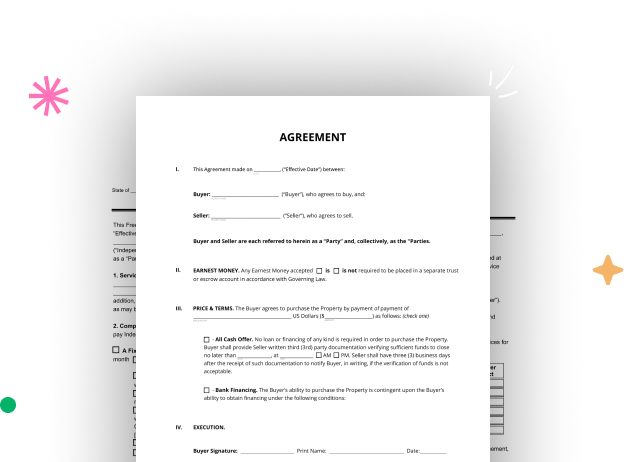
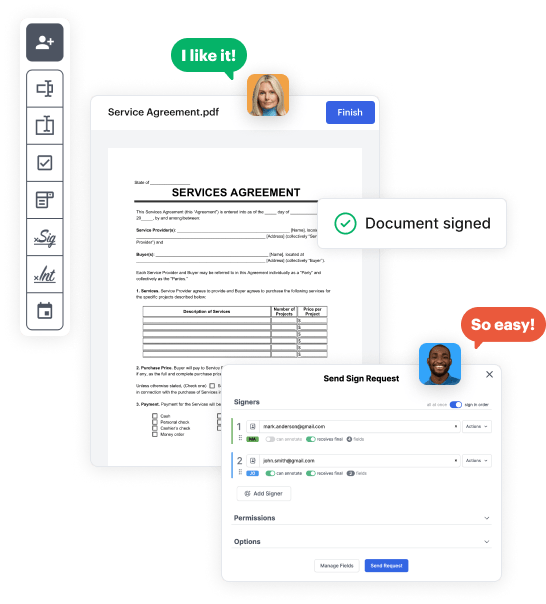
Open the blank document in the editor, set the document view, and add extra pages if applicable.
02. Add and configure fillable fields
Use the top toolbar to insert fields like text and signature boxes, radio buttons, checkboxes, and more. Assign users to fields.
03. Distribute your form
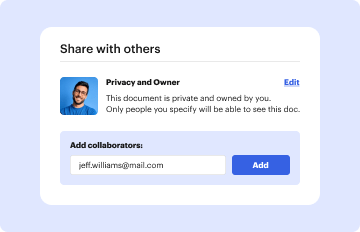
Share your US Civil Procedure in seconds via email or a link. You can also download it, export it, or print it out.

A simple tutorial on how to build a professional-looking US Civil Procedure

Form edit decoration

Step 1: Log in to DocHub to create your US Civil Procedure.

First, log in to your DocHub account. If you don't have one, you can easily sign up for free.

Step 2: Navigate to the dashboard.

Once you’re in, head to your dashboard. This is your main hub for all document-focused operations.

Step 3: Kick off new document creation.

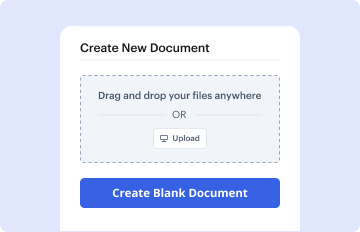
In your dashboard, click on New Document in the upper left corner. Hit Create Blank Document to build the US Civil Procedure from the ground up.

Step 4: Incorporate form elements.

Add numerous fields like text boxes, images, signature fields, and other elements to your form and designate these fields to certain individuals as necessary.

Step 5: Fine-tune your document.

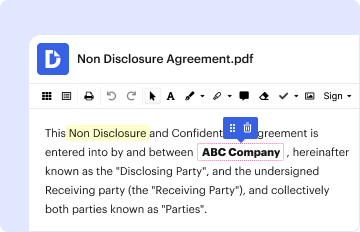
Personalize your template by incorporating guidelines or any other necessary information utilizing the text option.

Step 6: Double-check and correct the document.

Carefully review your created US Civil Procedure for any typos or required adjustments. Make use of DocHub's editing features to fine-tune your document.

Step 7: Share or download the document.

After finalizing, save your file. You may select to keep it within DocHub, export it to various storage platforms, or send it via a link or email.


be ready to get more

Build your US Civil Procedure in minutes

Start creating now

Got questions?

We have answers to the most popular questions from our customers. If you can't find an answer to your question, please contact us.
Contact us
Instead, the Supreme Court appointed an Advisory Committee in 1935 to solicit input from judges and practitioners and submit suggestions of rules. After solicitation and consideration, the Supreme Court approved the Federal Rules of Civil Procedure in 1938.
Rule 4 of the Federal Rules of Civil Procedure covers how service can be accomplished on a defendant either through personal service of a complaint and summons or mail service through a procedure called waiver of service of summons.
Rule 4-Summons. (a) Form. The summons shall be signed by the clerk, bear the seal of the court, identify the court and the parties, be directed to the defendant, and state the name and address of the plaintiffs attorney or, if unrepresented, of the plaintiff.
Advisory Committees on Appellate, Bankruptcy, Civil, Criminal, and Evidence Rules evaluate suggestions (i.e. proposals) for rules amendments in the first instance. If an advisory committee pursues a proposal, it may seek permission from the Standing Committee to publish a draft of the contemplated amendment.
Rule 4 of the Federal Rules of Civil Procedure requires certain defendants to cooperate in saving unnecessary expenses of serving a summons and complaint.
be ready to get more

Build your US Civil Procedure in minutes

Start creating now

Related Q&A to US Civil Procedure

Rule 4.1 Complaint, Warrant, or Summons by Telephone or Other Reliable Electronic Means. (a) In General. A magistrate judge may consider information communicated by telephone or other reliable electronic means when reviewing a complaint or deciding whether to issue a warrant or summons.
The Federal Rules of Civil Procedure govern civil proceedings in the United States district courts. The purpose of the Federal Rules of Civil Procedure is to secure the just, speedy, and inexpensive determination of every action and proceeding.
California law provides that a plaintiff must bring a lawsuit to trial within five years of filing, on penalty of dismissal with prejudice.

Additional resources on building your forms


