


Create your US Bankruptcy Legal Package from scratch

Start Building Now
Title decoration

Here's how it works

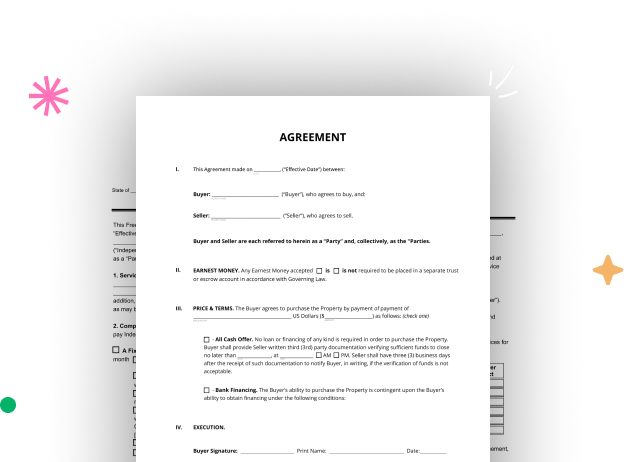
01. Start with a blank US Bankruptcy Legal Package
Open the blank document in the editor, set the document view, and add extra pages if applicable.
02. Add and configure fillable fields
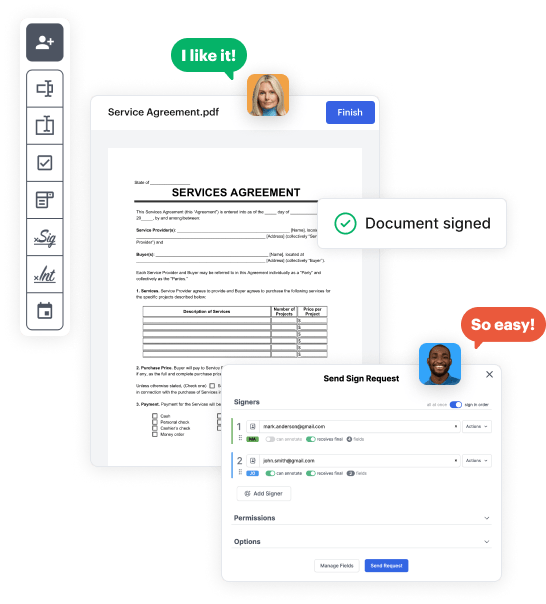
Use the top toolbar to insert fields like text and signature boxes, radio buttons, checkboxes, and more. Assign users to fields.
03. Distribute your form
Share your US Bankruptcy Legal Package in seconds via email or a link. You can also download it, export it, or print it out.

A brief guide on how to build a professional-looking US Bankruptcy Legal Package

Form edit decoration

Step 1: Log in to DocHub to create your US Bankruptcy Legal Package.

First, log in to your DocHub account. If you don't have one, you can easily register for free.

Step 2: Go to the dashboard.

Once you’re in, head to your dashboard. This is your primary hub for all document-centric processes.

Step 3: Initiate new document creation.

In your dashboard, hit New Document in the upper left corner. Opt for Create Blank Document to create the US Bankruptcy Legal Package from a blank slate.

Step 4: Incorporate template elements.

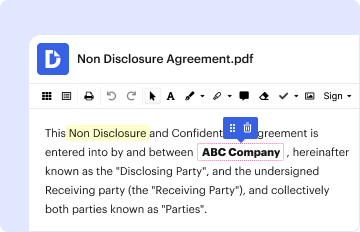
Add various elements like text boxes, images, signature fields, and other interactive areas to your template and assign these fields to certain individuals as required.

Step 5: Adjust your document.

Customize your form by incorporating directions or any other crucial tips utilizing the text tool.

Step 6: Double-check and modify the form.

Thoroughly review your created US Bankruptcy Legal Package for any errors or essential adjustments. Take advantage of DocHub's editing features to fine-tune your document.

Step 7: Distribute or export the document.

After finalizing, save your work. You can opt to keep it within DocHub, transfer it to various storage services, or send it via a link or email.


be ready to get more

Build your US Bankruptcy Legal Package in minutes

Start creating now

Got questions?

We have answers to the most popular questions from our customers. If you can't find an answer to your question, please contact us.
Contact us
Official Form 309F1 (For Corporations or Partnerships) Notice of Chapter 11 Bankruptcy Case.
Cons of Filing Chapter 13 Bankruptcy Even missing payments risks dismissal, leaving no bankruptcy protection. Job loss, medical issues, and added expenses all strain the plan. 2. Certain Debts Remain: Common protected debts like most student loans, alimony, and child support cant be discharged in Chapter 13. Pros and Cons of Chapter 13 Bankruptcy Indianapolis Bankruptcy Attorneys - Sawin Shea blog pros-cons-of-chapter Indianapolis Bankruptcy Attorneys - Sawin Shea blog pros-cons-of-chapter
Chapter 13 may cause less damage than Chapter 7 if you can reorganize your finances, as it involves repaying debts rather than liquidating assets. Future lenders might like Chapter 13 better, especially if you agree to pay back what you owe. But if your credit is extremely low, it wont matter much which one you pick. How Does Filing Chapter 13 Bankruptcy Affect Your Credit Score? Portland Bankruptcy Attorneys how-does-filing-chapter-13-bankr Portland Bankruptcy Attorneys how-does-filing-chapter-13-bankr
Attorney fees for a Chapter 7 bankruptcy will typically range from $1,000 to $2,000, depending on the complexity of your situation. A Chapter 13 will typically range from $3,000 to $5,000 and is typically determined by the complexity of the case.
1. A bankruptcy stays on your credit report for up to 10 years. While this is a negative aspect of Chapter 7, you can begin rebuilding your credit immediately. The Pros Cons of Filing Chapter 7 Bankruptcy | W. Ron Adams Law W. Ron Adams Law pros-cons-filing-chapter-7- W. Ron Adams Law pros-cons-filing-chapter-7-
be ready to get more

Build your US Bankruptcy Legal Package in minutes

Start creating now

Related Q&A to US Bankruptcy Legal Package

You may like to file Chapter 13 instead of a Chapter 7 bankruptcy, if youre behind on your mortgage payments and youre trying to save your home. Chapter 7 does not give you the opportunity to catch up mortgage payments or otherwise save your house. A Chapter 13 would be the appropriate chapter to file for that. Why should I file a Chapter 13 instead of a Chapter 7 Christie Arkovich Video FAQ Christie Arkovich Video FAQ
Generally, Chapter 7 is more appropriate for simple cases while Chapter 13 for more complicated bankruptcies. Or somewhat more accurately, Chapter 13 can give you more power over and flexibility with certain kinds of creditors, and if you have non-exempt assets.
It is provided for in section 362 of the Bankruptcy Code. Triggered immediately on filing of the bankruptcy petition, it automatically stops substantially all acts and proceedings against the debtor and its property.

Additional resources on building your forms


