
Create your Unmarried Couple Will from scratch

Start Building Now
Title decoration

Here's how it works

01. Start with a blank Unmarried Couple Will
Open the blank document in the editor, set the document view, and add extra pages if applicable.
02. Add and configure fillable fields
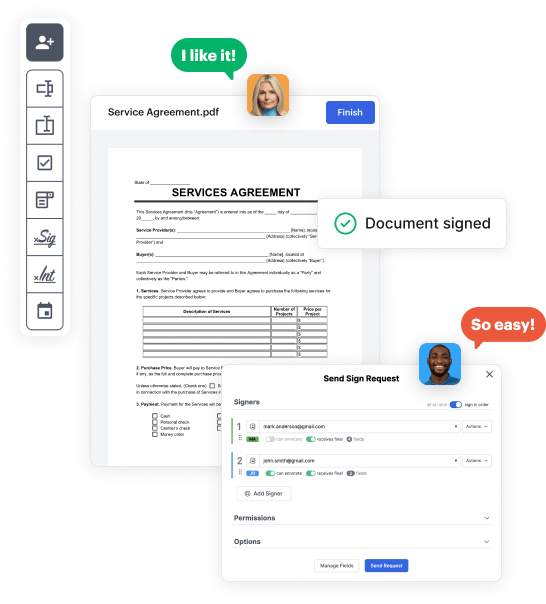
Use the top toolbar to insert fields like text and signature boxes, radio buttons, checkboxes, and more. Assign users to fields.
03. Distribute your form
Share your Unmarried Couple Will in seconds via email or a link. You can also download it, export it, or print it out.

Create Unmarried Couple Will from scratch with these comprehensive instructions

Form edit decoration

Step 1: Start off by launching DocHub.

Start by setting up a free DocHub account using any offered sign-up method. Just log in if you already have one.

Step 2: Register for a free 30-day trial.

Try out the entire collection of DocHub's advanced features by registering for a free 30-day trial of the Pro plan and proceed to build your Unmarried Couple Will.

Step 3: Build a new blank document.

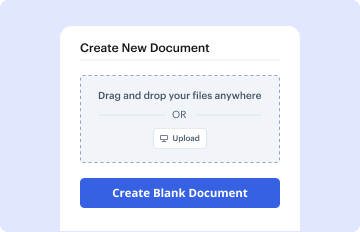
In your dashboard, select the New Document button > scroll down and choose to Create Blank Document. You will be redirected to the editor.

Step 4: Organize the document’s layout.

Use the Page Controls icon indicated by the arrow to toggle between different page views and layouts for more flexibility.

Step 5: Begin by inserting fields to create the dynamic Unmarried Couple Will.

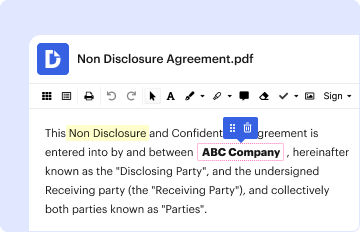
Navigate through the top toolbar to add document fields. Add and arrange text boxes, the signature block (if applicable), embed images, etc.

Step 6: Prepare and configure the incorporated fields.

Organize the fields you incorporated based on your preferred layout. Customize each field's size, font, and alignment to ensure the form is user-friendly and professional.

Step 7: Finalize and share your template.

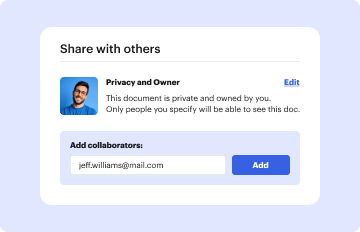
Save the finalized copy in DocHub or in platforms like Google Drive or Dropbox, or create a new Unmarried Couple Will. Share your form via email or utilize a public link to engage with more people.


be ready to get more

Build your Unmarried Couple Will in minutes

Start creating now

Got questions?

We have answers to the most popular questions from our customers. If you can't find an answer to your question, please contact us.
Contact us
There is no law forbidding unmarried couples from renting or buying a home together. Unmarried couples can live together and buy or rent a property and become joint owners.
Some couples who have no children or children intended to inherit may decide to bequeath assets to extended family members, such as nieces, nephews, siblings and parents, close friends, or to charitable organizations.
Revocable Living Trust For many reasons it is often advisable for unmarried partners to each have their own revocable living trusts, naming the other as primary beneficiary. This keeps separate property separate but permits each partner to provide for the other upon death or incapacity.
Estate planning is often viewed as a task for the distant future, leading many to deprioritize it amid more immediate concerns. Coupled with a general lack of awareness and education about the estate planning process and its benefits, its not surprising that many delay or avoid it altogether.
Therefore, it is vital that unmarried couples make wills if they would like their partner to inherit from their estate. A person who dies without leaving a valid will is called intestate. Under the Rules of Intestacy, if your partner dies without a will, and you are unmarried you will receive nothing.
be ready to get more

Build your Unmarried Couple Will in minutes

Start creating now

Related Q&A to Unmarried Couple Will

If I have a will, does my spouse need one? The answer is yes everyone should have a will! If youre married, you and your spouse can have separate (or joint) wills that you sign yourselves. This way, if something were to happen to one of you, theres no room for ambiguity or confusion.
However, if you are not married, it is even more important to have a Will in order to establish whomever you want to be in charge of how your estate assets are administered and ultimately distributed after you pass away.