



Create your United States Jury Instruction from scratch

Start Building Now
Title decoration

Here's how it works

01. Start with a blank United States Jury Instruction
Open the blank document in the editor, set the document view, and add extra pages if applicable.
02. Add and configure fillable fields
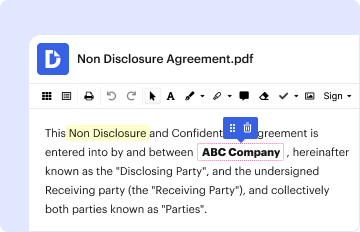
Use the top toolbar to insert fields like text and signature boxes, radio buttons, checkboxes, and more. Assign users to fields.
03. Distribute your form
Share your United States Jury Instruction in seconds via email or a link. You can also download it, export it, or print it out.

Design your United States Jury Instruction in a matter of minutes

Form edit decoration

Step 1: Access DocHub to build your United States Jury Instruction.

Begin by accessing your DocHub account. Explore the pro DocHub functionality free for 30 days.

Step 2: Navigate to the dashboard.

Once signed in, go to the DocHub dashboard. This is where you'll create your forms and manage your document workflow.

Step 3: Design the United States Jury Instruction.

Click on New Document and select Create Blank Document to be taken to the form builder.

Step 4: Design the form layout.

Use the DocHub tools to add and configure form fields like text areas, signature boxes, images, and others to your document.

Step 5: Add text and titles.

Include necessary text, such as questions or instructions, using the text field to assist the users in your document.

Step 6: Configure field properties.

Adjust the properties of each field, such as making them compulsory or arranging them according to the data you plan to collect. Assign recipients if applicable.

Step 7: Review and save.

After you’ve managed to design the United States Jury Instruction, make a final review of your document. Then, save the form within DocHub, send it to your chosen location, or distribute it via a link or email.


be ready to get more

Build your United States Jury Instruction in minutes

Start creating now

Got questions?

We have answers to the most popular questions from our customers. If you can't find an answer to your question, please contact us.
Contact us
Instructions to the Jury The judge instructs the jury about the relevant laws that should guide its deliberations. (In some jurisdictions, the court may instruct the jury at any time after the close of evidence. This sometimes occurs before closing arguments.) The judge reads the instructions to the jury.
For jury instructions to be effective, they must be clear and simple. Sentences should be short; instruc- tions should contain no more than a few sentences, cover only one topic, and be directly related to the circumstances of the case (they should not be abstract statements of the law).
Jury instructions are given to the jury by the judge, who usually reads them aloud to the jury. The judge issues a judges charge to inform the jury how to act in deciding a case. The jury instructions provide something of a flowchart on what verdict jurors should deliver based on what they determine to be true.
In its current form, Rule 30 requires that the court instruct the jury after the arguments of counsel. In some districts, usually where the state practice is otherwise, the parties prefer to stipulate to instruction before closing arguments.
A trial judge gives the jurors the applicable law through jury instructions. Jurors swear an oath to follow those instructions and fulfill their duty impartially. Jury nullification happens when juries disregard that oath and acquit a defendant because they disagree with the law.
be ready to get more

Build your United States Jury Instruction in minutes

Start creating now

Related Q&A to United States Jury Instruction

Jury service is a way for U.S. citizens to participate in the judicial process. Each court randomly selects qualified citizens from counties within the district for possible jury service. All courts use the respective state voter lists as a source of prospective jurors.
The American system utilizes three types of juries: Investigative grand juries, charged with determining whether enough evidence exists to warrant a criminal indictment; petit juries (also known as a trial jury), which listen to the evidence presented during the course of a criminal trial and are charged with
Either before or after the closing arguments by the lawyers, the judge will explain the law that applies to the case to you. This is the judges instruction to the jury. You have to apply that law to the facts, as you have heard them, in arriving at your verdict.


