Transform your form management with United States Civil Actions

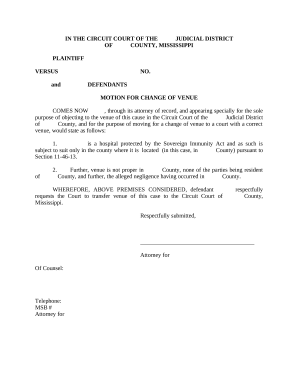
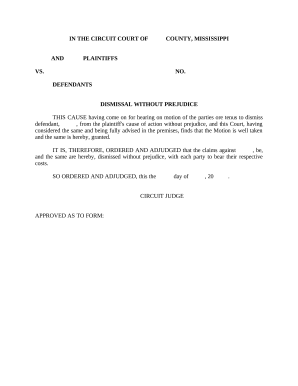
Your workflows always benefit when you can locate all of the forms and documents you require on hand. DocHub delivers a a large collection form templates to alleviate your everyday pains. Get a hold of United States Civil Actions category and quickly find your document.

Start working with United States Civil Actions in a few clicks:

  1. Access United States Civil Actions and discover the form you require.
  2. Click on Get Form to open it in our editor.
  3. Start changing your file: add more fillable fields, highlight paragraphs, or blackout sensitive data.
  4. The app saves your changes automatically, and once you are all set, you can download or distribute your form with other contributors.

Enjoy fast and easy file administration with DocHub. Discover our United States Civil Actions collection and locate your form today!


Video Guide on United States Civil Actions management

video background

Commonly Asked Questions about United States Civil Actions

The three most common civil cases are tort claims, contract bdocHubes and landlord/tenant issues. Tort Claim - An act committed by one person that causes harm to another. Tort cases can take many different forms, and can relate to a persons personal safety, safety of their property, and financial security.
Typical civil causes of action include bdocHub of contract, battery, or defamation and violations of federal statutes and constitutional rights. To establish a prima facie civil case, a plaintiff must describe his or her damages or injury, explain how the defendant caused the harm, and ask the court for relief.
Civil law deals with behavior that constitutes an injury to an individual or other private party, such as a corporation. Examples are defamation (including libel and slander), bdocHub of contract, negligence resulting in injury or death, and property damage.
Broadly speaking, civil procedure consists of the rules by which courts conduct civil trials. Civil trials concern the judicial resolution of claims by one individual or class against another and are to be distinguished from criminal trials, in which the state prosecutes an individual for violation of criminal law.
Four of the most important types of civil law deal with 1) contracts, 2) property, 3) family relations, and 4) civil wrongs causing physical injury or injury to property (tort).
Civil law, as it regards a type of law, is a branch of law that regulates the non-criminal rights, duties of persons (natural persons and legal persons) and equal legal relations between private individuals, as opposed to criminal law or administrative law.
Civil cases are the cases in which private citizens (or companies) sue each other in court. Civil cases are not about breaking a criminal law.