
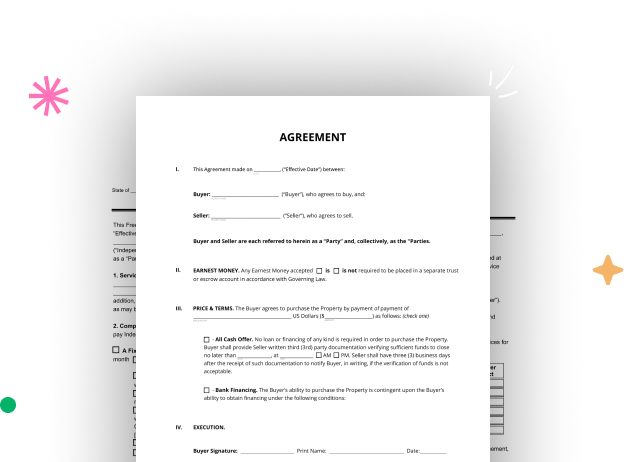

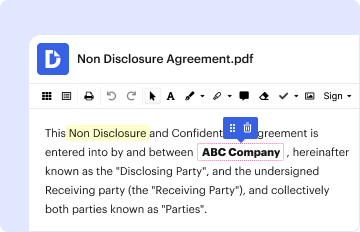


Create your Uniform Law Document from scratch

Start Building Now
Title decoration

Here's how it works

01. Start with a blank Uniform Law Document
Open the blank document in the editor, set the document view, and add extra pages if applicable.
02. Add and configure fillable fields
Use the top toolbar to insert fields like text and signature boxes, radio buttons, checkboxes, and more. Assign users to fields.
03. Distribute your form
Share your Uniform Law Document in seconds via email or a link. You can also download it, export it, or print it out.

Craft Uniform Law Document from the ground up by following these detailed instructions

Form edit decoration

Step 1: Start off by launching DocHub.

Begin by registering a free DocHub account using any available sign-up method. If you already have one, simply log in.

Step 2: Register for a free 30-day trial.

Try out the whole collection of DocHub's advanced tools by signing up for a free 30-day trial of the Pro plan and proceed to build your Uniform Law Document.

Step 3: Add a new blank doc.

In your dashboard, select the New Document button > scroll down and hit Create Blank Document. You’ll be redirected to the editor.

Step 4: Arrange the view of the document.

Utilize the Page Controls icon indicated by the arrow to switch between different page views and layouts for more flexibility.

Step 5: Begin by adding fields to design the dynamic Uniform Law Document.

Explore the top toolbar to add document fields. Insert and configure text boxes, the signature block (if applicable), embed images, etc.

Step 6: Prepare and configure the added fields.

Organize the fillable areas you added per your chosen layout. Personalize each field's size, font, and alignment to ensure the form is user-friendly and neat-looking.

Step 7: Finalize and share your form.

Save the completed copy in DocHub or in platforms like Google Drive or Dropbox, or create a new Uniform Law Document. Share your form via email or use a public link to engage with more people.


be ready to get more

Build your Uniform Law Document in minutes

Start creating now

Got questions?

We have answers to the most popular questions from our customers. If you can't find an answer to your question, please contact us.
Contact us
In the UK, no specific laws govern dress codes and uniforms in the workplace. Employers have the discretion to implement dress code policies, but they must ensure these policies do not discriminate unlawfully against workers. Definition: A dress code is a company policy outlining required employee attire while working.
An example of a Uniform Commercial Code is a lien against collateral. UCC lien lasts for five years and can be renewed by lenders if there are active loans. It impacts the credit report of a business.
Uniform Laws do not apply in all states and cannot apply to states that have not adopted them. Each state has the option to adopt or reject a uniform law.
Uniform Codes means those building, electrical, mechanical, plumbing, fire and other similar regulations of a City-wide scope which are based on recommendations of a multi-state professional organization and become applicable throughout the City, such as, but not limited to, the Uniform Building Code, the Uniform
Uniform Laws are carefully drafted model laws for potential enactment by state legislatures. State legislatures can reject them, enact them in entirety, or enact them with modifications.
be ready to get more

Build your Uniform Law Document in minutes

Start creating now

Related Q&A to Uniform Law Document

The mercantile law, in this respect is the same all over the world. For from the same premises, the same conclusions of reason and justice must universally be the same.
Uniform laws are laws written by lawyers from a variety of backgrounds with the hopes that states will adopt them. They are created by the Uniform Law Commission (ULC) in order to address legal issues that need a lot of expertise or need to be addressed similarly across states in order to be effective.
Some examples of the ULCs most widely adopted acts include: the Uniform Commercial Code, which has standardized and simplified the law of commerce in the United States; the Uniform Anatomical Gift Act, which has enabled organ and tissue transplants since 1968; the Uniform Trade Secrets Act, which ensures that business

Additional resources on building your forms