

Create your Tennessee Divorce Form from scratch

Start Building Now
Title decoration

Here's how it works

01. Start with a blank Tennessee Divorce Form
Open the blank document in the editor, set the document view, and add extra pages if applicable.
02. Add and configure fillable fields
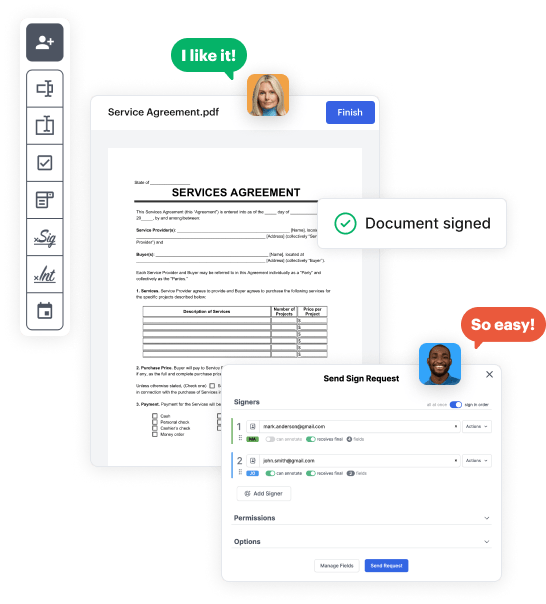
Use the top toolbar to insert fields like text and signature boxes, radio buttons, checkboxes, and more. Assign users to fields.
03. Distribute your form
Share your Tennessee Divorce Form in seconds via email or a link. You can also download it, export it, or print it out.

A brief tutorial on how to build a polished Tennessee Divorce Form

Form edit decoration

Step 1: Sign in to DocHub to create your Tennessee Divorce Form.

First, log in to your DocHub account. If you don't have one, you can simply sign up for free.

Step 2: Head to the dashboard.

Once signed in, head to your dashboard. This is your central hub for all document-based operations.

Step 3: Initiate new document creation.

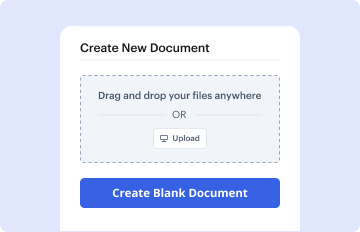
In your dashboard, select New Document in the upper left corner. Opt for Create Blank Document to design the Tennessee Divorce Form from the ground up.

Step 4: Insert form fillable areas.

Add numerous fields like text boxes, images, signature fields, and other interactive areas to your form and assign these fields to intended individuals as necessary.

Step 5: Configure your form.

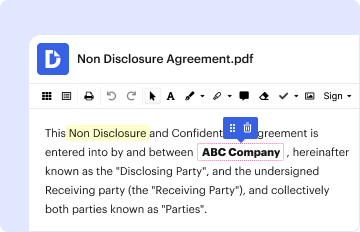
Refine your template by including guidelines or any other necessary tips utilizing the text tool.

Step 6: Review and tweak the form.

Thoroughly review your created Tennessee Divorce Form for any inaccuracies or necessary adjustments. Take advantage of DocHub's editing tools to perfect your form.

Step 7: Distribute or download the form.

After completing, save your work. You can choose to keep it within DocHub, export it to various storage services, or forward it via a link or email.


be ready to get more

Build your Tennessee Divorce Form in minutes

Start creating now

Got questions?

We have answers to the most popular questions from our customers. If you can't find an answer to your question, please contact us.
Contact us
Many people may think that filing online is easy and quick, especially if they are having an amicable separation. The truth is, they may end up agreeing to things without realizing the impact they will have down the line. Fortunately, it is not legal to file for divorce online in the state of Tennessee.
Once your paperwork is filed and you execute proper service, your spouse will have thirty days to file a response. If they do not then you and your lawyer can file a Motion for Default Judgment with the court.
If the other spouse refuses to acknowledge or sign divorce papers, one option is default divorce. Tennessee law stipulates that a spouse may be entitled to a default divorce if one of the following is true: The other spouse refuses to accept the divorce papers from a process server.
In limited circumstances, it is possible to get an agreed divorce in Tennessee without hiring an attorney. The Tennessee Supreme Court has approved divorce forms that, if properly completed, must be accepted by all Tennessee courts that hear divorce cases.
You do not have to hire an attorney. However, it is strongly recommended you do. If you are filing for divorce in TN with children, your divorce will forever change your parenting time.
be ready to get more

Build your Tennessee Divorce Form in minutes

Start creating now

Related Q&A to Tennessee Divorce Form

Tennessee has a simplified process of uncontested divorce known as agreed divorce, but its available only if you and your spouse: do not have children together who are younger than 18, in high school, or disabled (and neither of you is pregnant) do not own real estate or a business together.
Divorce Proceedings Without a Signature In Tennessee, a divorce can proceed without the spouses signature if both parties agree to waive service. This means that the spouse does not need to be served with papers for them to be legally divorced.
In Tennessee, there are two types of divorces: uncontested, which is usually irreconcilable differences, and contested, which requires proof of grounds for divorce. With a contested divorce, the parties cannot agree and must go to trial.

Additional resources on building your forms


