Create your Tenant's Rights Document from scratch

Start Building Now
Title decoration

Here's how it works

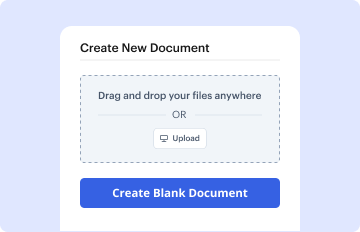
01. Start with a blank Tenant's Rights Document
Open the blank document in the editor, set the document view, and add extra pages if applicable.
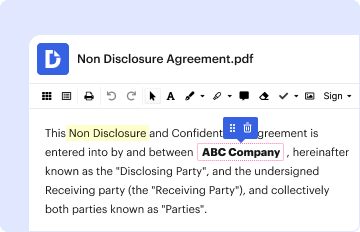
02. Add and configure fillable fields
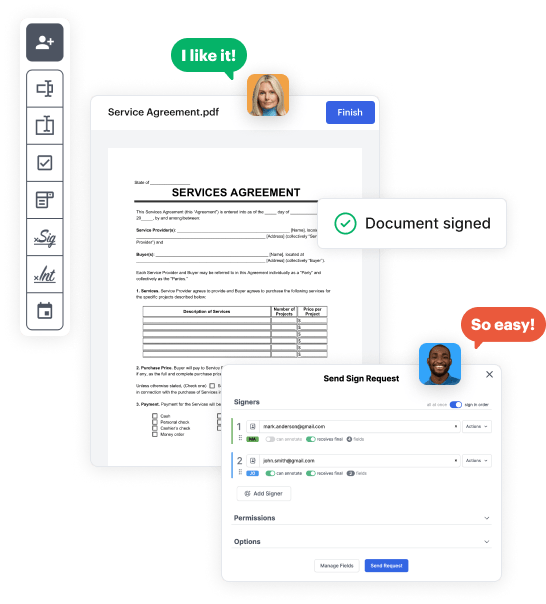
Use the top toolbar to insert fields like text and signature boxes, radio buttons, checkboxes, and more. Assign users to fields.
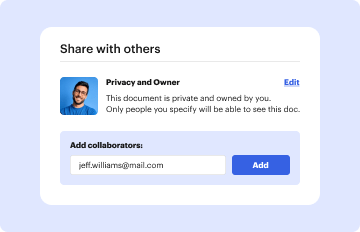
03. Distribute your form
Share your Tenant's Rights Document in seconds via email or a link. You can also download it, export it, or print it out.

Design your Tenant's Rights Document in a matter of minutes
Form edit decoration

Step 1: Access DocHub to set up your Tenant's Rights Document.

Begin by logging into your DocHub account. Try out the advanced DocHub functionality free for 30 days.

Step 2: Navigate to the dashboard.

Once signed in, go to the DocHub dashboard. This is where you'll build your forms and manage your document workflow.

Step 3: Design the Tenant's Rights Document.

Click on New Document and select Create Blank Document to be taken to the form builder.

Step 4: Set up the form layout.

Use the DocHub features to insert and configure form fields like text areas, signature boxes, images, and others to your document.

Step 5: Insert text and titles.

Include needed text, such as questions or instructions, using the text tool to guide the users in your form.

Step 6: Customize field properties.

Alter the properties of each field, such as making them mandatory or formatting them according to the data you plan to collect. Assign recipients if applicable.

Step 7: Review and save.

After you’ve managed to design the Tenant's Rights Document, make a final review of your document. Then, save the form within DocHub, transfer it to your chosen location, or distribute it via a link or email.

be ready to get more

Build your Tenant's Rights Document in minutes

Start creating now

Got questions?

We have answers to the most popular questions from our customers. If you can't find an answer to your question, please contact us.
Contact us
New York tenant responsibilities and rights Living in a habitable rental that meets local and state health and safety codes. Having repairs made in a reasonable time after providing the landlord with written notice. Taking legal action like suing or filing a court order if the landlord commits a lease violation.
New York allows tenants to refuse viewings at any time, including during the leases final month. Landlord entry for the purpose of showing the property requires the tenants explicit consent. Without it, the landlord must obtain a court order to legally conduct viewings.
If you pay rent by check, you may also request a receipt. You only have to ask once. After that, your landlord has to give you a receipt every month. Your landlord must keep proof of cash rent receipts for 3 years.
If a tenant is out of the rental apartment for a couple of days, their pets still need care, plants need watering, and all belongings need security. For these types of scenarios, landlords should allow their tenants to share keys with someone else whom they trust.
If you do not have a written lease, or your lease expired and you dont live in rent regulated housing, the landlord/owner may be able to go to court to evict you even if you did not do anything wrong. It is the landlord/owners right to evict you without a reason.
be ready to get more

Build your Tenant's Rights Document in minutes

Start creating now

Related Q&A to Tenant's Rights Document

Tenants have the right to privacy in their rented homes and can refuse entry to landlords who do not provide proper notice or have an illegitimate reason for entry. If this right is violated, tenants can take legal action to prevent continued violations and potentially seek damages.
What are the responsibilities of my landlord? Owners must ensure that buildings are safe, clean and well maintained, in both common areas and in individual apartments. Among other responsibilities, owners must provide and maintain security measures, heat, hot and cold water, and good lighting.
While tenants in New York City are generally not legally required to give their landlord a key to their apartment, it is important to understand any provisions related to this in your lease agreement. Consider your personal circumstances and relationship with your landlord before deciding whether to give them a key.
Tenants without a lease agreement also have the right to privacy. The landlord cannot enter your rental property without your consent, except in emergencies or other legally allowed circumstances. The landlord must provide reasonable notice before entering the rental property for repairs, inspections, or other reasons.

Additional resources on building your forms