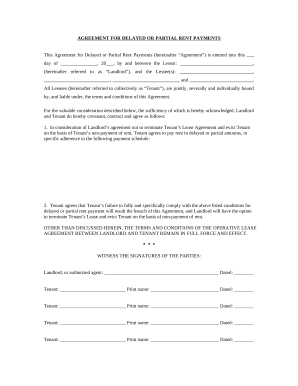
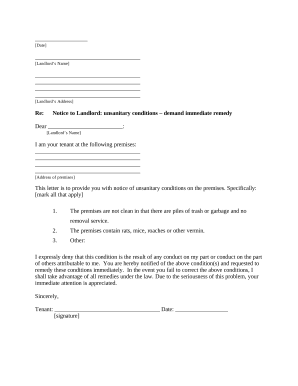
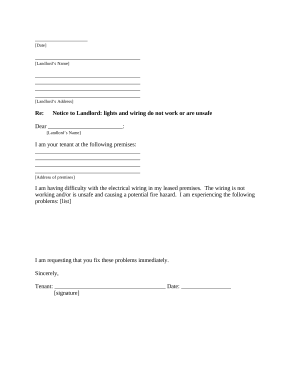
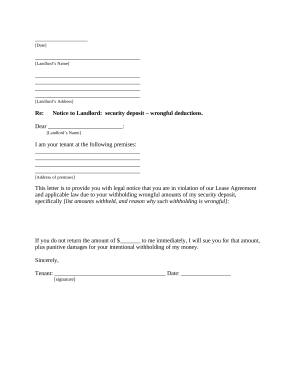
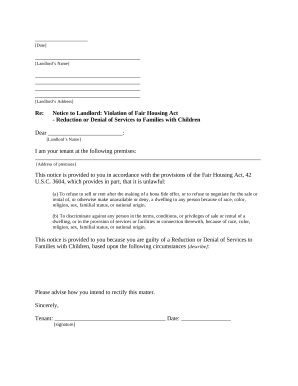
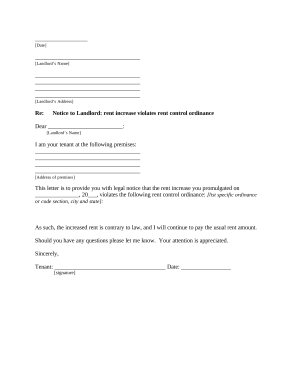
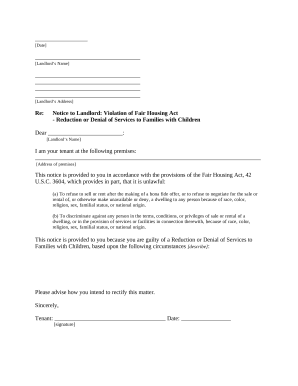
Boost your efficiency with Tenant to Landlord Letters

Papers management takes up to half of your office hours. With DocHub, you can reclaim your office time and improve your team's efficiency. Get Tenant to Landlord Letters category and check out all document templates relevant to your daily workflows.

The best way to use Tenant to Landlord Letters:

  1. Open Tenant to Landlord Letters and apply Preview to get the appropriate form.
  2. Click on Get Form to begin working on it.
  3. Wait for your form to upload in our online editor and start modifying it.
  4. Add new fillable fields, symbols, and pictures, modify pages, etc.
  5. Complete your file or set it for other contributors.
  6. Download or deliver the form by link, email attachment, or invite.

Boost your daily file management with the Tenant to Landlord Letters. Get your free DocHub profile right now to explore all templates.

Video Guide on Tenant to Landlord Letters management

video background

Commonly Asked Questions about Tenant to Landlord Letters

An LOI should describe how much the tenant will pay the landlord, starting with rent. The LOI either should state a monthly rent amount or should explain how rent will be calculated. If there will be rent increases during the lease term, the LOI should say so and say how much the increase will be.
[Talk about your interests/hobbies, your schedule, how you get along with neighbors, how you take care of the place you live/pick up trash/keep noise to a minimum, get involved in your community, pay your bills on time, etc. Renter Resume Cover Letter virginia.gov assets housingresumepacket virginia.gov assets housingresumepacket
When writing a letter to your landlord, be sure to include the following elements: Your full name and rental address. The date of the letter. A clear and concise subject line. A polite and professional tone throughout the letter. Specific details about your request or concern. A proposed solution or timeline, if applicable.
Dear (Landlord name), My name is (Your name), and Im writing to you to express my interest in the home at (address or property name). I would love to live in this place because (reasons you want to rent the property). I currently am a tenant at (current address) but am ready to move because (reason for moving).
A letter of intent (LOI) is a written, nonbinding document that outlines an agreement in principle between two or more parties before a legal agreement is finalized. It is often used in business transactions, such as mergers and acquisitions, joint ventures and real estate leases.
An LOI stands for Letter of Intent. In commercial real estate, a Letter of Intent is a preliminary agreement that is negotiated between a tenant and landlord or buyer and seller. The LOI or Letter of Intent states the primary economics and deal points with proposed terms.
What to include Your name, contact information, and why you are searching for a rental. Which listing you are interested in, and where you found their ad. A few highlights that show you are a responsible person (e.g., your part-time job, volunteer work, research projects, or past experiences as a tenant) Contacting a Landlord - Community Rentals ucsc.edu contact-landlord ucsc.edu contact-landlord
You should say something like: I am giving 1 months notice to end my tenancy, as required by law. I will be leaving the property on (date xx). I would like you to be at the property on the day I move out to check the premises and for me to return the keys.
A commercial lease letter of intent is a document that creates the foundation of a lease deed between a landlord and tenant. The letter will include a broad overview of the final lease agreement, showing that the company is serious about renting the space if terms can be docHubed.
A landlord reference letter will typically include: The date the letter was written. Your name, address and email or phone number. The recipients name (or a generic greeting) The address of the property the tenant rented. The dates of the tenancy. Any lease violations, such as late rent payments.