
Improve your output with Tenant Maintenance Request Letter

Document management consumes to half of your business hours. With DocHub, it is possible to reclaim your time and boost your team's productivity. Access Tenant Maintenance Request Letter online library and discover all templates related to your daily workflows.

The best way to use Tenant Maintenance Request Letter:

  1. Open Tenant Maintenance Request Letter and use Preview to get the suitable form.
  2. Click on Get Form to start working on it.
  3. Wait for your form to upload in the online editor and begin editing it.
  4. Add new fillable fields, icons, and pictures, modify pages, etc.
  5. Complete your template or prepare it for other contributors.
  6. Download or share the form by link, email attachment, or invite.

Accelerate your daily file management with the Tenant Maintenance Request Letter. Get your free DocHub profile right now to discover all templates.


Video Guide on Tenant Maintenance Request Letter management

video background

Commonly Asked Questions about Tenant Maintenance Request Letter

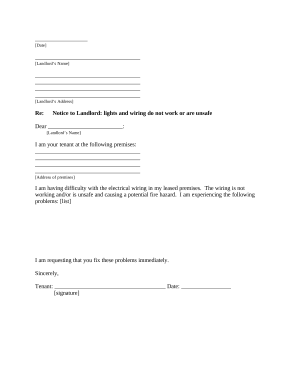
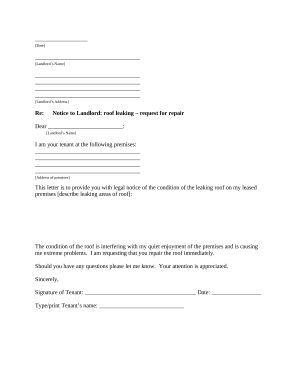
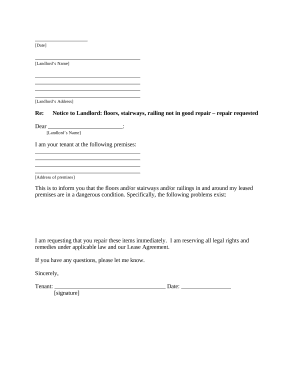
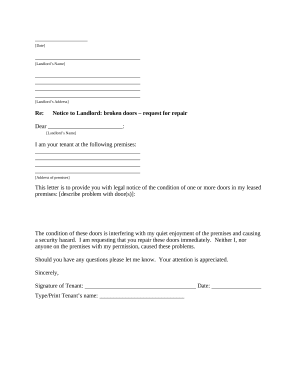
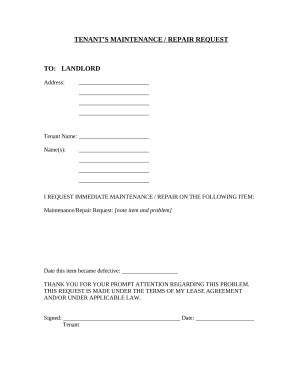
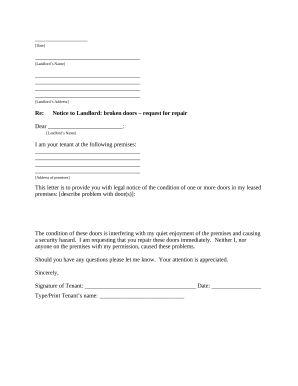
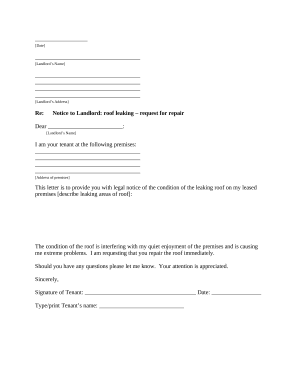
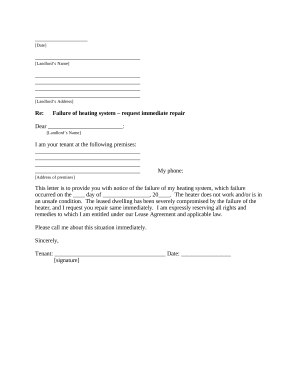
Start with your contact information: At the top of the letter, include your name, the rental property address and the date. Clearly state the purpose: In the opening sentence, state that you are writing to request repairs. Describe the problem in detail: Clearly and concisely describe the issue.
Document the issue with photos or videos, if possible. Write a clear and concise letter to your landlord, describing the problem and its impact on your living situation. Provide a reasonable timeline for the repairs to be completed. Keep a copy of the letter for your records and follow up if necessary.
When you write your own letter, include: names, dates, your address and signature. a description of the problems. background information if you already talked to the super or asked for repairs. a request for advance notice if they will come to your apartment, so you can plan.
Garage door opener not working. Broken toilet when there is more than one toilet in the apartment. Sink not working when there is more than one sink in the apartment. Minor moisture in a wall or on a floor that is not causing flooding.
Typical examples of routine maintenance include: Lubricating, cleaning, or adjusting machinery. Inspecting equipment to ensure proper operation and safety. Replacing parts that show deterioration. Checking, testing, and maintaining safety equipment, such as safety barriers, fire extinguishers, or alarm systems.
